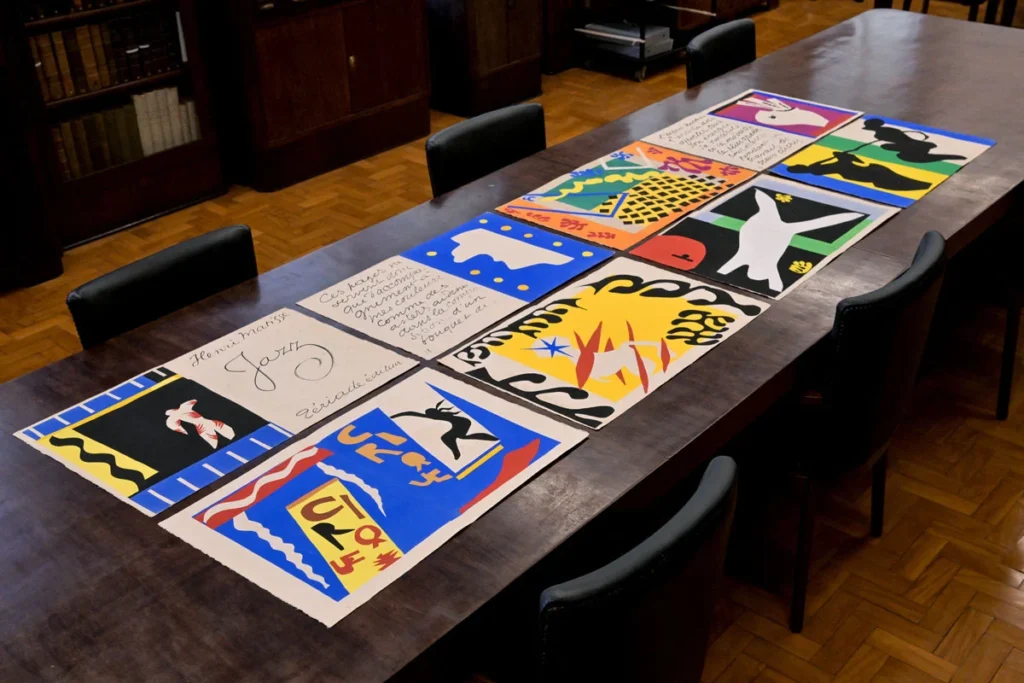
In a significant victory for international cultural heritage, Brazilian authorities have successfully recovered eight rare, iconic prints from Henri Matisse’s 1947 Jazz series. The works, which were brazenly stolen during a daylight heist at the Mário de Andrade Library in São Paulo last December, have finally returned to the custody of the city. The recovery marks the conclusion of a high-stakes investigation that spanned months, involving surveillance analysis, inter-agency coordination, and a series of arrests that dismantled the criminal network responsible for the theft.
The return of these pieces—valued at over 1 million Brazilian reais (approximately $193,000)—serves as a poignant reminder of the vulnerability of public art institutions and the ongoing global struggle to protect irreplaceable cultural assets from organized theft.
The Anatomy of a Daylight Heist
The theft occurred on December 7, a date that will remain infamous in the annals of Brazilian art security. At the time, the Mário de Andrade Library—São Paulo’s largest and most historically significant municipal library—was hosting a prestigious exhibition titled "From Book to Museum: MAM São Paulo and the Mário de Andrade Library." The exhibition was intended to bridge the gap between literature and visual arts, showcasing the profound impact of modernist masters on the broader cultural landscape.
According to police reports, two armed individuals entered the library during regular public operating hours. Utilizing intimidation tactics, the perpetrators managed to overpower a security guard and two visitors present in the gallery space. The brazenness of the act was captured on high-definition security footage, which later became the primary tool for investigators. The video captured the surreal and chilling sight of the thieves navigating the busy streets of São Paulo, carrying the stolen masterpieces as if they were mundane parcels. In one particularly harrowing moment, the footage showed a suspect casually placing a stack of frames beside a pile of garbage on a sidewalk before returning to retrieve them, highlighting the thieves’ complete disregard for the fragility and historical weight of the works.
Beyond the Matisse prints, the thieves also absconded with five paintings by the celebrated Brazilian modernist Candido Portinari. While the investigation into the Portinari works remains ongoing, the recovery of the Matisse series represents a monumental step forward in the broader effort to reclaim the city’s stolen treasures.
A Chronology of the Investigation
The path to recovery was far from linear. Following the December 7 heist, the São Paulo police initiated an exhaustive manhunt. The first breakthrough occurred just 24 hours after the robbery, when authorities apprehended one suspect linked to the logistics of the crime. However, the pieces themselves remained missing, presumably being held by intermediaries or awaiting a black-market buyer.
For months, investigators tracked leads across the city and its periphery. The investigation reached a critical juncture in April, when authorities identified and arrested two individuals described by officials as the "organizers" of the crime. These arrests provided the necessary intelligence to narrow the search area.
Finally, the trail led police to a private apartment in the suburb of São Bernardo do Campo. Upon executing a search warrant, authorities discovered the eight Matisse prints tucked away in the residence. A fourth individual was arrested at the scene on suspicion of receiving stolen goods. The recovery of these works brought an end to an eight-month-long ordeal that had sent shockwaves through the Brazilian arts community.
The Matisse ‘Jazz’ Series: A Legacy Preserved
The eight recovered prints—The Clown, The Circus, Monsieur Loyal, The Nightmare of the White Elephant, The Codomas, The Swimmer in the Aquarium, The Sword Swallower, and The Cowboy—are part of one of the most significant portfolios in the history of 20th-century art.
Created by Henri Matisse after he had undergone surgery for cancer, the Jazz series represents a revolutionary shift in the artist’s methodology. Unable to stand at an easel for long periods, Matisse pioneered the papier découpé (paper cut-out) technique. Using sheets of paper colored with gouache and cut with scissors, he created vibrant, rhythmic, and highly stylized compositions that captured the improvisational energy of the circus and the performing arts.
For the city of São Paulo, these works are more than just financial assets; they are artifacts of cultural memory. As Totó Parente, the municipal secretary of culture and creative economy, noted in an official statement: "The recovery of these eight works represents news of enormous importance for the culture and heritage of São Paulo. These are works that belong to the city and to the memory of the people of São Paulo."
Official Responses and Institutional Reform
The recovery has prompted a period of intense self-reflection for the Mário de Andrade Library and the municipal government. The vulnerability displayed during the heist has necessitated a total overhaul of security protocols.
Secretary Parente emphasized that the Secretariat has already begun implementing rigorous, modern security measures to ensure that such a breach cannot occur again. "The Secretariat has adopted measures to reinforce the security protocols of the Mário de Andrade Library and expand the protection of its heritage," Parente stated. "Our commitment is to ensure that these works are preserved and return to fulfilling their cultural function, as part of the public heritage and memory of the city."
These measures are expected to include advanced surveillance integration, restricted access zones within the gallery space, and enhanced training for personnel tasked with guarding cultural assets. The goal is to balance the library’s role as an accessible, public-facing institution with the necessity of shielding its most delicate items from the threat of theft.
A Global Context: The Rise in Art Crime
The recovery of the Matisse prints in Brazil occurred against the backdrop of an alarming, concurrent surge in global art crime. Just one day after the São Paulo discovery, European authorities announced the successful recovery of three world-class masterpieces stolen from Italy’s Fondazione Magnani Rocca.
The Italian heist, which took place over the course of a mere three minutes, involved the theft of:
- Henri Matisse’s Odalisque on the Terrace (1922)
- Pierre-Auguste Renoir’s Les Poissons (1917)
- Paul Cezanne’s Still Life with Cherries (1890)
The combined value of these works exceeded $10.4 million, underscoring the lucrative nature of high-end art theft. The simultaneous recovery of these works in Italy and the Matisse prints in Brazil has sparked a renewed international dialogue regarding the security of mid-sized cultural institutions. Experts suggest that while major museums like the Louvre or the Met have high-tech security, regional libraries and foundations often become targets due to less robust, albeit still valuable, collections.
The Implications for Cultural Heritage
The successful recovery of the Jazz prints raises important questions about the "art-napping" industry. In many cases, stolen art is not meant for private display by a collector but is instead used as collateral in criminal underworld transactions or held in the hope that a ransom or insurance payout can be negotiated.
The fact that the thieves in São Paulo were seen on video carrying the frames in such a cavalier fashion suggests a lack of sophistication in the "fencing" of the art. This amateurism, combined with the tireless efforts of the local police, proved to be the undoing of the criminal enterprise.
However, the event serves as a warning. As the global art market continues to see record-breaking valuations, the incentive for criminal organizations to target public cultural assets increases. The Mário de Andrade Library’s ordeal is a case study in resilience; while the physical objects were temporarily lost, the city’s determination to retrieve them prevented a permanent erasure of part of their cultural identity.
Conclusion
The safe return of the Matisse prints is a testament to the dedication of the São Paulo authorities and the importance of preserving the public trust in cultural institutions. As these works return to the walls of the library, they will likely be viewed through a new lens—not just as masterpieces of modernist art, but as symbols of the city’s refusal to allow its heritage to be held hostage.
Moving forward, the challenge for municipalities like São Paulo will be to foster an environment where art remains accessible to the public without compromising the safety of the works. By investing in better security and fostering closer cooperation between the arts community and law enforcement, cities can better safeguard the pieces that define their character, ensuring that the legacy of masters like Matisse continues to inspire future generations for years to come.