

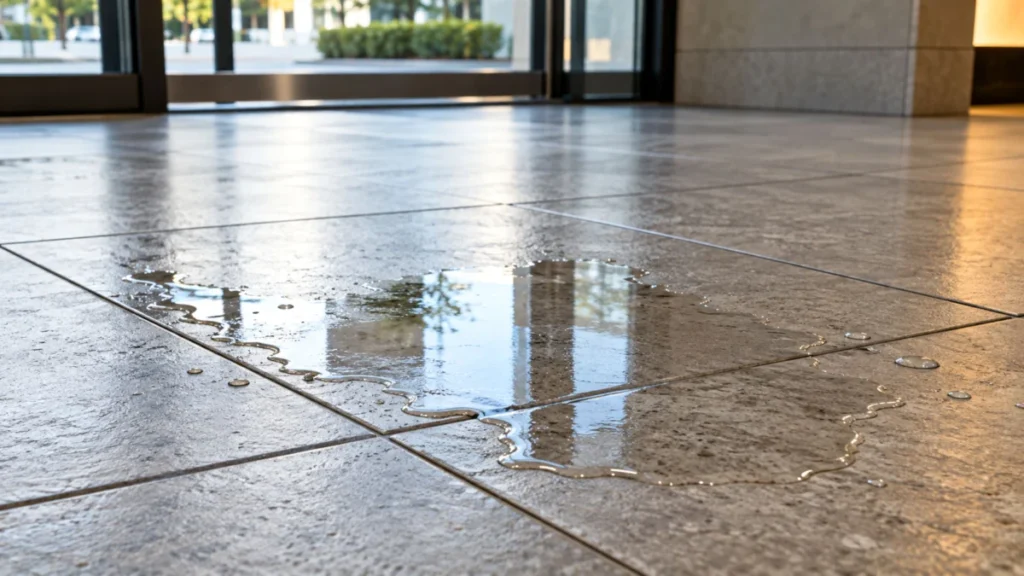
Slip and fall accidents are more than just unfortunate incidents; they are complex legal events that often hinge on the subtle distinction between an accident and an act of negligence. Whether occurring in a bustling grocery store, a high-end corporate lobby, or a residential apartment complex, these accidents frequently result in life-altering injuries. To successfully pursue a claim, an injured party must navigate the rigorous demands of premises liability law—specifically, the burden of proving that a property owner knew, or should have known, about a dangerous condition.
Understanding the mechanisms of "actual" and "constructive" notice is essential for anyone seeking justice after a fall. This article explores the legal landscape of premises liability, with a specific focus on California’s standards, the evidentiary requirements for establishing negligence, and the critical steps victims must take to protect their rights.
Main Facts: The Burden of Proof in Premises Liability
In the eyes of the law, a property owner is not a guarantor of a visitor’s safety. An owner is not automatically liable simply because an accident occurred on their premises. Instead, the core of a slip and fall claim lies in the concept of negligence. To hold an owner accountable, the plaintiff must prove that the owner failed to exercise "reasonable care" in maintaining the property.
The linchpin of this argument is notice. A plaintiff must demonstrate that the property owner had either actual or constructive notice of the hazard that caused the fall. Without this evidence, the court may view the hazard as an "unforeseen" condition, absolving the owner of liability.
Actual vs. Constructive Notice
- Actual Notice: This is the most straightforward form of proof. It occurs when a property owner or their employee has direct knowledge of a hazard. This could manifest as a customer alerting a clerk to a spill, an employee witnessing a leaking pipe, or an internal log entry documenting a known structural defect.
- Constructive Notice: This is a more nuanced legal standard. It applies when a hazard has existed for such a duration that a "reasonably prudent" property owner, exercising proper oversight, should have discovered and remedied the issue. The court looks for evidence of how long the puddle, debris, or damaged flooring had been present before the incident.
Chronology: The Critical Timeline of a Slip and Fall
The moments immediately following a fall are the most vital in the lifecycle of a potential legal claim. Understanding the sequence of events is crucial for preserving the integrity of a case.
- The Incident: The injury occurs. In these initial seconds, the focus is on personal safety and immediate medical stabilization.
- Documentation (Minutes 0–60): As soon as the victim is safe, capturing the scene is paramount. This includes taking photographs of the hazard—noting the depth of a puddle, the presence of loose mats, or the absence of "wet floor" signage.
- Reporting (Hours 0–24): The accident must be reported to the property manager or business owner. Requesting a formal incident report is a critical step that creates a paper trail, ensuring the event is acknowledged by the entity in control of the property.
- Preservation of Evidence (Days 1–7): Legal counsel is often required to issue a "spoliation letter," which legally mandates that the property owner preserve surveillance footage and inspection logs. This is essential because security footage is frequently overwritten on a rolling cycle.
- Investigation and Discovery (Months 1–12): During this phase, attorneys evaluate inspection records, employee statements, and expert testimony to build the argument for constructive or actual notice.
Supporting Data: Evidence That Wins Cases
To bridge the gap between an injury and a successful claim, victims must gather a robust body of evidence. Reliance on memory alone is rarely sufficient.
Essential Documentation Categories
- Surveillance Footage: Video evidence is the "gold standard." It can show the exact moment a spill occurred, the duration it sat unattended, and whether employees walked past it without taking corrective action.
- Inspection and Maintenance Logs: Businesses are generally required to perform routine inspections. If a grocery store’s log shows that the floor was not inspected for several hours, this supports a claim of negligence.
- Employee Statements: Statements made by staff immediately following an accident can be highly persuasive. Admissions like "I knew that pipe was leaking" or "We have been waiting for maintenance to fix this tile" serve as powerful evidence of actual notice.
- Previous Complaints: If other patrons have complained about the same hazard previously, it establishes that the owner had notice of a recurring danger, increasing the likelihood of a successful claim.
Official Responses: California Law and Property Responsibility
In California, the legal framework governing these cases is anchored in California Civil Code § 1714. This statute establishes the foundational principle that everyone is responsible for an injury occasioned to another by their want of ordinary care or skill in the management of their property.
The Standard of "Reasonable Care"
California courts evaluate whether the property owner acted as a reasonably prudent person would have under similar circumstances. This does not require an owner to eliminate every possible risk, but it does require them to:
- Conduct periodic and meaningful inspections of the premises.
- Provide adequate warnings (e.g., wet floor signs, caution tape) for known hazards.
- Effect repairs within a reasonable timeframe.
In cases involving "slip-and-fall," the court will often ask: What was the owner’s inspection policy? Was it followed? If a store has a policy to sweep the aisles every 30 minutes, but logs show they failed to do so for two hours, that deviation from policy is compelling evidence of a failure in duty.
Implications: Strategic Steps for Victims
The implications of a slip and fall injury can be profound, ranging from mounting medical bills to long-term loss of income. To protect one’s position, victims must approach the aftermath with tactical precision.
Steps to Take Post-Accident:
- Prioritize Health: Never delay medical attention. Even if symptoms seem minor, internal injuries or delayed trauma can manifest days later. A medical record acts as a vital link between the accident and the injury.
- Avoid Premature Admissions: In the confusion of the moment, avoid saying "I didn’t see it" or "It was my fault." These statements can be used to argue contributory negligence, potentially reducing the compensation you might otherwise receive.
- Witness Identification: If bystanders are present, collect their contact information. A neutral third-party witness who can verify the state of the floor or the lack of warning signs is invaluable.
- Preserve the Physical Evidence: If possible, save the shoes or clothing worn at the time of the fall. They can sometimes reveal the nature of the substance on the floor or the friction coefficient of the surface.
- Consult Experienced Counsel: Premises liability law is highly technical. A qualified attorney understands how to navigate the complexities of notice, how to depose employees, and how to effectively challenge the property owner’s defenses.
Final Takeaways: The Path Forward
Proving a property owner knew about a dangerous condition is a rigorous process, but it is the cornerstone of justice for the injured. By focusing on the preservation of surveillance, the collection of witness testimony, and the thorough review of maintenance records, victims can build a compelling case.
Remember: the burden rests on the injured to prove that the property owner had the opportunity to prevent the harm. By documenting the scene, reporting the incident, and seeking expert legal guidance early, you transform your narrative from a simple account of an accident into a well-supported legal claim. In the wake of a fall, evidence is your strongest ally—collect it, preserve it, and use it to hold negligent parties accountable.