

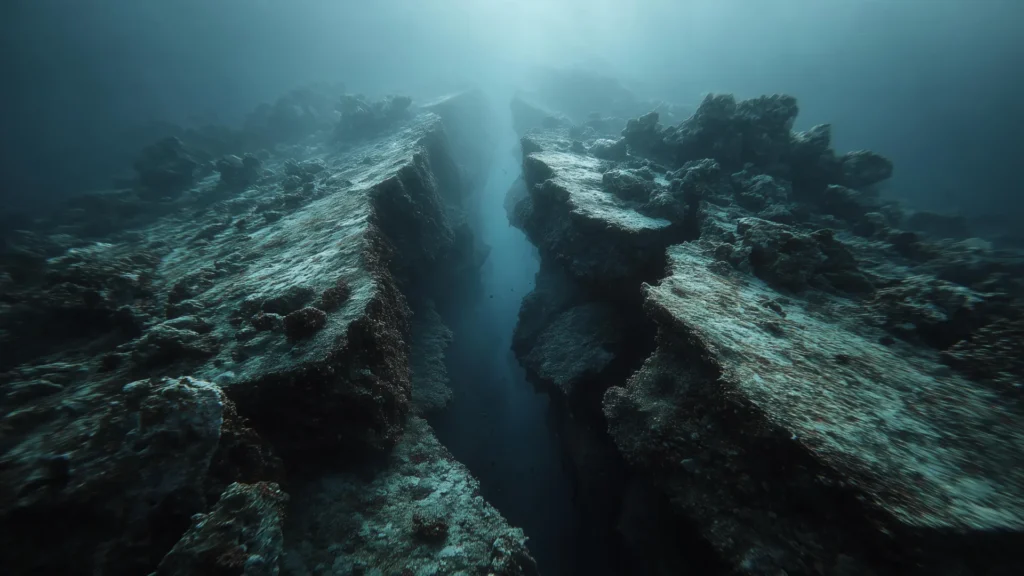
In the silent, crushing depths beneath the Pacific Northwest, a geological drama of continental proportions is unfolding. Scientists have captured an unprecedented, high-definition glimpse into the mechanics of a subduction zone—a massive tectonic boundary where one plate is forced beneath another—as it begins to fundamentally dismantle itself.
The findings, recently published in the journal Science Advances, provide the first clear evidence of a mature subduction zone in the throes of a "piecewise" death. For decades, geologists have understood the beginning of these systems, but the process of their termination has remained largely theoretical. By utilizing advanced seismic imaging, researchers have revealed that the Cascadia subduction zone is not simply shutting down in one singular, catastrophic event, but is instead tearing apart in a slow-motion, multi-million-year process of fragmentation.
The Life and Death of a Tectonic Engine
Subduction is the primary mechanism that reshapes the Earth’s surface. It is the engine that drives the recycling of oceanic crust into the Earth’s mantle, fueling volcanic arcs, mountain building, and the movement of continents. These zones are responsible for the planet’s most powerful seismic events and most explosive volcanic activity.
However, these systems are not eternal. If they were, the Earth would have long ago consumed its oceans and compressed its continents into a singular, static mass. The question that has plagued geologists for years is how these gargantuan tectonic engines eventually grind to a halt.
"Getting a subduction zone started is like trying to push a train uphill—it takes a huge effort," explains Brandon Shuck, a geologist at Louisiana State University and lead author of the study. "But once it’s moving, it’s like the train is racing downhill, impossible to stop. Ending it requires something dramatic—basically, a train wreck."
The current research suggests that the "train wreck" in Cascadia is far more nuanced than a sudden, total collapse. Instead, it is a gradual, episodic unraveling.
Chronology of a Tectonic Breakup
The discovery was made possible by the 2021 Cascadia Seismic Imaging Experiment (CASIE21), a National Science Foundation-funded project. During this expedition, researchers aboard a research vessel deployed a 15-kilometer-long streamer—an array of underwater listening instruments—to record the echoes of sound waves fired into the seafloor.
The technique, analogous to medical ultrasound, allowed the team to map the subsurface structures of the Juan de Fuca and Explorer plates as they descend beneath the North American plate off the coast of Vancouver Island. The resulting images were striking: they revealed deep-seated faults and massive fractures cutting through the descending slab.
The Mechanics of Fragmentation
The seismic data suggests that the plate is tearing apart into smaller, semi-independent sections known as microplates. This process is not instantaneous; it occurs over millions of years. The researchers identified a massive 75-kilometer tear, featuring an offset where a portion of the plate has plummeted five kilometers downward relative to the rest of the slab.
This "piecewise" termination is facilitated by transform boundaries—faults where tectonic sections grind sideways against one another. These boundaries act as geological shears, slicing through the sinking plate and isolating fragments. Once a section is severed, it loses the gravitational pull that helps drive the subduction process. As these "cars" are detached from the "runaway train," the overall momentum of the subduction system eventually fades.
Supporting Data: Seismic Silence as a Diagnostic Tool
One of the most compelling pieces of evidence for this ongoing breakup comes from the study of earthquake activity along the identified tears. In a healthy subduction zone, the grinding of rock produces constant, measurable seismic stress.
However, the researchers observed a distinct pattern: some segments of the 75-kilometer tear remain seismically active, while others have fallen into a strange, profound silence. This silence is a critical diagnostic indicator.
"Once a piece has completely broken off, it no longer produces earthquakes because the rocks aren’t stuck together anymore," Shuck notes. The absence of earthquakes along these segments suggests that the disconnection is already complete in those specific areas, and that the detached region is slowly expanding. This pattern confirms that the plate is failing in discrete, manageable episodes rather than as a monolithic slab.
Official Perspectives and Expert Analysis
The scientific community has lauded the study for bridging a critical gap in our understanding of Earth’s long-term evolution. By observing the "dying" process in real-time, researchers are finally able to make sense of "fossil" evidence found elsewhere in the world.
For example, off the coast of Baja California, geologists have long studied the remnants of the Farallon plate, a vast ancient plate that once dominated the eastern Pacific. The fragmented microplates and unusual volcanic signatures found there have long been a puzzle. The Cascadia observations provide the missing link, suggesting that the Farallon plate did not simply vanish, but rather underwent a similar, gradual unraveling.
The implications for volcanic activity are equally significant. As parts of a plate tear away, they create "slab windows"—gaps that allow mantle material to rise toward the surface. This influx of heat and mantle rock can radically alter magma production, leading to shifts in volcanic behavior that match the episodic nature of the plate’s destruction.
Implications: A New Lens on Earthquake Hazards
Perhaps the most pressing question for those living in the Pacific Northwest is whether this tectonic fracturing impacts the immediate seismic risk. The Cascadia subduction zone is a known epicenter for massive, megathrust earthquakes and tsunamis.
The researchers are quick to temper concerns regarding the short-term impact of their findings. The tectonic unraveling observed off the coast of Vancouver Island is occurring on a geological timescale—millions of years—rather than a human one.
Does the Tear Alter Risk?
While the discovery does not significantly change the current earthquake hazard profile for the region, it does provide critical new data for seismic modeling. Understanding whether a rupture could propagate across these newly identified tears, or whether the fractured geometry might act as a "break" that limits a rupture’s path, is a vital component of future hazard assessments.
By incorporating these complex structural features into earthquake simulations, geologists hope to refine their predictions of how a future "Big One" might behave. It is a shift in perspective: instead of viewing the subduction zone as a uniform, monolithic threat, scientists are now beginning to see it as a complex, heterogeneous system with internal flaws and individual moving parts.
Conclusion: Watching History in Real-Time
The story of the Cascadia subduction zone is a testament to the dynamic, ever-changing nature of the Earth. While human history is measured in generations, the history of our planet is measured in the slow, grinding shifts of plates and the quiet, deliberate dismantling of geological structures.
For geologists, this study is a rare window into a process that typically takes millions of years to complete. By witnessing the "derailment" of the Juan de Fuca plate, researchers are gaining a deeper understanding of the life cycle of the very ground we stand on. It serves as a reminder that the surface of the Earth is not a fixed foundation, but a fluid, evolving puzzle, constantly being built and broken down in a cycle that has defined our planet for billions of years.
As we look toward the future, the work in Cascadia will undoubtedly serve as the benchmark for studying other dying tectonic systems, helping us piece together the history of our world, one fragment at a time.



