

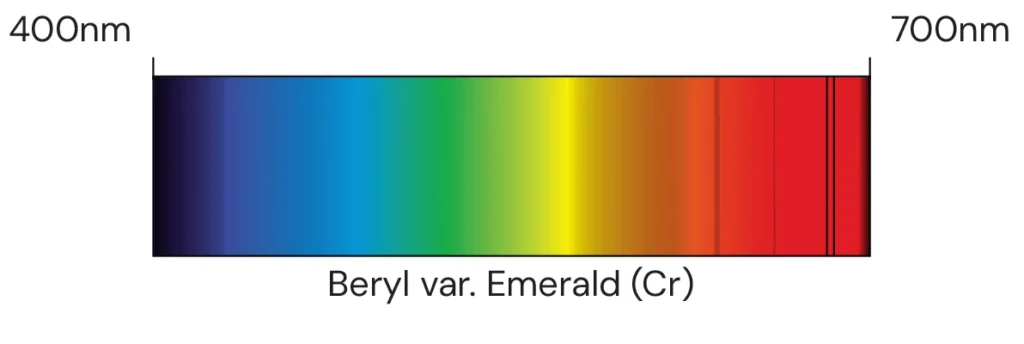
The intricate world of gemstones, long cherished for their beauty and rarity, is now being illuminated by a powerful scientific lens: spectroscopy. This sophisticated technique, which analyzes the interaction of light with matter, has become an indispensable tool for gemmologists, offering unparalleled insights into a gemstone’s identity, origin, and even its history of treatment.
Once a realm solely reliant on visual observation and basic physical tests, gemmology has been fundamentally transformed by the advent of spectroscopy. From its historical roots in understanding the visible spectrum to the cutting-edge applications of infrared, UV-Vis-NIR, Raman, and X-ray spectroscopy, this scientific discipline provides a rigorous, objective method for distinguishing natural from synthetic stones, identifying treatments, and tracing a gem’s geological journey. As gemstone synthesis and treatment methods grow increasingly complex, the role of spectroscopy in ensuring transparency and trust within the industry becomes ever more critical.
The Dawn of Spectral Understanding: From Newton to Fraunhofer
The journey of spectroscopy began not in a gemological laboratory, but with fundamental scientific inquiry into the nature of light. In 1672, Sir Isaac Newton’s groundbreaking experiments with prisms revealed the visible spectrum, demonstrating that white light is composed of a rainbow of colors. This fundamental observation laid the groundwork for understanding how different materials interact with light.
The 19th century saw significant advancements that brought spectroscopy closer to practical applications. Joseph Fraunhofer, in the early 1800s, refined the spectroscope by incorporating a narrow slit to control the light source and a diffraction grating to precisely separate spectral colors. His observation of dark lines within the solar spectrum—now known as Fraunhofer lines—was a pivotal moment. These lines, caused by the absorption of specific wavelengths of light by elements in the sun’s atmosphere, provided a crucial insight: different elements leave unique spectral fingerprints. This principle, initially applied to understanding the composition of stars, would later prove invaluable for gemmologists. The precise positioning and characteristics of these absorption lines became vital for calibrating and understanding the data generated by gemological spectroscopes.
A Spectrum of Discovery: The Historical Integration of Spectroscopy in Gemmology
The application of spectroscopy to gemstones began to gain traction in the mid-19th century. By the 1860s, researchers were actively recording the absorption spectra of various gemstones. Early seminal works, such as A.H. Church’s "Precious Stones," published a few years later, documented the spectral signatures of minerals like zircon and almandine. These early investigations marked the beginning of a paradigm shift, moving gem identification from subjective assessment to objective scientific analysis.
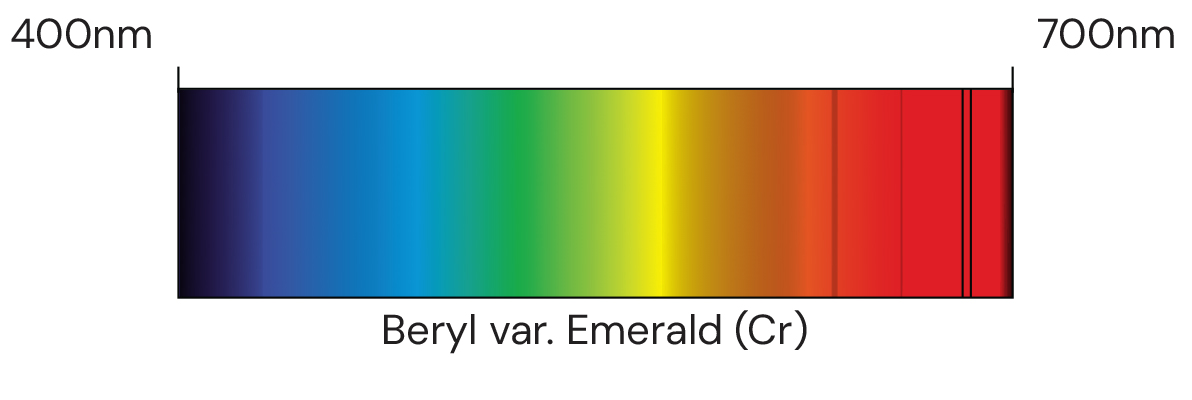
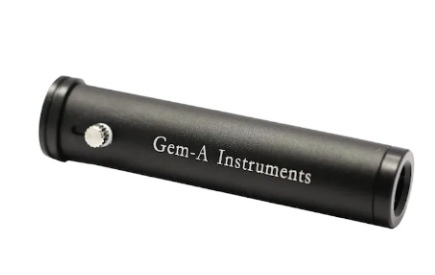
The development of the hand-held spectroscope in the 1930s, significantly advanced by the Gem Testing Laboratory in London, was a watershed moment for practical gemmology. This portable instrument, alongside the refractometer and microscope, quickly became a cornerstone of the gemmologist’s toolkit. Its utility lay in its ability to reveal the subtle absorption and emission bands within a gemstone’s spectrum. The position, width, and intensity of these bands are remarkably consistent for specific gem materials, serving as reliable indicators of a gemstone’s identity. Crucially, these spectral patterns can also offer clues about a stone’s origin—whether it is natural or synthetic—and whether it has undergone color treatments.
Illuminating the Invisible: Expanding the Spectroscopic Toolkit
While visible light spectroscopy provided initial insights, the true power of this technique lies in its ability to probe the interactions of gemstones with a much broader range of electromagnetic radiation, including those invisible to the human eye. The widespread adoption of these more advanced spectroscopic methods, however, was contingent on significant technological advancements and the commercial availability of sophisticated instruments.
The interaction of infrared (IR) radiation with matter, for instance, was recognized in the early 1900s. However, practical IR spectrometers only became widely available in the 1940s. Similarly, the Raman effect, a phenomenon involving inelastic scattering of light, was discovered in the late 1920s. It wasn’t until the invention and development of lasers in the 1960s that Raman spectroscopy became a viable and powerful tool for gemological analysis. These technological leaps enabled gemmologists to access a wealth of information hidden beyond the visible spectrum, unlocking new levels of diagnostic capability.
FTIR Spectroscopy: Unraveling the Molecular Fingerprint
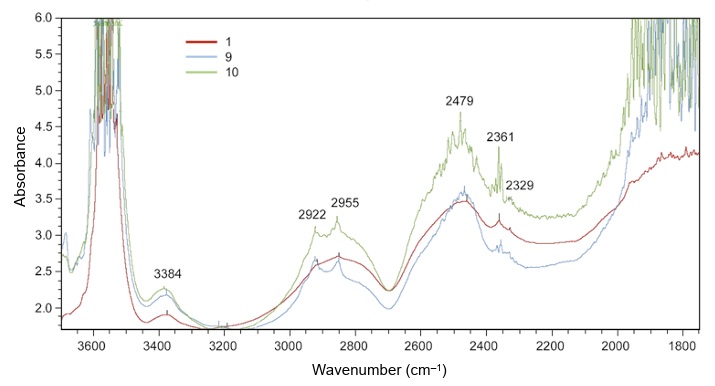
Fourier Transform Infrared (FTIR) spectroscopy has emerged as a cornerstone of modern gem identification. This technique measures the absorption of infrared radiation across a range of wavelengths, typically expressed in wavenumbers (the reciprocal of wavelength, indicating the number of waves per centimeter). The IR spectrum, extending from approximately 700 nanometers to 1 millimeter, provides a detailed molecular fingerprint of a gemstone.
The absorption patterns observed in FTIR spectra are invaluable for several key applications:
- Gem Material Identification: Each gemstone species possesses a unique FTIR spectrum, allowing for definitive identification and differentiation from similar-looking stones.
- Natural vs. Synthetic Distinction: FTIR can effectively distinguish between natural and synthetic gemstones by revealing differences in their molecular structure and impurity content. For example, the presence and concentration of specific elements or molecules, such as boron or nitrogen in diamonds, leave distinct spectral signatures.
- Detection of Treatments and Coatings: FTIR is adept at identifying a variety of treatments, including the resin impregnation of jadeite, which typically produces characteristic IR absorption peaks that are difficult to detect by other standard tests. It can also reveal the presence of surface coatings or fillings.
- Diamond Typing: FTIR is critical for classifying diamonds into Type I and Type II categories. Type IIb diamonds, naturally colored blue and containing boron, exhibit distinct spectral features absent in Type I diamonds, which contain nitrogen. This classification is vital, as most synthetic diamonds are Type IIb, while natural diamonds are predominantly Type I. Differences in nitrogen content (measured in parts per million, or ppm) between natural and synthetic stones can further aid in their separation.
The example of naturally colored blue diamonds illustrates the power of FTIR. A naturally colored blue diamond is almost invariably Type IIb, characterized by the presence of boron and the absence of detectable nitrogen. In contrast, a near-white Type I diamond, containing significant amounts of nitrogen, might be accepted as natural. However, comparable synthetic stones often contain much less than five ppm of nitrogen, a distinction readily revealed by FTIR analysis.
UV-Vis-NIR Spectroscopy: Probing Color and Origin
Ultraviolet-Visible-Near Infrared (UV-Vis-NIR) spectroscopy probes gemstones across a broader spectral range, from short-wave ultraviolet light to approximately one to a few thousand nanometers. This technique is particularly useful for understanding the causes of color in gemstones and for identifying trace elements that can indicate origin.
In diamonds, for instance, specific absorption bands are associated with the presence of impurities and their aggregation states. An absorption at 415 nm, attributed to nitrogen aggregates, can indicate a natural diamond. Conversely, absorptions at 484 nm and 884 nm, linked to nickel, and at 737 nm, related to silicon, are more commonly observed in synthetic diamonds.
UV-Vis-NIR spectroscopy also plays a crucial role in tracing the geographical origin of gemstones like sapphires and emeralds. By analyzing the relative proportions of trace elements such as chromium and iron, gemmologists can differentiate sapphires originating from igneous versus sedimentary rocks. Similarly, variations in chromium and iron content can help pinpoint the specific locality from which emeralds were mined. The presence of copper peaks in the UV-Vis-NIR spectrum is a definitive indicator of valuable Paraiba tourmalines, distinguishing them from less expensive, visually similar stones that lack this element.
X-ray Diffractometry and Fluorescence: Peering into Atomic Structures
X-rays, with their short wavelengths, interact with the atomic structure of gemstones in a unique way. X-ray diffractometers measure how X-rays are scattered by the regular arrangement of atoms within a crystal lattice. This scattering pattern is highly sensitive to the distances between atomic layers and the symmetry of the crystal structure, providing a definitive method for mineral identification.
The applications of X-ray diffractometry in gemmology are profound:
- Mineral Species Identification: Even for polycrystalline aggregates like rocks, X-ray diffraction can separate and identify individual mineral species based on their unique atomic structures.
- Crystal Structure Analysis: The atomic structures and symmetry of single crystals can be meticulously investigated. This is particularly important when studying newly discovered minerals, as exemplified by the initial description of taaffeite, a mineral first identified as a fashioned gemstone.
Beyond diffraction, X-rays can also interact with gemstones through X-ray fluorescence (XRF). When high-energy X-rays strike an atom, they can dislodge electrons from its inner shells. Electrons from outer shells then cascade down to fill these vacancies, emitting X-ray photons with energies characteristic of the specific element. A detector records these emissions, providing a partial elemental analysis of the material.
XRF is a powerful tool for:
- Identifying Stones and Coatings: It can accurately identify the elemental composition of gemstones and any applied coatings.
- Distinguishing Natural from Synthetic Stones: By detecting the presence of trace elements that are more typical of synthetic materials, such as nickel or silicon in diamonds, XRF can aid in their separation from natural counterparts.
- Origin Determination: The precise proportions of trace elements like chromium, vanadium, and iron can help distinguish between natural and synthetic rubies, and potentially provide clues about the origin of other colored gemstones.
Raman Spectroscopy: Unveiling Vibrational Signatures
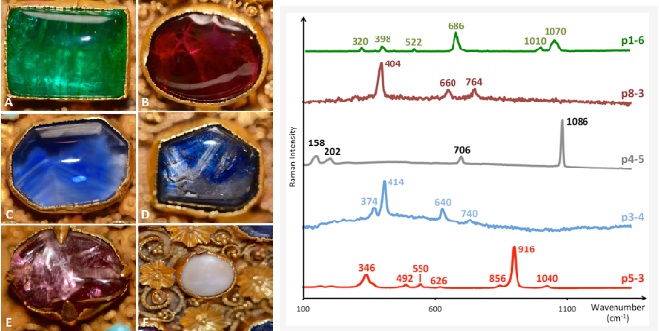
Raman spectroscopy utilizes the phenomenon of inelastic light scattering, where a small portion of the incident light is scattered at a different wavelength. This shift in wavelength, known as the Raman shift, is directly related to the vibrational modes of the molecules within the gemstone. The resulting series of peaks, displayed on a chart, forms a diagnostic fingerprint that can be compared against extensive databases for material identification.
While Raman spectroscopy is excellent for identifying the mineral species of a gemstone, it is often less effective at distinguishing between natural and synthetic versions of the same material. However, its capabilities extend to:
- Inclusion Identification: Sophisticated Raman instruments can identify microscopic inclusions within a gemstone, even if they are not at the surface, providing valuable clues about its formation history.
- Diamond Analysis: Raman spectroscopy is particularly useful for diamonds. The technique’s sensitivity is enhanced at low temperatures, making it effective after cooling diamonds with liquid nitrogen. This process, which diamonds can typically withstand, can improve the detection of defects.
- Detecting Origin and Treatment: By identifying subtle defects and their concentrations, Raman spectroscopy can provide evidence of natural origin or synthetic production. It can also reveal evidence of treatments like high-pressure, high-temperature (HPHT) color enhancement, which may be difficult to confirm through other methods.
Advanced Spectroscopy for Precision Gemmology
The relentless evolution of gemstone synthesis and treatment techniques necessitates continuous advancements in analytical instrumentation. While many spectroscopic methods are non-destructive, some cutting-edge techniques involve the removal of minute amounts of material from the gemstone’s surface. This process, creating a shallow pit comparable in size to a human hair, is justified by the significant value premium placed on natural stones and those from specific, prized localities.
The material vaporized from the gem’s surface is then analyzed by sophisticated spectrometers to perform elemental and isotopic analyses. By meticulously comparing these detailed analyses with extensive databases, gemmologists can gain compelling evidence of a gemstone’s geographical origin, offering an unprecedented level of insight into its provenance.
The Enduring Significance and Future of Spectroscopy in Gemmology
Spectroscopy has been a transformative force in gemmology for over a century. Its ability to provide objective, reproducible data has elevated the field, fostering greater transparency and trust within the global gem and jewelry market. As gemmologists and researchers continue to push the boundaries of what is possible in gemstone creation and alteration, the development of even more sophisticated spectroscopic instruments and analytical techniques will be paramount.
The ongoing advancements in spectroscopy promise to equip gemmologists with the tools they need to tackle the increasingly complex challenges of gemstone identification and authentication in the future, ensuring that the beauty and value of these natural treasures are accurately understood and preserved.



