

The global art market is currently navigating a period of significant structural transformation, marked by high-profile personnel shifts, a recalibration of gallery rosters, and the emergence of innovative commercial models that blur the lines between hospitality and high-stakes dealing. From the strategic expansion of advisory firms in New York to the recognition of "changemakers" in West Africa and Bhutan, the industry is witnessing a concerted effort to bridge the gap between traditional gatekeeping and a more globalized, multi-disciplinary future.
This report examines the recent wave of industry moves, the distribution of prestigious awards, and the evolving strategies of major auction houses and institutions as they prepare for the 2026–2027 season.
I. Main Facts: A Season of Strategic Realignment
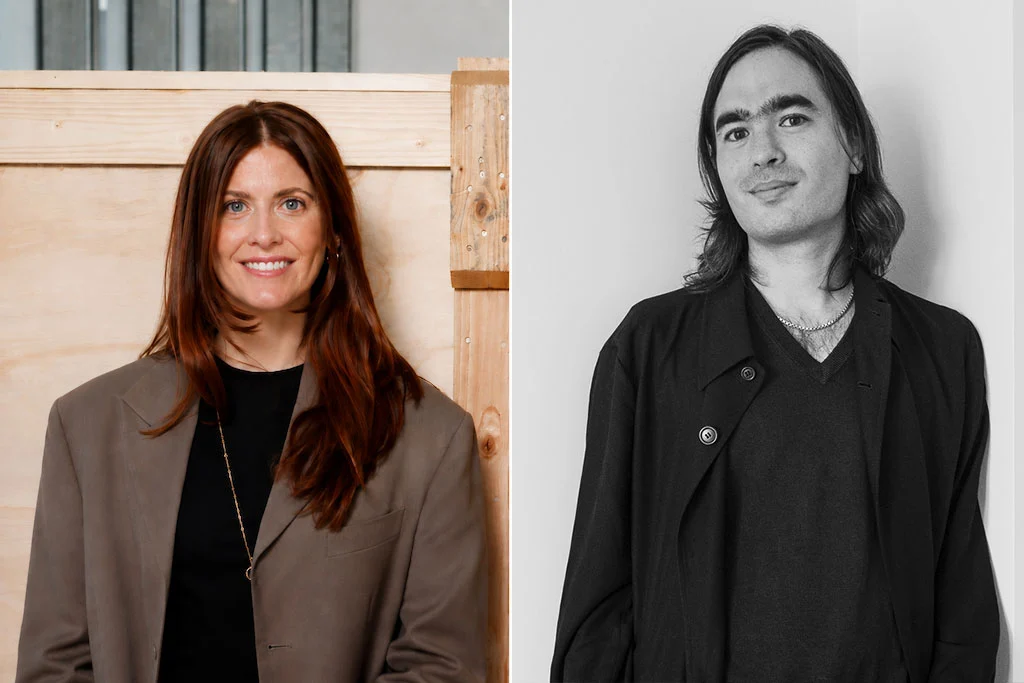
The primary headlines of this cycle are dominated by the migration of veteran talent from blue-chip galleries to advisory roles and partnership positions. Most notably, Danielle Forest Brandi, a cornerstone of Pace Gallery’s sales team for nearly a decade, has transitioned to the advisory sector, joining Beaumont Nathan. This move signals a growing trend where seasoned gallery directors leverage their deep collector networks within the more agile framework of global art advisories.
Simultaneously, the New York gallery Ortuzar has solidified its leadership by naming Kenta Murakami as Partner and recruiting Jeffrey Rowledge from Greene Naftali as Senior Director. These moves suggest a robust growth phase for mid-tier galleries that are successfully competing for top-tier talent and artist representation.
In the institutional and non-profit sectors, the announcement of the 2026 Prince Claus Impact Award and the Rubin Museum Himalayan Art Prize highlights a continued shift toward recognizing "peripheral" art hubs. The selection of kÄrî’kạchä seid’ou (Ghana) and Pem Lham (Bhutan) underscores a commitment to supporting artists who operate at the intersection of education, social change, and traditional craftsmanship.
On the commercial front, Sotheby’s has unveiled "Chez Sotheby’s," a $150 million "restaurant-cum-salon" in Paris. This project represents the pinnacle of the "lifestyle" approach to art sales, timing its opening with Art Basel Paris to capture the influx of high-net-worth individuals.
II. Chronology of Events and Upcoming Milestones
The current trajectory of the art world can be mapped through a series of appointments and exhibition schedules extending into the late 2020s:
- Late 2025 – October 2025: Sotheby’s launches "Chez Sotheby’s" on Rue de Rivoli, Paris, coinciding with Art Basel Paris. The space features masterpieces by Picasso, Matisse, and Bacon.
- September – October 2025: Choreographer Sarah Michelson begins her month-long residency at the Museum of Modern Art (MoMA) in New York, performing nowhere.
- January 2026: kÄrî’kạchä seid’ou officially receives the Prince Claus Impact Award in Amsterdam, coinciding with the blaxTARLINES collective’s feature in the Venice Biennale exhibition "In Minor Keys."
- 2026–2027 Academic Year: Professor Tina M. Campt begins her tenure as MoMA’s Scholar in Residence.
- June 2027: Sarah Ball’s first exhibition with Pilar Corrias opens in London, followed by an institutional solo show at the Holburne Museum in Bath.
- Spring 2028: Márcia Falcão is scheduled for her debut exhibition at Alexander Gray Associates in New York.
III. Supporting Data: Financial Stakes and Global Reach
The financial and geographic data underlying these moves reveal a market that is both consolidating wealth and diversifying its talent pool.
The $150 Million Salon
Sotheby’s "Chez Sotheby’s" is not merely a branding exercise; it is a high-density sales environment. The $150 million valuation of the works on-site—including blue-chip names like Gerhard Richter and Andy Warhol—reflects a strategic pivot. By placing these works in a curated, hospitality-driven setting with views of the Jardin des Tuileries, Sotheby’s is attempting to lower the intimidation factor of the traditional "white cube" or auction block, potentially increasing the velocity of private treaty sales.
Philanthropic Investment
The grants associated with recent awards provide essential capital for artists in developing art ecosystems:
- Prince Claus Impact Award: €50,000 ($57,300) granted to kÄrî’kạchä seid’ou.
- Rubin Museum Himalayan Art Prize: $30,000 granted to Pem Lham.
The Baltic-UK Pipeline
The Upė Foundation’s appointment of Diāna Mikāne and Martyna Ratnik as curatorial fellows marks a data point in the internationalization of the UK museum workforce. By placing Baltic curators in the Hayward Gallery and Camden Art Centre, the foundation is creating a formal bridge between Northern European perspectives and the London institutional circuit.
IV. Official Responses and Leadership Perspectives
The rhetoric surrounding these appointments emphasizes "expansion," "innovation," and "structural challenge."
On Advisory Expansion
Wentworth Beaumont, founding partner of Beaumont Nathan, framed the hiring of Danielle Forest Brandi as a cornerstone of the firm’s American strategy. "She will play an important role in our ambitions to expand in New York and across the wider US, working with collectors to develop and evolve their collections," Beaumont stated. This highlights a shift in the advisory role from mere procurement to long-term "collection evolution."
On Curatorial Philosophy
Pilar Corrias, commenting on the signing of Sarah Ball, noted the artist’s "distinct ability at distilling the essence of a person." This focus on psychological depth in portraiture reflects a broader market interest in figurative works that offer more than mere representation.
On the Critique of the Market
Perhaps the most poignant commentary came from Sarah Michelson during her MoMA residency. In an interview with The New York Times, she expressed a profound skepticism regarding how the art market consumes ephemeral work. "I think it’s really hard for dance not to be mediated in relationship to the value systems of other kinds of art," Michelson remarked. Her critique suggests that while institutions like MoMA are opening their doors to performance, the "value systems" remain rooted in object-based commerce, often "objectifying" the performer in the process.
V. Implications: The Future of the Art Ecosystem
The convergence of these developments points to several long-term implications for the industry.
1. The "Professionalization" of the Collector-Advisor Relationship
The move of high-level directors like Forest Brandi and Rowledge suggests that the "talent war" is no longer just between rival galleries, but between galleries and advisory firms. As collectors become more sophisticated, they increasingly seek independent counsel that is not tied to a specific gallery’s inventory. This could lead to a more transparent, but also more competitive, secondary market.
2. Institutional Decentralization
The Rubin Museum’s recognition of Pem Lham is particularly significant given the museum’s recent transition to a "museum without walls" model. By focusing on prizes and global partnerships rather than a central New York building, the Rubin is signaling a future where institutional influence is measured by the strength of its grants and its ability to spotlight artists in their home countries, such as Bhutan.
3. The Rise of West African Intellectual Leadership
The recognition of kÄrî’kạchä seid’ou by the Prince Claus Fund is a testament to the growing influence of the KNUST (Kwame Nkrumah University of Science and Technology) school in Ghana. Seid’ou’s "Emancipatory Art Teaching Project" is not just about making art; it is about "challenging the systems through which art is taught." This suggests that the next decade of "global" art will be shaped by pedagogical shifts originating in West Africa, rather than just the aesthetic trends of New York or London.
4. The Commercialization of Experience
Sotheby’s "Chez Sotheby’s" model may become a blueprint for the future of auction houses. As the digital transformation of auctions continues, the physical presence of the auction house must offer something the internet cannot: exclusive, high-end "experiences." The blending of a $150 million inventory with a luxury dining environment suggests that for the ultra-wealthy, art consumption is becoming inextricably linked to lifestyle and hospitality.
5. Academic Integration in Museums
The appointment of Tina M. Campt at MoMA signifies a deepening of the relationship between rigorous visual theory and museum curation. Campt’s work on the "Black Gaze" and the politics of race and memory provides a theoretical framework that museums are now desperate to integrate into their public-facing programming. This move suggests that MoMA is positioning itself not just as a repository of objects, but as a center for the "politics of seeing."
Conclusion
The art world of 2026 is one defined by a restless search for new structures. Whether it is through the migration of sales talent, the theoretical anchoring of museum residencies, or the radical rethinking of how art is sold in Paris, the industry is moving away from the rigid silos of the past. While challenges remain—specifically regarding the "objectification" of performance and the pressures of a market-fueled environment—the current influx of diverse talent and innovative commercial models suggests an ecosystem that is, if nothing else, remarkably adaptive.



