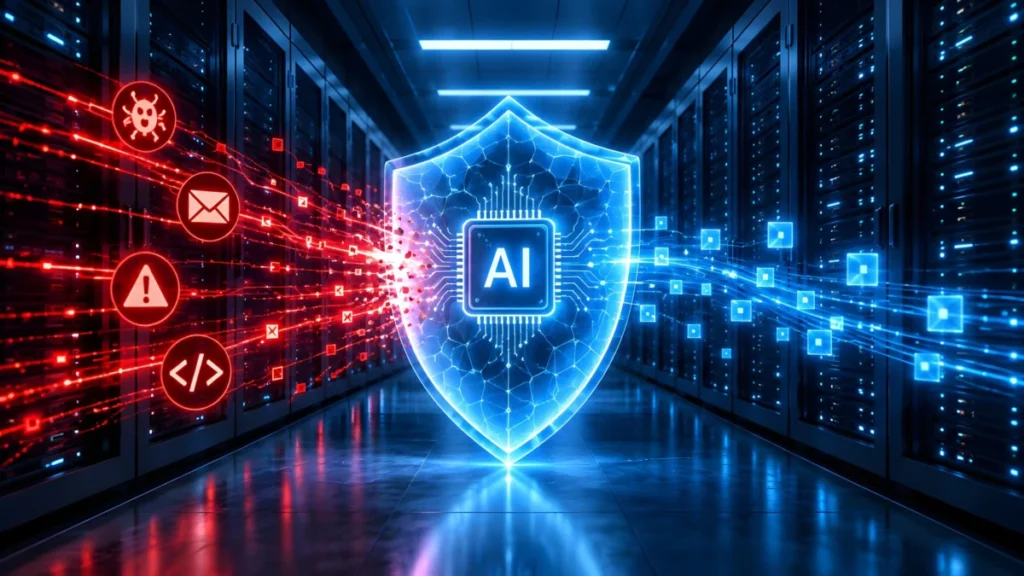
As artificial intelligence (AI) transitions from an experimental novelty to the backbone of modern enterprise infrastructure, a sobering reality has set in for the C-suite: the very tools driving efficiency and innovation are creating a massive, unaddressed attack surface. According to the PwC 2027 Global Digital Trust Insights survey, a significant majority of senior business and technology leaders admit they are fundamentally unprepared to defend their organizations against AI-specific cyber threats.
The findings, derived from an extensive study of 3,934 executives across 71 countries, paint a picture of a digital landscape evolving faster than the defensive frameworks designed to protect it. While organizations are pouring capital into AI adoption, the infrastructure to secure these models remains in its infancy.
Main Facts: The New Frontier of Cyber Insecurity
The core finding of the PwC report is stark: half of all surveyed leaders identify cyberattacks against AI systems as their single greatest point of vulnerability. This is not merely an IT concern; it is a strategic business risk that threatens brand reputation, data integrity, and operational continuity.
The threat landscape is characterized by three specific, highly sophisticated attack vectors that keep executives awake at night:
- Autonomous Botnets (53%): These are self-propagating, AI-driven scripts capable of executing large-scale, adaptive attacks. Unlike traditional botnets, which follow static commands, AI-enhanced botnets can observe defenses in real-time and alter their tactics to bypass traditional firewalls and intrusion detection systems.
- Adversarial Attacks (52%): These involve the manipulation of input data to trick AI models into making incorrect classifications or predictions. For instance, a self-driving car might be tricked by a physical sticker on a stop sign, or a fraud detection system might be fooled by carefully crafted financial data packets.
- Data Poisoning (52%): This is perhaps the most insidious threat. By introducing malicious or misleading data into an AI model’s training set, attackers can create "backdoors" that allow them to manipulate the model’s outputs later, often without the organization ever realizing the system has been compromised.
Chronology of a Crisis: How We Arrived Here
To understand the current state of panic, one must look at the rapid evolution of the cybersecurity timeline over the last decade.
2020–2022: The Adoption Surge
Following the global pandemic, organizations accelerated digital transformation efforts. Cloud migration became standard, and early-stage generative AI tools began to emerge. During this period, security focused heavily on perimeter defense and identity management. AI was largely seen as a black-box tool that sat outside the primary infrastructure.
2023–2024: The Generative AI Explosion
The release of large language models (LLMs) triggered a "gold rush" in AI deployment. Companies integrated AI into customer service, software development, and financial forecasting. However, security protocols lagged. The "move fast and break things" mentality of the tech sector began to permeate the enterprise, leaving the back door open for attackers.
2025–2026: The Weaponization Phase
As AI models became more ubiquitous, threat actors began utilizing the same tools to sharpen their own capabilities. Phishing campaigns became hyper-personalized, and malware began to self-mutate. The threat shifted from human hackers manually exploiting code to automated systems engaging in "machine-vs-machine" warfare.
2027: The Reality Check
The current data from PwC reflects a pivotal moment. The scale of the threat has finally hit the consciousness of the board of directors. Organizations are no longer asking if their AI can be hacked, but how badly they will be impacted when it inevitably occurs.
Supporting Data: By the Numbers
The PwC data serves as a barometer for global readiness, or lack thereof. When segmented by industry and region, the data suggests that no sector is immune to the "AI vulnerability gap."
- The Global Scope: With representation from 71 countries, the study confirms that AI threats are not isolated to Silicon Valley or financial hubs like London and New York. Developing economies, which are increasingly relying on AI for infrastructure management, report similar levels of anxiety.
- Preparedness Deficit: While 100% of surveyed organizations have some form of cyber strategy, only 28% report having a specialized "AI-specific" security strategy. This implies that nearly three-quarters of the global economy is attempting to secure cutting-edge AI with legacy cybersecurity tools—a mismatch that security experts compare to using a padlock to secure a digital vault.
- Investment Misalignment: Despite the fear, only 35% of respondents indicated that their cybersecurity budget for 2027 has been significantly adjusted to account for AI-specific threats. This indicates a massive gap between perception and resource allocation.
Official Responses: The C-Suite’s Dilemma
The response from corporate leadership has been a mix of caution and confusion. "The challenge," notes one anonymous Chief Information Security Officer (CISO) featured in broader industry discussions, "is that we are trying to defend a moving target. We don’t even have a standardized vocabulary for what an ‘AI breach’ looks like, let alone a standardized defense mechanism."
Regulatory bodies are also attempting to intervene. In the European Union, the AI Act is setting the stage for strict governance, requiring companies to conduct rigorous testing of high-risk AI systems. However, the PwC data suggests that companies are feeling the weight of these regulations more as a compliance burden than a security roadmap.
Industry associations are now calling for a "Security-by-Design" approach. This would mean that AI developers must integrate security audits into the training phase of models—essentially "vaccinating" the AI against data poisoning before it is ever deployed in a production environment.
Implications: A New Era of Risk Management
The implications of these findings are profound, affecting everything from market valuation to consumer trust.
1. The Erosion of Digital Trust
If a company’s AI system is poisoned or manipulated, the fallout is not just financial; it is existential. Consumers who rely on AI for health diagnostics, financial advice, or personalized shopping will quickly abandon platforms they perceive as insecure. "Digital trust" is becoming a primary competitive advantage, and those who cannot guarantee the integrity of their AI models will lose market share to more secure competitors.
2. Legal and Liability Headaches
As AI systems make decisions that impact human lives, the legal ramifications of a hack are set to skyrocket. If an autonomous botnet forces an AI to miscalculate a medical dosage or a credit risk, who is liable? The software vendor, the data provider, or the company that deployed it? We are entering a period of litigation that will likely define corporate law for the next generation.
3. The Rise of the "AI Security" Sector
Just as the cybersecurity boom of the 2000s created giants like Palo Alto Networks and CrowdStrike, the AI security crisis is spawning a new generation of vendors. Companies are now looking for "AI Red Teaming" services—hired hackers who attempt to break their own models—and automated monitoring tools that scan for adversarial patterns in real-time.
4. Strategic Retrenchment
We may see a short-term slowing of AI adoption. Organizations, realizing the depth of their vulnerability, are likely to pause the integration of AI into mission-critical systems until they can establish a robust security perimeter. This "strategic pause" is not a rejection of AI, but a necessary maturation process.
Conclusion: Bridging the Gap
The PwC 2027 survey is a wake-up call. It reveals that while the global business community has successfully integrated AI into its operational fabric, it has failed to weave a corresponding security fabric. The path forward requires a fundamental shift in mindset. Organizations must stop viewing cybersecurity as an IT problem and start viewing it as a core component of AI innovation.
To move from a state of vulnerability to resilience, leaders must prioritize:
- Visibility: Understanding where AI is used across the enterprise and what data it accesses.
- Red Teaming: Proactively testing models for adversarial weaknesses before they go live.
- Governance: Establishing clear, board-level accountability for AI security outcomes.
As we look toward the remainder of the decade, the winners will not necessarily be the companies with the most powerful AI, but those with the most secure, resilient, and trustworthy AI. The era of unchecked experimentation is over; the era of secure, hardened AI intelligence has begun. Whether organizations are prepared for this transition remains one of the most critical questions of the modern business age.