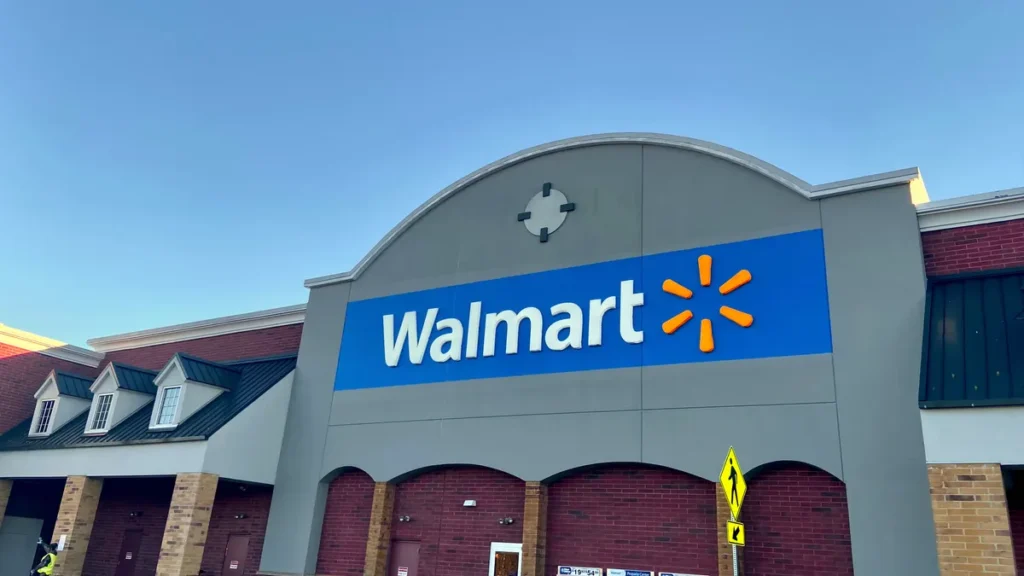
By Daphne Howland | Retail Dive
Updated: August 24, 2026
In a significant leadership shift at the world’s largest retailer, Walmart Chief Communications Officer Allyson Park has announced her departure from her executive role, effective September 1, 2026. Park, who has been a central figure in managing the retail giant’s public image and internal messaging over the past three years, will transition into a strategic advisory role to ensure a smooth handoff before officially departing the company on February 1, 2027.
The move marks the latest evolution in a multi-year restructuring effort at Walmart, a period characterized by major shifts in corporate governance, a heightened focus on digital transformation, and an aggressive pivot to capture a broader demographic of American shoppers.
The Core Facts: A Planned Transition
Park’s transition was confirmed to Retail Dive via email, shortly after a internal memo from Dan Bartlett, Walmart’s Executive Vice President of Corporate Affairs, began circulating among staff. According to Bartlett’s communication, the company has officially launched an external search to identify a successor capable of navigating the complex, high-stakes landscape of global retail communications.
During the interim period beginning in September, Park will serve as a senior advisor to Bartlett, focusing on continuity and the completion of key messaging initiatives. The memo also signaled a broader realignment of departmental responsibilities, with Bartlett noting that various roles and reporting lines within the corporate affairs team will be adjusted to maintain momentum as the search for a permanent replacement proceeds.
Chronology: A Tenure Defined by Change
Allyson Park’s three-year tenure at Walmart was not a quiet period. Joining the organization with a robust background in global communications—having served in senior capacities at Yum Brands, Mars, and Coca-Cola—Park arrived at a moment of profound organizational volatility.
The McMillon Era Ends
The most defining moment of Park’s tenure was undoubtedly the departure of long-time CEO Doug McMillon. For over a decade, McMillon had been the face of Walmart, overseeing its transition from a brick-and-mortar titan to an omnichannel powerhouse. His departure triggered a cascade of leadership changes, most notably the elevation of John Furner to the helm of Walmart U.S. and the subsequent reshuffling of the executive suite.
Navigating the Shakeup
Following Furner’s appointment, the company underwent a series of strategic pivots. Park was tasked with the unenviable job of maintaining stakeholder confidence while the new leadership team redefined the company’s identity. Throughout this period, she worked to ensure that the retail giant’s strategy—often criticized for its complexity—was translated into clear, actionable, and consistent messaging for both internal associates and external investors.
Supporting Data: Walmart’s Modern Retail Strategy
To understand why Park’s role was so critical, one must look at the macro-environment Walmart has operated in since 2023. The retailer has faced a unique set of challenges, ranging from inflationary pressures on its core customer base to the existential need to compete with Amazon in the e-commerce sector.
E-commerce and Omnichannel Dominance
Under the current leadership, Walmart has poured billions into its digital infrastructure. This includes:

- Logistics Automation: Massive investments in automated distribution centers to speed up fulfillment times.
- Digital Integration: The expansion of the Walmart+ subscription service, which has become a primary vehicle for driving recurring revenue and customer loyalty.
- Third-Party Marketplace: Aggressive growth in the company’s marketplace platform, which has expanded the variety of goods available to consumers far beyond traditional big-box inventory.
The "High-Income" Shift
Perhaps the most surprising trend of the last three years has been Walmart’s success in capturing higher-income households. As economic conditions tightened, inflation-weary shoppers from higher tax brackets increasingly flocked to Walmart for groceries and essentials. Park’s communications team played a vital role in rebranding the company’s value proposition to appeal to these new cohorts without alienating the legacy, price-sensitive base that built the brand.
Official Responses and Internal Sentiment
In his memo to employees, Dan Bartlett offered a glowing endorsement of Park’s contributions, emphasizing her role in modernizing the corporate communications function.
"Throughout this period, the team has worked to ensure our associates and external stakeholders hear clearly and consistently about our strategy, performance, and priorities," Bartlett stated. He specifically highlighted that under Park’s leadership, the communications department evolved into a more "digitally enabled" and "integrated" function, breaking down the silos that often plague organizations of Walmart’s massive scale.
Park’s influence, according to Bartlett, extended to talent acquisition within the communications department. By investing in new talent and realigning the team’s focus, she ensured that Walmart’s story was not just told, but "consistently echoed across diverse audiences," from Wall Street analysts to store-level associates in small-town America.
Implications: What Lies Ahead for the Retail Giant
The departure of a Chief Communications Officer during an ongoing leadership evolution carries significant weight. For the market, it raises questions about the stability of the current corporate strategy. However, internal sources suggest the change is part of a deliberate transition plan rather than a reactionary move.

The Search for a Successor
The decision to conduct an external search indicates that Walmart is looking for a fresh perspective, perhaps someone with a heavy emphasis on digital storytelling or crisis management in the age of social media. The new CCO will inherit a department that has been "digitally enabled," implying that the next leader must be comfortable managing data-driven communication strategies that sync with the company’s e-commerce and retail tech initiatives.
Maintaining Reputation
Walmart faces a perpetual PR challenge: as a massive employer and a dominant market force, it is constantly under the microscope regarding labor practices, environmental impact, and regulatory compliance. The outgoing communications structure—now more integrated with the business side—must remain robust enough to handle these pressures.
The Road to February
Between now and February 2027, Park’s advisory role will be crucial. Her mandate will likely involve ensuring that the "story" of Walmart’s transition under John Furner remains coherent during the leadership transition. With the retail environment remaining volatile—characterized by fluctuating consumer sentiment and a rapidly shifting competitive landscape—Walmart cannot afford a "quiet" period in its public relations office.
As the company looks toward the next chapter, the departure of Allyson Park serves as a reminder that even the most stable retail giants are in a state of constant flux. For Walmart, the goal remains the same: to remain the indispensable choice for the American consumer, regardless of their economic bracket, through a blend of low prices, high-tech convenience, and a brand narrative that continues to evolve with the times.
Disclaimer: This article is based on information provided in the original text and represents a synthesis of available corporate announcements. Future developments regarding the appointment of a new CCO will be monitored closely.