London’s skyline is dominated by the majestic, Christopher Wren-designed dome of St. Paul’s Cathedral—a structure that serves not only as the spiritual seat of the Bishop of London but as the symbolic heart of the United Kingdom. However, a seismic shift in the cathedral’s operational strategy has ignited a firestorm of controversy. St. Paul’s has announced a landmark four-year partnership with Fabric, the legendary Farringdon nightclub synonymous with the global electronic music scene, from high-octane drum and bass to subterranean techno.
While the cathedral’s administration frames the move as a bold evolution in community engagement, critics—including the descendants of national heroes—are condemning the alliance as a profound desecration of a hallowed site.
The Collision of Two Worlds: The Core Facts
The partnership, slated to span four years, intends to curate a series of live performances within the cathedral’s vast, resonant nave. For Fabric, the collaboration represents a pivot toward architectural heritage, utilizing the cathedral’s unique acoustics to host "world-class talent." For St. Paul’s, the partnership is a strategic attempt to bridge the gap between historic ecclesiastical traditions and contemporary urban culture.
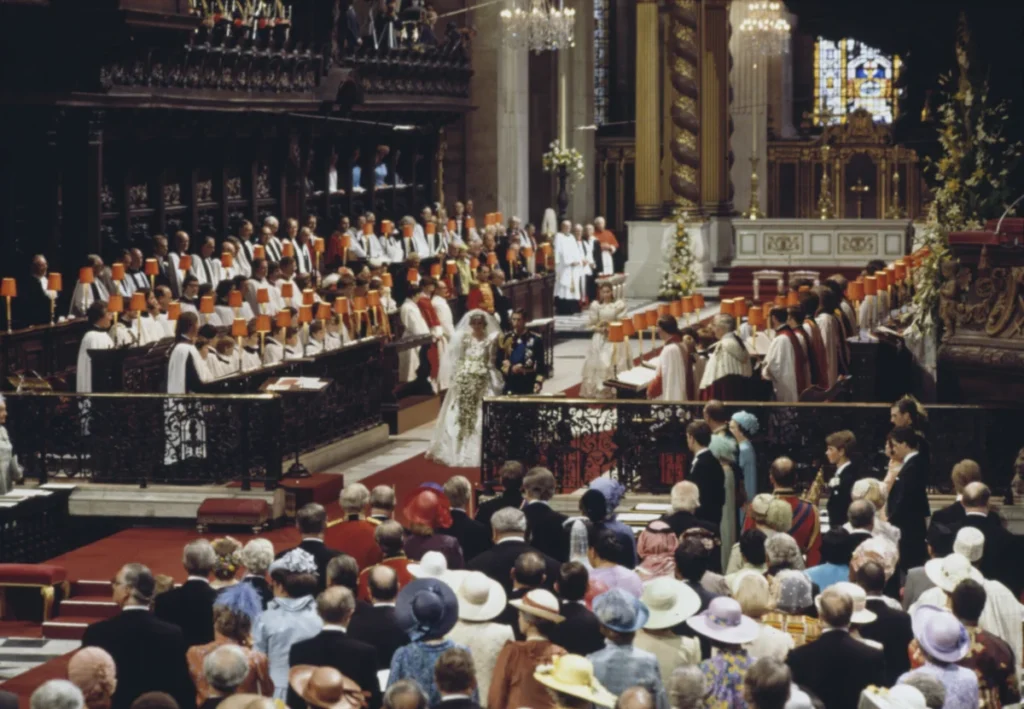
The cathedral has long functioned as a sanctuary for both worship and national reflection. It is the final resting place of luminaries such as the Duke of Wellington and Admiral Lord Horatio Nelson. It has hosted the state funerals of Winston Churchill and Margaret Thatcher, and it famously served as the backdrop for the 1981 wedding of King Charles III and Princess Diana. Beyond its role as a mausoleum and a seat of power, it is a repository of art, housing masterpieces ranging from the delicate 19th-century devotion of William Holman Hunt’s The Light of the World to the mid-century modern gravitas of Henry Moore’s Madonna and Child.
By inviting a club brand known for nocturnal revelry into this space, the cathedral has placed itself at the epicenter of a national debate regarding the commercialization of faith and the preservation of historical sanctity.
A Chronology of Artistic Evolution
To understand the current tension, one must look at the gradual shift in how St. Paul’s has utilized its nave over the last two years. The cathedral has been slowly softening its stance on non-liturgical performances, signaling a departure from purely traditional church music.
- 2024: The cathedral hosted a rare, intimate performance by the musician RY X, which was widely praised for its ethereal quality and technical precision.
- 2025: The momentum continued with a highly publicized performance by the "Godmother of Punk," Patti Smith. The success of this event provided the administrative team at St. Paul’s with the data—and the confidence—to pursue a more structured, long-term commercial partnership.
- 2026 (September): The formal announcement of the four-year partnership with Fabric was released. The cathedral characterized the move as a "visionary step" to diversify its audience.
- Late 2026: The immediate backlash began, led by the Nelson Society and traditionalist religious organizations, questioning the ethical boundaries of the Church of England’s commercial endeavors.
The Weight of History: The Nelson Society’s Stance
The most vocal opposition has originated from the family and supporters of Admiral Lord Horatio Nelson. Nelson, whose tomb sits directly beneath the dome, is viewed by many as the ultimate symbol of British resilience and sacrifice during the Napoleonic Wars.
Andy Smith, the press officer for the Nelson Society, was unequivocal in his condemnation. "He was the absolute hero of his age," Smith stated. "It is a profound insult to his memory, but to all those national heroes who are either buried or memorialized at St. Paul’s Cathedral."
The indignation reached a peak when Peregrine Hood, president of the Nelson Society and a direct descendant of the Admiral, issued a scathing critique in the Daily Telegraph. "Is nothing sacred anymore?" Hood asked. "What a sad reflection on where spiritual integrity and Christianity are today. St. Paul’s Cathedral positioning itself in this way is deeply depressing. This extends far beyond Nelson. St. Paul’s is one of the great sacred spaces of Christianity and a place of enormous significance to our national life and history."
For the Nelson family, the issue is not merely about a "one-off concert," but the institutional decision to align the cathedral’s brand with a nightclub industry that they feel represents a fundamental antithesis to the values of the Church.
Official Justifications: The Cathedral’s Perspective
In the face of mounting public pressure, the administration at St. Paul’s has maintained a steadfast, if conciliatory, position. Sandra Lynes Timbrell, the cathedral’s director of visitor engagement, has been the primary spokesperson for the initiative.
According to Timbrell, the partnership is designed to "showcase world-class talent and create unforgettable experiences for audiences." The cathedral is acutely aware of the challenges facing religious institutions in the 21st century: a decline in traditional church attendance and the soaring costs of maintaining an architectural marvel of such historical scale.
"We want to encourage people to discover and engage with this historic building in new and exciting ways," Timbrell stated. The administration believes that by utilizing the space for high-end cultural performances, they are not only generating necessary revenue for the preservation of the fabric of the building but also ensuring that the cathedral remains a "living, breathing" part of London’s cultural dialogue rather than a static, forgotten museum.
Implications: The Future of Sacred Spaces
The St. Paul’s-Fabric partnership is a microcosm of a much larger struggle facing the Church of England and other historic religious institutions globally. This struggle centers on three core questions:
1. The Financial Imperative vs. Moral Stewardship
Maintaining a structure like St. Paul’s costs millions of pounds annually. With the decline of traditional tithes and donations, cathedrals are increasingly forced to look toward commercial avenues—corporate events, film sets, and high-profile performances—to keep the lights on. The implication is clear: in the modern era, "sacred" status may no longer be enough to guarantee financial solvency.
2. The Definition of "Sacred Space"
The backlash against the partnership raises a philosophical question: Does an act, or a form of music, possess inherent sanctity? Critics argue that the electronic beats associated with Fabric are incompatible with the reverence required for a place of worship. Supporters, however, argue that music—regardless of genre—is a universal language that can elevate the human spirit within a grand setting. The debate is a clash between two different interpretations of what a cathedral is: a house of prayer, or a communal space for all humanity.
3. The Secularization of History
As institutions like the Church attempt to appeal to younger, more secular demographics, they risk alienating their traditional base. By partnering with a brand as "edgy" as Fabric, St. Paul’s is explicitly courting a demographic that may have never stepped foot in a church. However, if the cost of that outreach is the perceived "insult" to the memory of national figures like Nelson, the cathedral faces a precarious balancing act.
Conclusion
The partnership between St. Paul’s Cathedral and Fabric is more than a series of concerts; it is a profound indicator of a shifting cultural landscape. Whether this move is seen as a "desecration" or a "necessary evolution" depends largely on one’s view of the church’s role in modern society.
As the first events under the four-year agreement approach, the world will be watching to see how the cathedral manages this transition. Will the echo of synthesizers in the nave ultimately lead to a renewed interest in the cathedral, or will the institution find itself further alienated from the traditionalists who view it as the nation’s final, quiet sanctuary?
For now, the debate remains unresolved, proving that even in the heart of a secular, bustling metropolis, the walls of St. Paul’s still hold enough weight to command the nation’s attention—and its outrage. The outcome of this experiment will likely set a precedent for how historic cathedrals across the globe manage their survival in an increasingly commercialized and secular age.