Executive Summary: A Shifting Landscape of Maritime Threat
The global maritime industry has observed a significant, albeit complex, shift in piracy and armed robbery trends during the first nine months of 2024. According to the latest data released by the International Maritime Bureau (IMB), several traditional hotspots, including the Gulf of Guinea, the waters off Somalia, and the Singapore Straits, have recorded a decrease in the absolute number of reported incidents. However, this statistical decline masks persistent dangers to crew safety, navigational integrity, and regional stability.
While the headline figures suggest a cooling of maritime aggression, the persistence of kidnappings, hijackings, and boarding attempts indicates that maritime crime has not been eradicated; rather, it has evolved. As the shipping industry navigates an increasingly volatile geopolitical climate, the IMB’s report serves as both a cautiously optimistic benchmark and a stern warning: the threshold for vigilance remains as high as ever.
Chronology and Regional Analysis: 2024 in Review
The Gulf of Guinea: A Historic Low
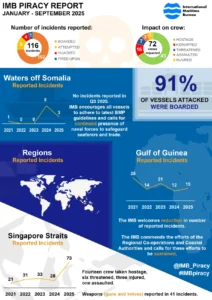
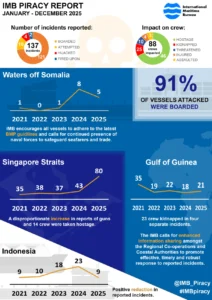
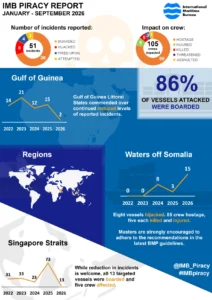
For the first nine months of 2024, the Gulf of Guinea—long considered the world’s most dangerous maritime corridor—reported only 12 incidents. This figure represents the lowest volume of recorded activity in the region since 1996. For over two decades, this area has been synonymous with sophisticated piracy networks, hostage-taking, and oil theft.
The decline in activity is attributed to a combination of enhanced naval patrols by regional powers, better coordination between coastal states, and the hardening of vessel security protocols. However, the qualitative nature of the remaining incidents remains harrowing. Despite the low frequency, the severity of these events is underscored by the kidnapping of 11 crew members and the taking of 21 individuals as hostages. These statistics serve as a grim reminder that even a diminished piracy footprint can inflict severe psychological and physical trauma on seafarers.
The Somali Basin and Gulf of Aden: Seasonal Lull or Strategic Pause?
The waters off the coast of Somalia and the Gulf of Aden have experienced a resurgence of concern throughout 2024. A total of eight incidents were recorded in these waters, including three vessel hijackings and two instances where vessels were fired upon.
However, the third quarter (July to September) saw a notable silence, with zero reported piracy incidents. Analysts suggest this is less a result of diminished intent by pirate syndicates and more a consequence of environmental factors, specifically the seasonal monsoons. The adverse weather conditions inherent to the monsoon season significantly hamper the ability of small skiffs to operate effectively in open waters. As the weather patterns shift toward more favorable conditions for small-craft navigation, the IMB and other maritime security agencies are bracing for a potential spike in activity.
The Singapore Straits: High-Volume, Low-Intensity Risks
The Singapore Straits, one of the world’s busiest and most vital shipping arteries, continues to record a high frequency of incidents, though the numbers have improved compared to previous years. There were 23 reported incidents in the first nine months of 2024, a notable decrease from the 33 incidents reported during the same period in 2023.
Despite the reduction, the nature of these incidents remains stubbornly consistent. Perpetrators successfully boarded the vessels in 96% of the reported cases. These are typically opportunistic, low-level armed robberies. While they rarely result in crew casualties on the scale seen in West Africa, the sheer frequency and the navigational complexity of the Singapore Straits present a unique, systemic risk to global supply chains.
Supporting Data and Statistical Context
The following table summarizes the reported incident trends for the first nine months of 2024, providing a comparative view against previous benchmarks:
| Region | Incidents (Jan–Sept 2024) | Key Incident Types |
|---|---|---|
| Gulf of Guinea | 12 | Kidnapping, Hostage-taking |
| Somalia/Gulf of Aden | 8 | Hijacking, Direct fire |
| Singapore Straits | 23 | Boarding/Robbery |
The data highlights a clear divergence in the nature of maritime crime. In the Gulf of Guinea, the focus remains on human targets (kidnapping for ransom). In the Singapore Straits, the focus is on theft of ship stores and engine parts. The Somali region, meanwhile, reflects a return to "traditional" maritime piracy, characterized by the intent to hijack large vessels for potential use as mother ships or for large-scale cargo theft.
Official Responses and Strategic Recommendations
The International Maritime Bureau’s Stance
The IMB has issued a formal call to action for all vessel operators. "While the drop in the number of reported incidents is welcome," the IMB stated in its recent briefing, "there remains concern over the safety of crew." The Bureau emphasizes that statistics are not a substitute for security. The IMB urges all vessels to strictly adhere to the latest Best Management Practices (BMP), which have been instrumental in deterring attacks.
The IMB’s recommendation focuses on three pillars:
- Deterrence: Maintaining high-visibility security measures, including water sprays, razor wire, and, where appropriate, armed security teams.
- Detection: Enhancing radar watch and bridge vigilance, particularly during the hours of darkness and while transiting high-risk chokepoints.
- Reporting: Ensuring that all incidents—including "near-misses"—are reported immediately to the IMB Piracy Reporting Centre (PRC). Accurate reporting is the only way to build an actionable intelligence picture for regional navies.
Navigational Implications: The "Distraction" Risk
A critical aspect of the IMB’s report is the warning regarding the navigational hazards posed by piracy. In congested, narrow waterways like the Singapore Straits, a vessel being boarded—even if the intruders are only seeking minor supplies—creates a massive distraction for the bridge team.
When a large commercial vessel is under pressure to maintain course and speed in dense traffic, the presence of unauthorized personnel on deck can lead to navigational errors, collisions, or groundings. Therefore, the IMB argues that these incidents should not be classified merely as "theft" but as "navigational hazards." The risk to the vessel, its crew, and the cargo is compounded by the environment in which these crimes occur.
Broader Implications for Global Trade
Supply Chain Resilience and Insurance
The maritime industry remains the backbone of global trade, with over 80% of goods transported by sea. The persistence of piracy, even at lower levels, has tangible economic consequences. Marine insurance premiums for vessels transiting high-risk zones remain elevated, and the cost of implementing security measures adds to the operational expenditure of shipping companies.
If piracy were to return to the levels seen a decade ago, the ripple effects would be felt in the cost of consumer goods worldwide. The relative stability of 2024 is essential for keeping supply chains fluid, but the underlying threat requires sustained investment in maritime security architecture.
The Human Element: Protecting the Seafarer
Beyond the data points of "incidents" and "tonnage," the primary concern remains the human element. The kidnapping of 11 seafarers and the trauma inflicted upon the 21 hostages are not just statistics; they represent a significant failure of international protection mechanisms.
The maritime community is increasingly advocating for stronger legal frameworks to prosecute pirates. Often, the individuals apprehended for low-level boardings in the Singapore Straits or the Gulf of Guinea face little in the way of significant legal consequences. The lack of a unified, international maritime legal response continues to be a hurdle in truly "solving" the piracy problem.
Conclusion: A Future of Vigilance
The first nine months of 2024 have provided a glimpse of what is possible when coordinated regional efforts and adherence to safety protocols are prioritized. The record-low figures in the Gulf of Guinea are a testament to the efficacy of sustained pressure on criminal networks.
However, the maritime domain is notoriously unpredictable. As the monsoon seasons end in the Indian Ocean and the geopolitical tensions in the Red Sea and surrounding regions continue to simmer, the security environment remains fragile. The lessons from 2024 are clear: the decline in reported piracy is not a signal to relax, but a signal that the current defensive strategies are working—and must be maintained with even greater rigor.
For shipping operators, the directive remains unchanged: vigilance, preparation, and proactive reporting are the only tools capable of ensuring that the oceans remain open, safe, and navigable for the global economy. As we move into the final quarter of the year, the international community must remain committed to the security of the seafarers who keep the world’s trade moving.
Appendix: Recommended Best Practices for Vessels
- Continuous Vigilance: Maintain 24/7 bridge watch with dedicated lookouts.
- Hardening Measures: Ensure all access points to the bridge and engine room are reinforced.
- AIS Transparency: While there are instances where AIS should be switched off for security reasons, the decision must be based on current risk assessments and local regulations.
- Reporting Procedures: Utilize the IMB Piracy Reporting Centre (PRC) as the primary point of contact for any suspicious activity.
- Drills and Training: Conduct regular anti-piracy drills to ensure the crew is prepared for an emergency, focusing on the protection of the "citadel" or safe room.