
The history of mineral exploration is rarely a straight line. It is a narrative defined by grit, the fickle nature of corporate strategy, and the stubborn persistence of geological truth. Nowhere is this better exemplified than in the saga of the McIlvenna Bay deposit in Saskatchewan—a project that began with a drill bit in the 1970s and has only recently realized its full potential as a modern, producing copper-zinc mine.
For the exploration sector, McIlvenna Bay serves as more than just a success story; it is a profound case study in the nature of value. As Searchlight Resources Inc. [TSXV: SCLT] advances its Wapawekka Lake VMS (Volcanogenic Massive Sulphide) project, the history of McIlvenna Bay offers a vital perspective: an orebody remains an orebody, regardless of the corporate turbulence, commodity price cycles, or administrative shifts that surround it.
The Genesis: A Discovery Stalled by Corporate Flux
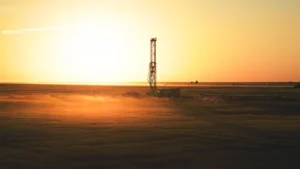
In the mid-1970s, the exploration team at Esso Minerals—comprised of geologists Jack Marr, Randy Turner, and Zig Dobrzynski—was engaged in the kind of high-stakes fieldwork that defines the industry. Their target was a geophysical anomaly in the rugged landscape of Saskatchewan. After months of mapping, surveying, and interpreting complex data, they mobilized a drill rig.
The moment of truth arrived when the core samples were retrieved. They had intercepted a significant massive sulphide discovery. For the team, it was the pinnacle of their professional lives—a career-defining find that promised to unlock new mineral wealth for the province.
However, the euphoria was short-lived. Upon returning to the office on a Monday morning, the team was met with the harsh reality of corporate restructuring. Esso Minerals had made the strategic decision to shutter its entire minerals division. The project, despite its obvious technical merit, was effectively orphaned. The geologists were dismissed, and the discovery was shelved, left to gather dust while the corporate world moved on to other priorities.
This moment highlights the disconnect between geological reality and corporate strategy. While Esso’s boardroom saw a line item to be liquidated, the earth held a resource that would, nearly 50 years later, become a critical component of Saskatchewan’s mining economy.
Chronology of a Half-Century Journey
The path from the initial Esso drill hole to the current production status at McIlvenna Bay is a testament to the concept of "geological endurance." The project’s timeline is characterized by the following phases:
- The 1970s Discovery: The initial geophysical target is confirmed via drilling by the Esso Minerals team. The discovery is validated, but development is halted due to corporate withdrawal.
- The Wilderness Years: For decades, the project changed hands, reflecting the cyclical nature of the mining industry. It survived through various junior explorers and mid-tier companies, each tasked with the arduous work of de-risking the asset.
- Exploration Refinement: Subsequent geological teams applied increasingly sophisticated geophysical and geochemical techniques to better define the geometry and grade of the orebody.
- The Development Push: As commodity demand shifted toward critical minerals like copper and zinc, the project attracted the necessary capital and technical expertise to transition from a resource estimate to a formal feasibility study.
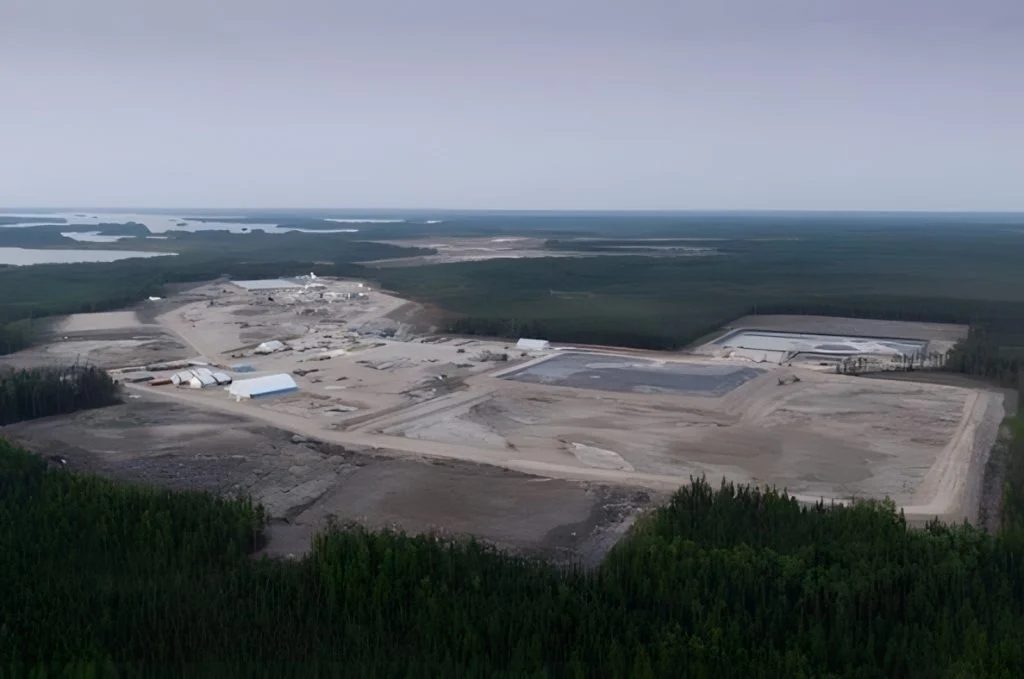
- First Production: Nearly five decades after the first core was pulled, the McIlvenna Bay mine reached first production, signaling its formal entry into the global supply chain.
The Technical Significance of VMS Deposits
The success of McIlvenna Bay is not an anomaly in the geological sense; it is a prime example of the potential of Volcanogenic Massive Sulphide (VMS) terrain. VMS deposits are formed by volcanic-associated hydrothermal events in submarine environments. They are highly prized for their polymetallic nature, typically containing copper, zinc, lead, gold, and silver.
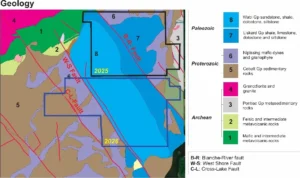
Saskatchewan’s geological history makes it a premier jurisdiction for such deposits. The Flin Flon-Snow Lake belt, which extends into Saskatchewan, is one of the most prolific VMS camps in the world. The lesson learned at McIlvenna Bay is that when a company identifies an environment conducive to VMS formation, the methodical application of modern geophysics can narrow the search space significantly.
This is the precise strategy being deployed by Searchlight Resources at its Wapawekka Lake VMS Project. By utilizing the "playbook" established by regional successes, Searchlight is systematically filtering large land packages down to specific, high-priority drill targets.
Searchlight Resources and the Wapawekka Lake Opportunity
Searchlight Resources currently holds a substantial inventory of geophysical targets at Wapawekka Lake. The company’s approach is disciplined: moving from broad-scale geological mapping to high-resolution geophysical surveys, and finally to the drill testing of specific anomalies.
The distinction between a "target" and a "discovery" is the most critical hurdle in the mining business. At this stage, Searchlight is in the process of systematically narrowing the possibilities. Every geophysical anomaly represents a potential, but it is the drill bit that provides the ultimate verdict.
The McIlvenna Bay history is particularly relevant here because it serves as a reminder of the "discovery risk." Most anomalies do not become mines. However, the one that does can define the future of a company and a region. For investors and stakeholders, the Wapawekka Lake project represents an opportunity to participate in the front end of that discovery curve, guided by the knowledge that the geological potential of the Saskatchewan shield remains largely untapped.
Implications for Modern Exploration
The McIlvenna Bay story provides three major takeaways for the modern exploration sector:
1. Geology Outlives Strategy
Corporate priorities are transient. Exploration divisions are opened and closed, budgets are expanded and slashed, and commodities fall in and out of favor. Yet, a high-grade deposit remains a high-grade deposit regardless of the ticker symbol of the company that owns it. This underscores the necessity of "good geology" being the primary driver of any investment decision.
2. The Persistence Factor
The transition from an anomaly to a mine is a marathon, not a sprint. The generations of geologists who worked on the McIlvenna Bay project—often without the gratification of seeing the mine in operation—provided the foundational work that made today’s production possible. This highlights the importance of institutional memory and long-term project stewardship.
3. Saskatchewan as a Critical Minerals Hub
Saskatchewan’s emergence as a key player in the critical minerals sector is not accidental; it is the result of decades of exploration effort. Projects like Wapawekka Lake are vital to maintaining the pipeline of new mines needed to meet the global demand for copper and zinc, which are essential for the energy transition and industrial infrastructure.
Official Perspectives on Exploration Risk
Industry experts often emphasize that while the risks in exploration are high, the rewards of discovery are unparalleled. A representative for Searchlight Resources notes that the company’s focus on the Wapawekka Lake VMS Project is rooted in the "systematic de-risking" of prospective ground.
"We are looking for the same signatures that have historically yielded world-class deposits in this region," the spokesperson stated. "McIlvenna Bay proved that the systems are here. Our role is to use the data we have to identify where the next major system is hidden beneath the surface."
This sentiment is echoed by many in the geological community. The shift from "grassroots" exploration to "brownfields" development requires a delicate balance of patience and technical precision. As the global mining industry faces a looming supply deficit in base metals, the projects currently sitting at the "target" stage—like those at Wapawekka Lake—become increasingly valuable.
Conclusion: The Next Anomaly
The history of McIlvenna Bay is a narrative of resilience. It reminds us that behind every successful mining operation, there is a story of a drill hole that defied the odds, a team that refused to give up, and a geological reality that remained constant through nearly 50 years of change.
For Searchlight Resources, the Wapawekka Lake VMS Project is the current chapter in this broader Saskatchewan story. While the path from anomaly to asset is never guaranteed, the geological evidence suggests that the potential for significant discovery remains high. Somewhere in the vast reaches of the Saskatchewan landscape, another geophysical anomaly is waiting—a silent, subsurface indicator that may eventually evolve into the next critical component of the province’s mining future.
The history of the industry is written by those who are willing to look, to drill, and to believe that beneath the surface, the next great discovery is waiting to be found.
Disclosure: The author is a director of Searchlight Resources Inc. This article is provided for general information purposes only and does not constitute financial, investment, or legal advice. Readers are encouraged to conduct their own due diligence and consult with professional advisors before making any investment decisions. The information presented is derived from sources deemed reliable but is not guaranteed for accuracy or completeness.