
Approximately 7,300 years ago, the Kikai-Akahoya volcano—a submarine behemoth located south of Japan—erupted with a violence that fundamentally altered the geography and demography of the Japanese archipelago. For decades, the prevailing archaeological narrative suggested a binary outcome for the prehistoric Jomon hunter-gatherer societies: either total annihilation or remarkable, untouched survival.
However, a groundbreaking study led by an international team from Lund University and the University of Cambridge has shattered these simplistic paradigms. By employing advanced modeling and analyzing expansive archaeological datasets, researchers have revealed a far more intricate tapestry of human response. The aftermath of the Kikai-Akahoya event was characterized not by a uniform fate, but by a chaotic, creative, and highly variable struggle for survival that saw some communities collapse while others expanded, migrated, and innovated in the face of environmental catastrophe.
Main Facts: A Volcanic Cataclysm
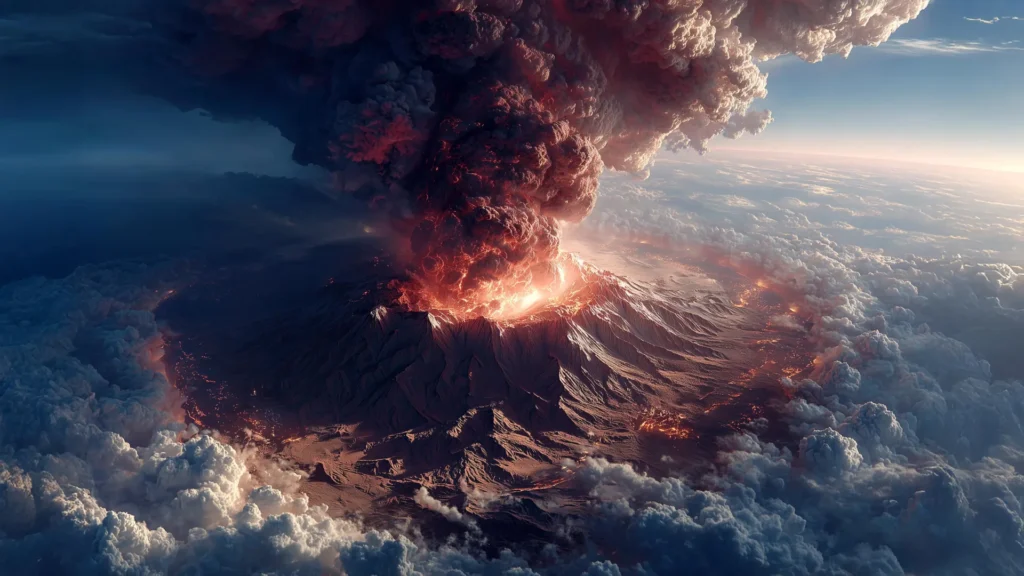
The Kikai-Akahoya eruption was one of the largest Holocene volcanic events on Earth. It did not merely involve an explosion; it was a multi-stage catastrophe that unleashed a sequence of devastating natural phenomena.
"This eruption must have been devastating, exploding out of the seabed with little warning," explains senior author Peter Jordan, a professor of archaeology at Lund University. "It battered the Japanese islands with powerful earthquakes and enormous tsunamis, and then blanketed the landscape with meters of volcanic ash."
The fallout created an "archaeological horizon"—a distinct layer of tephra (volcanic ash) that allows scientists to precisely date the sites above and below it. The core findings of the study demonstrate that the "apocalypse" model is largely a myth. While the eruption caused severe loss of life and rendered significant portions of southern Japan uninhabitable, the survivors did not simply fade away. Instead, they demonstrated a profound capacity for social reorganization, economic innovation, and long-distance migration.
Chronology of the Disaster and Its Aftermath
Pre-Eruption: The Fragile Equilibrium
Before the caldera collapsed, Jomon populations were not uniform. In southern Kyushu, the demographic trajectory was already trending downward; the region was home to sparse, highly mobile foraging groups. Conversely, northern Kyushu was experiencing a population boom, suggesting a thriving ecosystem capable of supporting sedentary or semi-sedentary lifestyles.
The Moment of Impact: 7,300 Years Ago
The Kikai-Akahoya event triggered a massive submarine caldera-forming eruption. The immediate aftermath included:
- Seismic Instability: Massive earthquakes that destabilized the local geography.
- Marine Inundation: Tsunamis that wiped out coastal settlements and poisoned freshwater sources with salt.
- Atmospheric Choking: A blanket of volcanic ash that covered vast swaths of the archipelago, choking vegetation and killing fauna.
The Immediate Aftermath: Survival and Flight
In the weeks and months following the blast, the landscape became a hostile, ash-strewn desert. Forager groups in the immediate vicinity were forced into rapid, emergency migration. Those who could not leave faced localized extinction. However, as the research indicates, this was not the end of the Jomon culture, but rather a catalyst for a radical shift in settlement patterns.
The Long-Term Recovery
Over the centuries that followed, the survivors integrated into new social networks. The study suggests that displaced populations moved into areas where ecosystems were more resilient—particularly the coastal zones—where they developed new maritime technologies to exploit marine resources that had recovered from the fallout.
Supporting Data: Regional Disparities
The researchers identified three distinct patterns of human response that defy traditional archaeological expectations.
1. The Kyushu Divergence
Perhaps the most striking evidence comes from the contrast between southern and northern Kyushu. While southern Kyushu saw a desertion of sites, northern Kyushu—which was already growing—continued to thrive. The data suggests that this growth was likely fueled by an influx of refugees from the south, proving that human communities can effectively "absorb" the impact of a disaster through relocation and the restructuring of social and economic networks.
2. The Coastal Shift
Evidence points to a definitive movement of inland populations toward the northern coastlines. As terrestrial ecosystems suffered from the toxic effects of the ash, marine ecosystems proved more robust. Survivors pivoted their entire survival strategy, shifting their caloric reliance from terrestrial hunting to intensive marine resource exploitation. This shift allowed for the stabilization and eventual expansion of these coastal communities.
3. The Distant Ripple Effect
The most unexpected discovery was the decline of populations in regions far from the volcano. Areas that were ostensibly "safe" from the direct physical destruction of the eruption experienced a stalling or reversal of growth. This suggests that the Kikai-Akahoya event acted as a "macro-disaster," potentially causing:
- Climate Anomalies: Global cooling or shifts in weather patterns that hindered plant growth.
- Faunal Stress: The contamination of grazing lands with ash led to severe dental issues in deer and wild boar, the primary protein sources for the Jomon. This likely led to a collapse in animal populations, which in turn triggered a secondary crisis for the human populations relying on them.
Official Responses and Scholarly Interpretations
The academic community has received the findings with significant interest, as the study serves as a masterclass in modern archaeological methodology. Lead author Professor Enrico Crema of Cambridge University highlights the importance of the human element in this story.
"The disaster caused major loss of life," Crema notes. "However, survivors migrated, forged new social relations, innovated new kinds of economy, and appear to have found creative ways to exist and later thrive in the new post-disaster conditions."
The study emphasizes "contingent" outcomes. It suggests that there is no single "correct" response to a climate or geological shock. Instead, the survival of a culture depends on the existing social infrastructure, the ability to communicate across distances, and the flexibility to abandon traditional livelihoods in favor of new technologies.
Implications for Modern Disaster Studies
The Kikai-Akahoya study provides a profound lesson for the modern era, particularly as the world faces the compounded risks of climate change and environmental instability.
Understanding "Systemic Risk"
The finding that distant, "safe" regions were negatively impacted underscores the interconnectedness of ancient (and modern) societies. A disaster in one corner of the world does not remain contained; it ripples through food chains, trade networks, and climate systems. This "systemic risk" perspective is crucial for modern urban planners and policymakers who must account for cascading failures in infrastructure and supply chains.
The Necessity of Social Adaptability
The Jomon experience demonstrates that social networks are as important as physical assets. The survivors who fared best were those who could move, collaborate, and trade with neighboring groups. For modern communities, this highlights the necessity of maintaining robust, flexible, and inclusive social institutions that can pivot during times of crisis.
Redefining Resilience
Ultimately, the study redefines resilience. It is not merely the ability to "bounce back" to a pre-disaster state. The Jomon survivors did not return to the way things were before the eruption; they created a new reality. They transformed their economic systems, shifted their demographics, and adapted to the environmental realities of a post-volcanic landscape.
As Professor Jordan concludes, "This study helps in creating a deeper understanding of the contingent ways in which cultures and societies cope with sudden shocks and catastrophes. Even in the most impossible situations, survivors and communities have choices, however limited: they need to act and make decisions; they need to adjust, collaborate, and find new connections and social networks."
The legacy of the Kikai-Akahoya eruption is not just one of destruction, but of the remarkable, often hidden, persistence of the human spirit. By looking closely at the dust and ash of 7,300 years ago, we find a story that is not just about what was lost, but about the extraordinary capacity of humanity to reconstruct its world from the ruins of the old one.