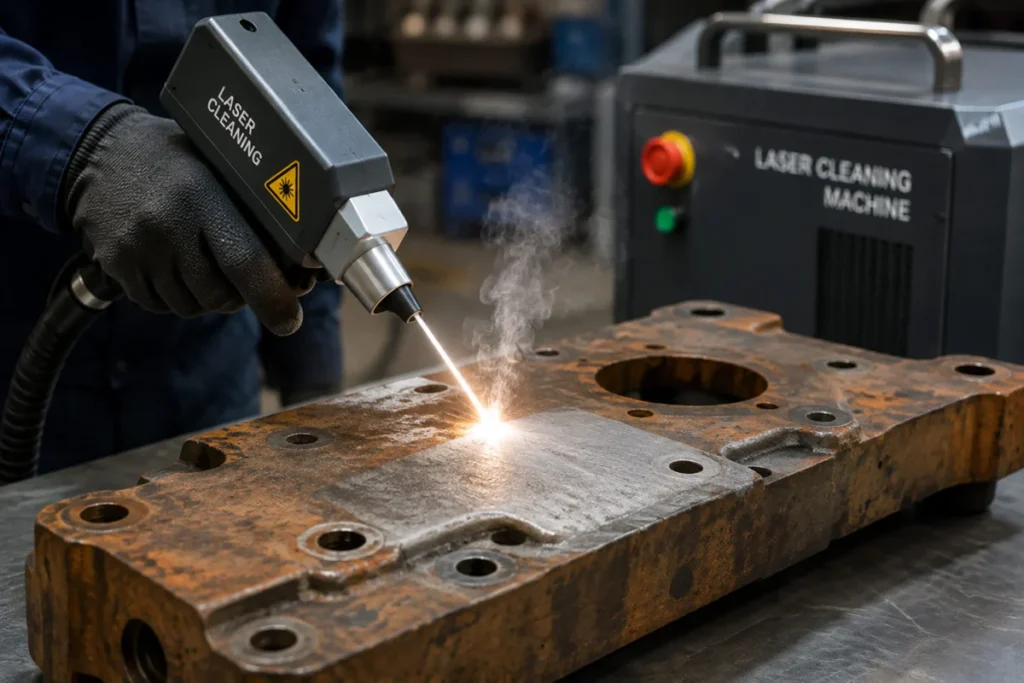
For decades, sandblasting has served as the industry standard for surface preparation. By propelling abrasive particles at high velocities, it effectively strips rust, stubborn paint, and industrial coatings from metal surfaces. However, as manufacturing demands become more sophisticated, the limitations of traditional abrasive blasting—namely the massive production of waste, the potential for surface profile damage, and the inherent safety risks—have forced engineers and facility managers to seek more nuanced alternatives.
Today’s industrial sector requires a higher degree of precision. Whether it is aerospace components requiring microscopic purity or automotive assembly lines demanding repeatable, high-speed cleaning, the industry is pivoting toward methods that balance effectiveness with environmental responsibility.
The Evolution of Industrial Cleaning: A Chronology of Progress
The timeline of surface preparation is a narrative of increasing control. The early 20th century relied heavily on manual mechanical cleaning—scraping, sanding, and brushing. These methods were labor-intensive and lacked the consistency required for the mass production era.
- 1900s–1950s: The rise of sandblasting provided a rapid, high-impact solution for large-scale rust removal and heavy industrial maintenance.
- 1960s–1980s: As environmental regulations tightened, the industry saw the rise of chemical and solvent-based cleaning. While effective at dissolving oils and residues, these methods introduced complex hazardous waste disposal challenges.
- 1990s–2000s: Ultrasonic and high-pressure water cleaning technologies gained traction for specialized applications, moving away from harsh abrasives to fluid-dynamic cleaning.
- 2010s–Present: The "Laser Era." Industrial laser cleaning has emerged as the definitive frontier, offering a non-contact, data-driven approach that integrates seamlessly into automated manufacturing environments.
The Case Against Traditional Abrasives
While sandblasting remains a cost-effective option for rugged, large-scale structures like bridges or ship hulls, it is often a blunt instrument. When abrasive particles collide with a substrate, they do not just remove the contaminant; they often alter the surface profile itself.
For high-tolerance components, this "profile modification" can lead to structural compromise or poor adhesion for subsequent coatings. Furthermore, the "dust and waste" problem is not merely an inconvenience—it is a significant operational cost. The environmental footprint of collecting, filtering, and disposing of contaminated abrasive media is a mounting expense that many businesses are no longer willing to absorb.
Exploring Modern Alternatives: A Technical Breakdown
As industries move away from indiscriminate blasting, several specialized technologies have risen to the forefront, each serving specific niches in the modern workshop.
1. Laser Cleaning: The Precision Powerhouse
Laser cleaning operates on the principle of laser ablation. By delivering high-energy pulses to a surface, the machine vaporizes contaminants—such as oxidation, paint, or organic residues—without heating or damaging the base material.
- Key Advantage: It is entirely non-contact.
- Industrial Utility: Because operators can precisely calibrate power, scanning speed, and pulse frequency, it is the preferred choice for delicate precision work, mold cleaning, and high-tech manufacturing.
2. Dry Ice Blasting: The Residue-Free Solution
Dry ice blasting uses solid carbon dioxide pellets propelled by compressed air. Upon impact, the pellets sublimate—turning instantly from a solid to a gas.
- Key Advantage: There is no secondary waste stream. The only residue to manage is the contaminant itself, which falls away from the surface.
- Industrial Utility: Ideal for cleaning electrical panels or sensitive machinery where water or abrasive grit would cause irreparable damage.
3. Chemical Cleaning: The Solvent-Based Standard
This method utilizes specialized chemical agents to dissolve grease, oils, and chemical bonds.
- Key Advantage: Excellent for deep-cleaning complex geometries where physical media cannot reach.
- Considerations: Modern businesses must navigate stringent EPA and OSHA regulations regarding solvent disposal and worker exposure, making this method increasingly expensive in terms of compliance.
4. Ultrasonic Cleaning: Micro-Level Precision
By using high-frequency sound waves in a liquid bath, ultrasonic cleaning creates cavitation bubbles that collapse against the surface of a part.
- Key Advantage: It reaches into blind holes and intricate threads that other methods miss.
- Considerations: Limited by the size of the tank, making it unsuitable for large industrial structures.
5. Soda Blasting and Water Blasting
These methods occupy the middle ground between aggression and delicacy. Soda blasting is a milder form of abrasive cleaning, while water blasting removes contaminants via kinetic fluid energy. Both represent a "cleaner" approach than sandblasting but require significant post-process drying and water management to prevent flash rust on exposed metal.
Supporting Data: Operational Impact and ROI
When evaluating a switch in cleaning technology, businesses must move beyond the "sticker price" of the equipment. According to recent industrial case studies, the Total Cost of Ownership (TCO) is influenced by four primary factors:
- Labor Intensity: Laser cleaning and automated water blasting drastically reduce the man-hours required per square meter.
- Consumables: Abrasive blasting requires continuous replenishment of media. Laser and ultrasonic systems have significantly lower ongoing material costs.
- Waste Management: The disposal of spent abrasive media is a multi-billion dollar annual expense across the industrial sector. Technologies that eliminate or reduce media usage, like dry ice or laser, provide an immediate ROI in waste reduction.
- Throughput/Downtime: Laser systems can be integrated into existing production lines, allowing for cleaning to occur in-situ without disassembling large machinery, thus minimizing downtime.
Implications for Industry: The Move Toward Automation
The shift toward these modern methods has profound implications for the factory floor. As industry moves toward Industry 4.0, the "black box" nature of traditional sandblasting is being replaced by the "smart" nature of laser cleaning.
Modern laser systems can be equipped with sensors that detect when a surface is clean, allowing the machine to stop automatically. This level of repeatability ensures that every part on the line meets the exact same quality standard, a requirement for sectors like aerospace, automotive, and medical device manufacturing.
Selecting the Right Method: A Strategic Framework
Choosing the correct cleaning method is a multi-step process that requires a thorough analysis of the site and the object:
- Contamination Identification: Is the layer soft (grease) or hard (rust)?
- Substrate Sensitivity: Will the base material (aluminum, composite, or hardened steel) withstand the kinetic energy of the cleaner?
- Geometric Complexity: Does the part have internal cavities that require fluid or sound-based cleaning?
- Operational Environment: Are you in a controlled lab or a remote field site?
- Regulatory Constraints: What are the local environmental laws regarding water runoff and dust control?
Conclusion
While sandblasting will continue to hold a place in heavy industry, it is no longer the default choice for the forward-thinking facility. The transition to laser, dry ice, and ultrasonic cleaning represents a maturation of the industrial sector.
As noted by industry leaders at organizations like Hantencnc, the initial capital expenditure for advanced technologies like laser systems is often offset by the long-term gains in precision, reduced labor, and environmental compliance. By embracing these modern alternatives, companies are not just cleaning surfaces—they are upgrading their entire production philosophy to meet the rigorous demands of the 21st century.
The future of surface preparation is clean, controlled, and, above all, precise. Whether the goal is to reduce waste or simply to achieve a level of purity that traditional sandblasting could never reach, the technology now exists to transform the maintenance and production cycles of the modern world.