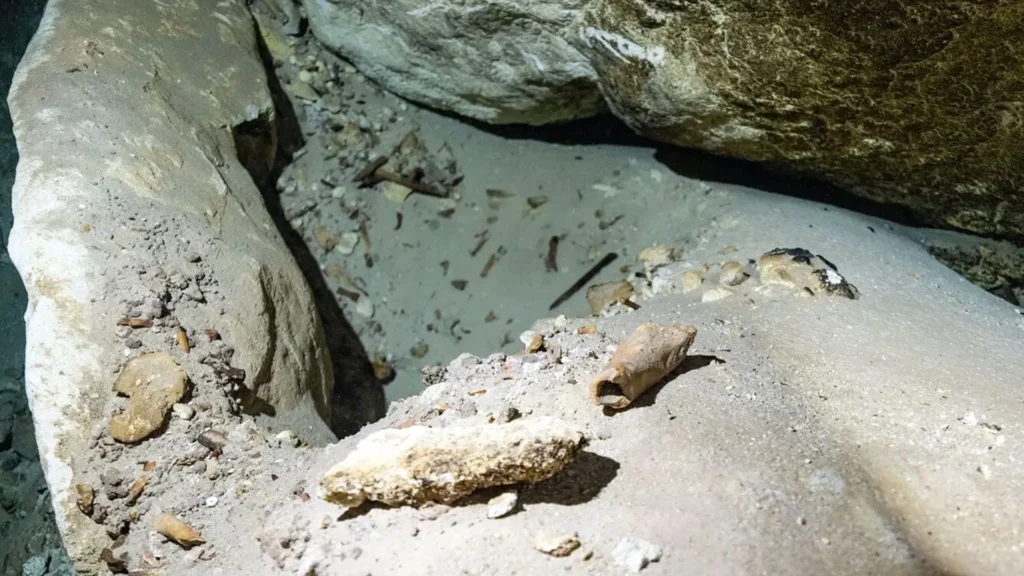
Underwater caves have long been viewed by the scientific community as enigmatic, inaccessible, and profoundly mysterious repositories of the past. For decades, researchers have recovered the skeletal remains of extinct megafauna and ancient fauna from these submerged graveyards, yet they have lacked a standardized methodology to decode the history written upon those bones. How did these animals arrive in the dark, water-filled voids? What biological and chemical forces acted upon them over the centuries?
A groundbreaking new study led by Griffith University has finally bridged this gap. By developing a comprehensive framework for analyzing the "taphonomic fingerprints"—the processes that affect organic remains after death—researchers are now able to read the complex narratives hidden within submerged skeletons.
The Science of Submerged Preservation
The research, published in the journal PLOS One under the title "Neotaphonomic characteristics of vertebrate site formation in underwater caves," represents a significant leap forward in taphonomy—the study of how organisms decay and become fossilized.
Meg Walker, a PhD candidate under the supervision of Professor Julien Louys, Director of the Australian Research Centre for Human Evolution, led the investigation. "By analyzing animal bones from two underwater cave systems in South Australia, we have revealed how different cave environments leave distinct preservation ‘fingerprints’ on skeletal remains," Walker explains.
To build this framework, the team utilized a multi-scalar approach, examining everything from the macroscopic spatial distribution of bones within the caves to the microscopic elemental composition and protein residues trapped within ancient cells. By cross-referencing these findings with radiocarbon dating, the team successfully tracked how skeletons accumulated and were modified over decades and centuries.
Chronology of Discovery: From Modern Remains to Deep Time
The research project was not merely a theoretical exercise; it required the physical labor of specialized cave divers and a rigorous comparative methodology. The investigation focused on two primary sites near Mount Gambier in South Australia: the Green Waterhole and the Gouldens Sinkhole.
The Modern Baseline
The team began by examining relatively recent skeletal remains, some dating back to the arrival of European settlers in the 1840s. These remains included a diverse array of species, both native and introduced: cows, kangaroos, emus, sheep, pigs, dingoes, rabbits, possums, quolls, and swamp rats.
By analyzing these more recent specimens, researchers established a "control" dataset. Because the timing of these animals’ entry into the caves is relatively well-documented in historical records, the team could accurately measure the rate and nature of bone modification. This provided a necessary baseline for understanding how much older fossils—specifically those belonging to extinct megafauna—might have been altered over thousands of years.
Comparison to Dry Cave Environments
A critical component of the study involved contrasting underwater preservation with the more traditional "dry cave" environments. The results were striking. In dry caves, skeletal remains are subject to a specific set of erosive forces: terrestrial bacteria break down bone matter, while the roots of surface plants often weave through the cave ceiling, carving long, distinct grooves into the surfaces of the bones as they search for moisture.
In contrast, submerged bones often retained their original structural integrity and finely detailed surfaces, sometimes looking as if they had been deposited only a few years prior, despite being far older.
The Role of Light, Algae, and Total Darkness
The study identified that the preservation of bone is heavily dictated by the specific micro-environment of the cave, particularly the presence of light and the subsequent biological activity.
The Photic Zone: A Colonized Surface
Near the cave entrances, where sunlight penetrates the water column, the environment is rich in life. Algae and various aquatic plants thrive in these well-lit zones. When animal remains settle in these areas, they are quickly colonized by these organisms. This colonization leaves behind distinct chemical and biological signatures on the bone surface—a "fingerprint" of the light-filled, nutrient-rich environment.
The Midnight Zone: Pristine Preservation
Conversely, in the deep, lightless "midnight regions" of the caves, the environment acts as a natural time capsule. Because sunlight never reaches these depths, photosynthesis is impossible, preventing the growth of algae and plants that would otherwise degrade or obscure the bone surface. In these total-darkness zones, the bones often remained remarkably pristine, preserved by the stable, cold, and dark water.
Supporting Data: The Microscopic Evidence
The methodology employed by Walker and her team is perhaps the most significant contribution to the field. By moving beyond simple visual inspection, the team categorized the "fingerprints" based on empirical evidence:
- Spatial Distribution: How bones were scattered or clustered provided clues about water flow and the method of entry (e.g., whether the animal fell in, washed in via a flood, or was deposited by a predator).
- Surface Morphology: Microscopic examination of bone surfaces allowed the team to differentiate between natural wear, scavenger marks, and the specific etchings caused by aquatic bacteria versus terrestrial plant roots.
- Elemental and Protein Analysis: By looking at the elemental composition and trapped proteins, researchers were able to infer the geochemical history of the bone. This data allows scientists to reconstruct the water chemistry of the cave at the time the animal was deposited, effectively using the bone as a probe for ancient climate and water quality.
Official Responses and Expert Commentary
The significance of this work has resonated throughout the archaeological and paleontological communities. Professor Julien Louys noted that the framework is a "powerful new tool" for researchers operating in what are notoriously challenging conditions.
"Underwater caves are difficult environments to study," Professor Louys stated. "The logistical challenges are immense, and the data can be ambiguous. What Meg Walker has provided is a Rosetta Stone for these environments. We are no longer just looking at bones; we are reading a record of the environment that existed at the time of the animal’s death."
The participation of the Cave Divers Association of Australia was essential to the project’s success. The specialist divers provided the technical expertise required to safely extract samples from the delicate and treacherous South Australian sinkholes without disturbing the sensitive geological context.
Broader Implications: Reconstructing the Past
The implications of this study extend far beyond the shores of South Australia. By providing a standardized framework for interpreting fossil formation in underwater caves, the Griffith University team has opened up a new frontier for global research.
Reconstructing Past Environments
These underwater caves are essentially massive, submerged filing cabinets containing the biological history of the regions they occupy. With this new methodology, archaeologists can now confidently analyze fossils from similar submerged sites worldwide—from the cenotes of Mexico to the sea caves of the Mediterranean—to reconstruct paleo-environments with unprecedented accuracy.
Understanding Megafauna Extinction
One of the most exciting applications of this research is the potential to better understand the extinction of megafauna. By identifying the environmental conditions surrounding ancient, extinct species found in these caves, researchers can gain insight into the climatic shifts and ecological pressures that led to their decline. Understanding how these creatures ended up in these caves—whether as part of a catastrophic mass-mortality event or a slow accumulation over millennia—could resolve long-standing debates regarding the role of human activity versus environmental change in megafauna extinctions.
A New Era of Taphonomy
The study marks a shift from descriptive paleontology to analytical, process-oriented research. As the scientific community continues to grapple with the effects of modern climate change on biodiversity, understanding the history of past extinctions and environmental shifts has never been more urgent.
The framework developed by Walker and her team ensures that the "silent" archives of underwater caves will no longer remain silent. Instead, they will provide a clear, evidence-based narrative of the distant past, helping us understand the delicate balance of life and death in our planet’s hidden depths.
Conclusion
The work led by Griffith University serves as a masterclass in scientific rigor. By combining the adventurous spirit of cave diving with the precision of microscopic geochemical analysis, the research team has successfully illuminated a dark corner of human knowledge. As this framework is adopted by researchers globally, we can expect a wave of new discoveries emerging from the depths of the world’s underwater caves, each adding a new page to the extraordinary record of life on Earth.
The study concludes that these submerged graveyards are not just final resting places, but active, preserved archives. With the right tools—and the right eyes to read the fingerprints—we are finally learning how to listen to the stories they have been waiting to tell for thousands of years.