

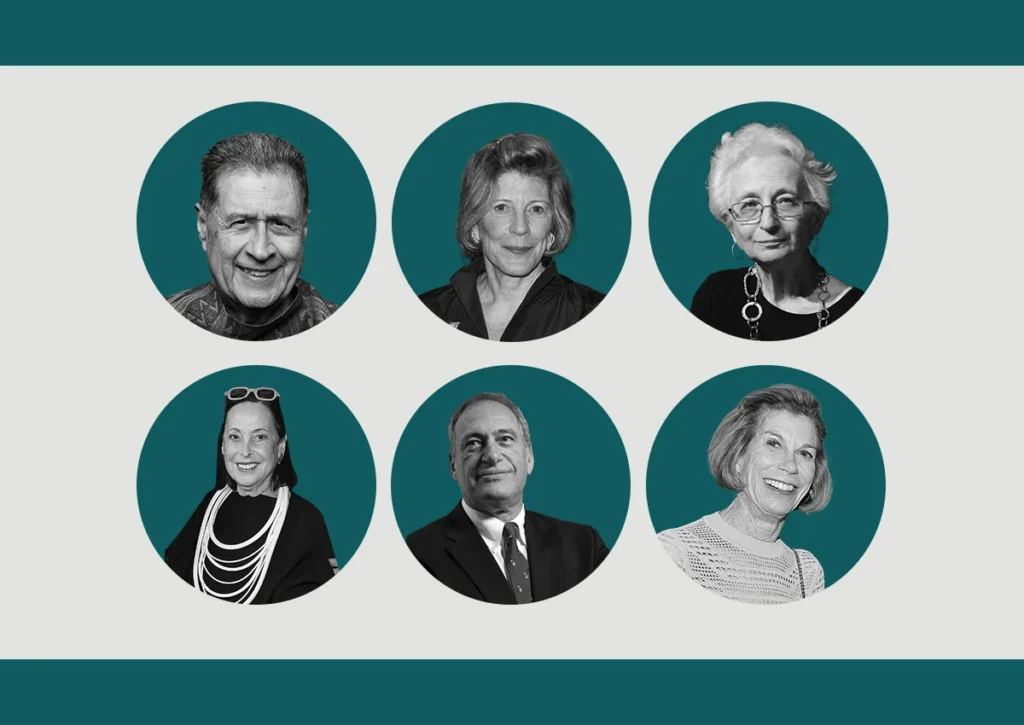
In the quiet corridors of the world’s most prestigious museums, the names inscribed on plaques and gallery walls often serve as the only enduring testament to the individuals who made such spaces possible. Over the past twelve months, the global art community has mourned the passing of several luminaries—collectors whose lives were defined not merely by the accumulation of objects, but by a profound commitment to the stewardship of culture.
From the intellectual rigor of Agnes Gund to the grassroots passion of Dorothy Vogel, these collectors operated as essential pillars of the art ecosystem. Their legacies are not confined to private living rooms or climate-controlled vaults; rather, they are embedded in the institutional fabric of the Museum of Modern Art (MoMA), the National Gallery of Art, the Aspen Art Museum, and beyond. This article examines the profound impact of these six visionary figures, tracing the indelible marks they left on the trajectory of art history.
Main Facts: The Pillars of Patronage
The art world is often perceived through the lens of the market—the spectacle of the auction block and the frenetic energy of the art fair. However, the true lifeblood of the museum sector is the collector-patron. The six individuals highlighted here—Agnes Gund, Barbara Jakobsen, Dorothy Vogel, Susan Marx, John P. Axelrod, and Gilberto Cárdenas—represented a spectrum of collecting philosophies.

While some, like Gund and Jakobsen, wielded institutional power from the heights of the MoMA Board of Trustees, others, like Vogel, proved that one did not need to be a titan of industry to alter the course of a national collection. Collectively, these individuals donated thousands of works, provided essential funding for acquisitions, and championed artists who were often overlooked by the mainstream establishment. Their contributions represent a multi-generational investment in the public’s access to art.
Chronology of Impact: A Legacy in Motion
To understand the scope of their influence, one must look at the decades of engagement these collectors sustained with the institutions they supported.
The Mid-Century Visionaries
The mid-20th century saw the emergence of a new type of collector—one who viewed art as a public trust. Agnes Gund, who passed away recently, served as the president of MoMA from 1991 to 2002. Her tenure was marked by a commitment to diversifying the museum’s holdings and ensuring that contemporary voices were given space within the canon. Her partnership with colleagues like Barbara Jakobsen solidified a period of institutional growth that saw MoMA cement its status as the world’s leading repository of modern art.

The Rise of the Specialist Collector
While the trustees were managing the giants, collectors like Dorothy Vogel were meticulously building a world-class collection in a modest Manhattan apartment. Vogel, a librarian, and her husband Herb, demonstrated that institutional transformation could occur through the systematic accumulation of specific movements—namely Minimalist and Conceptual art. Their donation to the National Gallery of Art in the early 2000s remains one of the most significant single-donor contributions in the history of the museum.
Regional and Cultural Expansion
As the 21st century progressed, the focus shifted toward ensuring that museum collections reflected a broader geographical and cultural demographic. Gilberto Cárdenas’s donation of 5,000 works of Latinx art to the Blanton Museum of Art represents a watershed moment in American museum history. It shifted the needle from token representation to comprehensive historical documentation, ensuring that the Blanton could tell a "fuller story" of the Latinx experience.
Supporting Data: The Quantitative Scale of Generosity
The impact of these six individuals can be measured in tangible figures, though the qualitative value of their contributions is immeasurable.

- The Axelrod Contribution: The Museum of Fine Arts, Boston (MFA) was fundamentally reshaped by John P. Axelrod. His departure left a void of 700 artworks, a collection that helped define the MFA’s approach to decorative arts and contemporary design.
- The Cárdenas Archive: The 5,000-work donation to the Blanton Museum stands as a singular, monumental effort to correct historical imbalances in museum holdings. It serves as an essential research archive for scholars of Latinx studies.
- Institutional Stewardship: The cumulative time spent by Gund and Jakobsen as trustees at MoMA spans over half a century. Their influence on acquisition committees, capital campaigns, and museum governance shaped the very direction of the institution’s growth during the most expansive period of its history.
These figures illustrate the "multiplier effect" of private collecting: one individual’s passion for a specific niche, when funneled into a public institution, becomes a resource for millions of visitors, researchers, and students.
Official Responses: A Community in Reflection
In the wake of these losses, curators and peers have taken to public platforms to discuss the unique personalities behind the collections. ARTnews interviewed several figures close to the deceased, painting a portrait of individuals who were as generous with their time as they were with their capital.
"Agnes didn’t just give art; she gave direction," one former MoMA curator noted. "She pushed us to look at artists who were ignored by the market. Her influence wasn’t just in the works she bought, but in the questions she forced us to ask."

Regarding Susan Marx’s work with the Aspen Art Museum, a fellow collector remarked, "Susan was the heartbeat of that institution. She understood that a museum in a place like Aspen had a unique responsibility to engage with the local community while maintaining a global perspective. She made the Aspen Art Museum feel like a living, breathing laboratory."
The consensus among those who knew them is clear: these collectors were not merely "donors." They were active participants in the creative process, often acting as sounding boards for artists and early supporters of burgeoning talent.
Implications: The Future of Museum Collecting
The passing of these six collectors brings into sharp focus the precarious nature of the modern museum. Institutions are increasingly dependent on private largess to fund acquisitions, as public funding continues to dwindle globally.

The Succession Challenge
As we lose a generation of collectors who were instrumental in building the 20th-century museum model, the question arises: who will take their place? The modern art market is significantly more volatile and expensive than it was when the Vogels began their collection. This economic barrier threatens to narrow the field of collectors to the ultra-wealthy, potentially sidelining the "librarian-collector" model that once democratized the art world.
The Shift Toward Diversity
The legacy of collectors like Gilberto Cárdenas underscores a vital shift: the demand for inclusivity. Museums are now under immense pressure to decolonize their collections and address the gaps left by decades of exclusionary collecting practices. The challenge for future patrons will be to move beyond the "masterpiece" model of collecting and toward the "narrative" model—building collections that document entire cultural movements rather than just individual trophies.
The Human Element
Beyond the metrics of acquisitions and capital, the most significant implication is the loss of the human connection. The "patronage of institutions" is, at its core, a human relationship between the collector and the curator. These six individuals spent years cultivating deep, intellectual friendships with museum staff. As the art world moves toward a more digital and transactional future, the loss of these long-term, relationship-based partnerships poses a significant risk to the institutional culture of museums.

Conclusion: A Legacy Beyond the Canvas
The six individuals honored here—Agnes Gund, Barbara Jakobsen, Dorothy Vogel, Susan Marx, John P. Axelrod, and Gilberto Cárdenas—leave behind a world that is objectively richer. Through their foresight, the public can now witness the evolution of Latinx identity, the nuances of postwar conceptualism, and the intricate craftsmanship of the decorative arts.
Their stories remind us that a museum is not merely a building filled with objects; it is a collaborative project that requires the sustained commitment of those who believe that art is a fundamental necessity for society. As the art world navigates the uncertainties of the coming decades, the templates established by these collectors will serve as a guide for the next generation of patrons. Their names may fade from the headlines, but the art they championed will continue to speak to future generations, ensuring that their dedication remains a permanent fixture of our shared cultural heritage.



