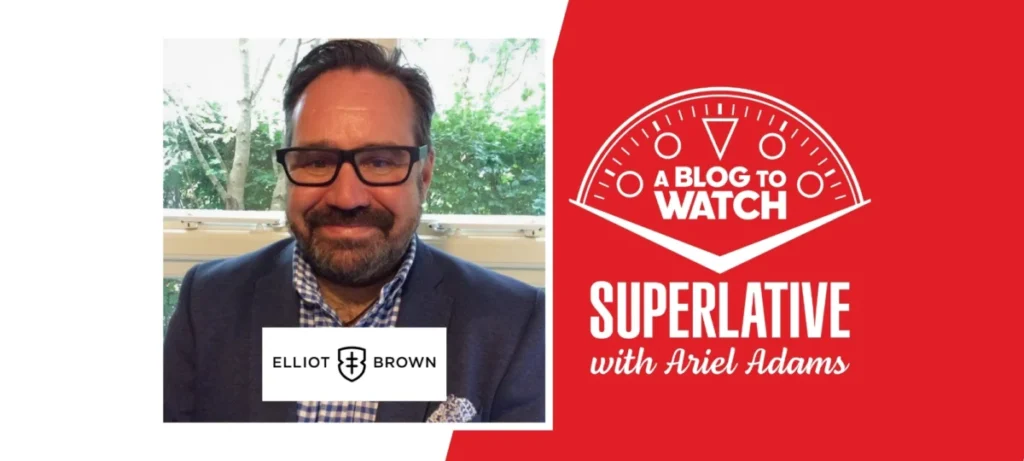
In the latest installment of the SUPERLATIVE podcast, aBlogtoWatch founder Ariel Adams sits down with a titan of the British watch industry: Guy Allen, Head of Sales at Elliot Brown Watches. Their conversation serves as a comprehensive masterclass on the current state of the horological world, bridging the gap between historical industry trends and the rapidly shifting realities of the modern market. With over 40 years of experience under his belt, Allen provides a rare, unvarnished look at how brands survive, innovate, and maintain authenticity in an era dominated by Swiss luxury conglomerates and volatile supply chains.
Main Facts: The Intersection of Heritage and Rugged Utility
At the heart of the discussion is the distinct trajectory of Elliot Brown. Unlike many brands that rely on heritage marketing or speculative value, Elliot Brown has carved its niche through the crucible of extreme utility. The brand is perhaps best known for its deep-rooted relationship with the UK’s Tier One Special Forces community—a partnership that birthed the legendary Holton model.
The Holton is not merely a "military-inspired" watch; it is a piece of equipment designed to survive the harshest environments on Earth. Allen highlights that the development of such timepieces requires a level of engineering rigor that transcends the aesthetics of traditional watchmaking. By focusing on durability, legibility, and shock resistance, Elliot Brown has secured its position as a "go-to" brand for professionals who view their watches as essential tools rather than mere accessories.
Chronology: A Four-Decade Journey in Horology
Guy Allen’s career is a microcosm of the evolution of the watch industry itself. His journey began in an era vastly different from today, starting with his early work managing LEGO watches—a stark contrast to the high-end tool watches he champions today.
- The Early Years: Allen’s entry into the industry provided him with a foundational understanding of mass-market appeal and supply chain management.
- The Transition: Moving through various sectors of the watch world, he witnessed the rise and fall of trends, the quartz crisis recovery, and the eventual resurgence of mechanical watch appreciation.
- The Elliot Brown Era: Joining Elliot Brown marked a pivotal shift toward the "Independent Brand" movement. Allen emphasizes that the brand’s current success is built upon the lessons learned during the mid-to-late 20th century: that quality and distinct brand identity will always outperform the "me-too" marketing of larger, legacy firms.
Supporting Data: The Shifting Economics of Value
A significant portion of the SUPERLATIVE episode is dedicated to the cold, hard economics of the current watch market. Allen and Adams dissect the aggressive price hikes seen across the Swiss luxury sector.
The Value Proposition Crisis
Allen poses a challenging question to the audience: When a familiar watch—a model that was considered "attainable luxury" a decade ago—suddenly doubles in price without a commensurate increase in technical innovation, does it remain a good value? The duo argues that the "Swiss luxury" label is losing its automatic status as a gold standard.
Direct-to-Consumer (DTC) Evolution
Elliot Brown’s strategic pivot to a Direct-to-Consumer model is a calculated response to the inefficiencies of the traditional retail supply chain. By cutting out the middleman, the brand can maintain tighter quality control while offering a more transparent price point to the consumer. This model is becoming increasingly vital for independent brands seeking to protect their margins while fending off the price inflation that has plagued the industry at large.
The Movement Supply Crunch
One of the most concerning trends discussed is the "movement-supply problem." As demand for mechanical watches surges, the supply of reliable, accessible movements—particularly from Japanese manufacturers like Miyota or Seiko—has tightened. This has created a bottleneck for smaller, independent brands that lack the vertical integration of a conglomerate like Swatch Group or Richemont. Allen notes that as these movements become more expensive and harder to source, the barrier to entry for new independent watchmakers is rising, potentially stifling the creativity that has recently revitalized the industry.

Official Perspectives: Authenticity in the Age of Marketing
A recurring theme in the interview is the definition of "authenticity." In an age where digital marketing can manufacture a brand’s history overnight, Elliot Brown relies on empirical evidence. The testing protocols for their watches—which involve extreme pressure, impact, and thermal shock—serve as the brand’s primary marketing narrative.
Allen posits that modern collectors are becoming more sophisticated. They are no longer satisfied with "lifestyle" branding; they want to know the why behind the what. Why this case material? Why this specific movement? Why this strap integration? For Allen, authenticity is the result of answering these questions with honesty, even if the answer is that a specific feature was added to solve a problem rather than to follow a trend.
Implications: The Future of the Enthusiast Community
The relationship between brands and their customers has undergone a radical transformation, fueled by the rise of enthusiast communities and digital platforms like aBlogtoWatch.
The Rise of the Cross-Price Collector
Adams observes a fascinating trend: collectors no longer operate solely within a single price bracket. It is now common to see a watch enthusiast own a $500 Elliot Brown tool watch alongside a $20,000 Swiss haute horlogerie piece. This "cross-price" collecting indicates that the value proposition has shifted from the cost of the object to the utility and design of the object. Enthusiasts are judging watches based on their merit, regardless of the brand’s pedigree or price tag.
The Power of Independent Brands
The implications for the industry are clear: the hegemony of the major Swiss conglomerates is being challenged by a nimble, design-forward, and community-engaged tier of independent brands. These companies are more than just manufacturers; they are participants in the horological dialogue. By attending events, listening to feedback on forums, and engaging directly with collectors, they have built a level of brand loyalty that legacy firms often struggle to replicate.
Looking Ahead
The discussion concludes on a note of cautious optimism. While the supply chain challenges are real and the economic climate is uncertain, the appetite for high-quality, authentic timepieces remains at an all-time high. For Elliot Brown, the path forward is clear: continue to focus on the professional user, maintain a commitment to extreme durability, and keep the dialogue with the collector community at the center of the business model.
As Guy Allen suggests, the watch industry is in the midst of a "great sorting," where brands that offer genuine value and technical integrity will flourish, while those that rely on brand prestige alone may find themselves struggling to justify their place on the wrist. For those who prioritize substance over status, the current landscape offers more opportunities than ever before to find a timepiece that is not just a collector’s item, but a lifelong companion.
To hear the full conversation between Ariel Adams and Guy Allen, listen to the latest episode of the SUPERLATIVE podcast, available now on all major streaming platforms. You can also explore the current catalog of Elliot Brown timepieces at www.elliotbrownwatches.com or follow their latest updates on Instagram at @ebwatches.