In the rarified world of haute horlogerie, the quest for exclusivity often leads watchmakers toward exotic alloys, proprietary carbon composites, or historic provenance. However, the emerging brand Diatom has bypassed conventional luxury markers to claim a more celestial frontier. With the release of their "Inner Worlds" limited-edition series, Diatom is not merely utilizing materials sourced from the heavens; they are subjecting their timepieces to the vacuum of space, ensuring that every watch in the collection possesses an authentic, documented history of orbital flight.
Main Facts: A Convergence of Engineering and Astronomy
The Diatom Inner Worlds collection is a five-piece series that functions as a horological tribute to the inner planets of our solar system: Mercury, Venus, Earth, Mars, and the Moon. Each timepiece is housed in a precision-engineered 39.5mm 316L stainless steel case, characterized by sharp, modern facets and balanced proportions.

At the heart of every model lies the reliable Swiss-made ETA 2892-A2 automatic movement. Operating at a frequency of 28,800 beats per hour (4Hz) and offering a 42-hour power reserve, the movement provides a stable foundation for the brand’s ambitious experimentation. However, Diatom’s modifications distinguish these pieces from standard Swiss fare. Visible through the sapphire crystal caseback, the movements are finished with delicate perlage on the bridges and blued screws, topped by a custom-designed, techno-organic winding rotor adorned with Geneva striping.
The collection is defined by its "space-flown" status. Unlike watches that simply contain space-related materials, every individual unit in the Inner Worlds series is launched into the upper atmosphere via a custom carbon-fiber carrier, crossing the Armstrong Limit—the critical altitude where human biology fails without pressurized intervention. By testing these watches in the harsh, low-pressure environment of the edge of space, Diatom is setting a new benchmark for "space-tested" durability in the entry-luxury segment.

Chronology: From Concept to Cosmic Reality
The development of the Inner Worlds series represents a multi-year effort to integrate scientific artifacts into wearable mechanical art.
- Phase 1: Procurement of Celestial Provenance: Diatom spent years securing authentic materials from historic space programs. This included the acquisition of metallic scraps from the Liberty Bell 7 spacecraft, components from the Atlas-Agena launch vehicle (which propelled the Mariner 2 probe), and rare fragments of Kapton thermal insulation salvaged from the Apollo 13 Command Module, Odyssey.
- Phase 2: Metallurgical Integration: Engineers at Diatom successfully integrated these historic materials into the alloy of their custom winding rotors. The Mercury model features a rotor forged from Liberty Bell 7 remnants; the Venus utilizes Atlas-Agena metal; and the Earth model features a gold-toned rotor containing actual Apollo 13 Kapton insulation—a poignant nod to the most famous survival story in space history.
- Phase 3: The Flight Campaign: Each finished watch is subjected to a rigorous testing cycle. They are housed in custom, high-altitude launch vehicles designed to survive the ascent to the Armstrong Limit and the subsequent re-entry. This process ensures that the lubricant, casing, and movement of every individual watch have survived the extremes of space.
- Phase 4: Global Launch: With testing concluded, the brand has officially opened orders for the 450-piece limited run per model, signaling the arrival of a new, scientifically minded contender in the watch industry.
Supporting Data: Technical Specifications and Dial Artistry
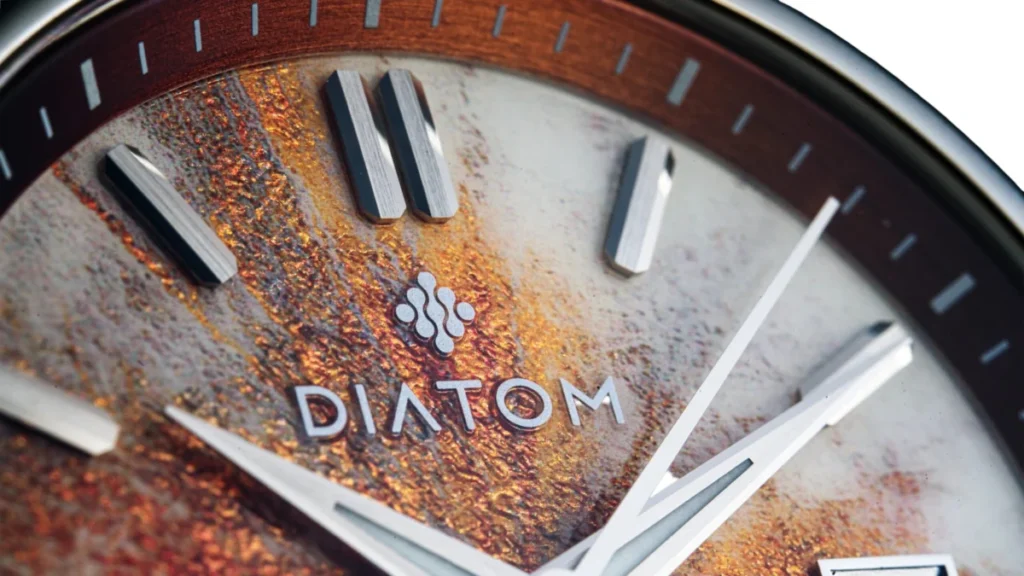
The visual identity of the Inner Worlds collection is as complex as its engineering. Diatom utilizes a multi-day, multi-process finishing technique for the dials, which are stamped, embossed, and sandblasted before undergoing precision electroplating.

Dial Textures and Materials
- Mercury: A deep blue and gold palette with a ridged texture meant to simulate the impact-scarred surface of the solar system’s innermost planet.
- Venus: A white-topped landscape of oranges and reds, mimicking the volcanic, cloud-shrouded surface of Earth’s "twin" planet.
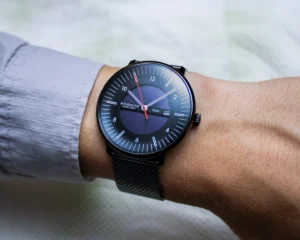
- Earth: A vibrant, blue-degradé dial with a fluid, wave-like texture, capturing the ethereal beauty of our home planet from orbit.
- The Moon: Beneath layers of black-and-gray enamel sits a dusting of authentic lunar regolith, providing a granular, crater-like texture that is quite literally "out of this world."
- Mars: The dial features concentric ridges inspired by Martian terrain, coated with material from the NWA 13187 meteorite—a verified piece of Martian Shergotite that crashed on Earth, acting as a geological messenger from the Red Planet.
Official Responses and Brand Philosophy
In a statement accompanying the launch, the Diatom design team emphasized that the project was born from a desire to bridge the gap between "science-fiction dreams and grounded reality."
"We didn’t want to just make a watch that ‘looked’ like space," a company spokesperson noted. "We wanted to create a vessel that participated in the exploration of space. By taking the movement, the casing, and the dial materials and exposing them to the vacuum of the upper atmosphere, we are offering the collector a piece of equipment that has truly earned its place in the history of exploration."

The decision to pair such extreme credentials with an approachable price point of £2,200 GBP is a strategic move to democratize the "space-watch" category, which has traditionally been dominated by five-figure horological giants.
Implications: The Future of the "Space-Flown" Niche
The release of the Diatom Inner Worlds collection carries significant implications for the horological landscape. First, it raises the bar for "provenance." As collectors become increasingly skeptical of marketing-heavy storytelling, the presence of physical, scientifically verified space-flown materials—coupled with actual flight testing—creates a standard of transparency that is difficult for competitors to ignore.

Second, the collection highlights a growing trend in "techno-organic" design. By moving away from traditional dial patterns and toward geological and astronomical textures, Diatom is catering to a new demographic of watch enthusiasts who value scientific narrative over traditional guilloché or sunburst patterns.
Finally, the success of this series could force a re-evaluation of the "entry-luxury" market. By providing a watch that is technically superior in terms of its testing regime while maintaining an accessible price, Diatom is challenging the notion that high-concept, space-faring complications must be restricted to ultra-high-end brands.

As we look toward the future, the Diatom Inner Worlds series stands as a testament to human ingenuity. It is a reminder that the stars are not just objects to be studied through a telescope, but tangible, physical components that can, with enough innovation, be worn on the wrist. With only 450 examples per model available, these pieces are destined to become highly sought-after artifacts for both the space enthusiast and the serious horologist.