

In a landmark move to address the moral and historical complexities embedded within the nation’s cultural repositories, the Swiss Federal Office of Culture (FOC) announced this week a substantial financial commitment of $2.4 million toward provenance research. This initiative, which will support 26 distinct projects across the 2027–2028 period, marks a pivotal shift in how Swiss institutions reckon with the origins of objects acquired during periods of colonial expansion, archaeological excavation, and the systematic looting of the Nazi era.
The funding represents a proactive effort to move beyond passive collection management toward active historical inquiry. By commissioning these studies, the Swiss government is acknowledging that objects held in public trust are not merely aesthetic assets, but tangible fragments of history—often acquired under duress, systemic violence, or profound ethical ambiguity.
The Scope of Inquiry: A Broadening Mandate
The selection of the 26 winning projects, determined through a rigorous public call for proposals, reflects a diverse range of investigative methodologies. These initiatives span from large-scale, multi-institutional collaborations to granular, archive-focused research conducted by smaller museums with limited prior experience in provenance tracking.
The goal, as articulated by the FOC, is twofold: to establish a transparent, evidence-based history for these items and to provide a factual foundation for future discussions regarding restitution, repatriation, or reconciliation. By democratizing access to research funding, the government is ensuring that even smaller, regional collections—which often hold overlooked or undocumented pieces—can participate in this national reckoning.
Key Projects Under the Microscope
Among the selected initiatives, several stand out for their focus on high-stakes historical grievances:
- Human Remains and Colonial Legacies: The Natural History Museum in Basel has been awarded $120,000 for a collaborative project with Gadjah Mada University in Indonesia. This project aims to trace the provenance of 189 Indonesian human remains currently in the museum’s care. By examining the circumstances of their acquisition and identifying potential descendant communities, the research seeks to pave the way for informed, respectful restitution dialogues.
- The Cameroonian Collections: A consortium of nine Swiss museums, including the prestigious Museum of Cultures Basel and the Bern Historical Museum, has received $120,000 to examine over 6,300 artifacts of Cameroonian origin. This ambitious study will interrogate the chains of ownership and the circumstances under which these items were appropriated, while simultaneously engaging with contemporary Cameroonian stakeholders to understand the cultural significance of these objects in the present day.
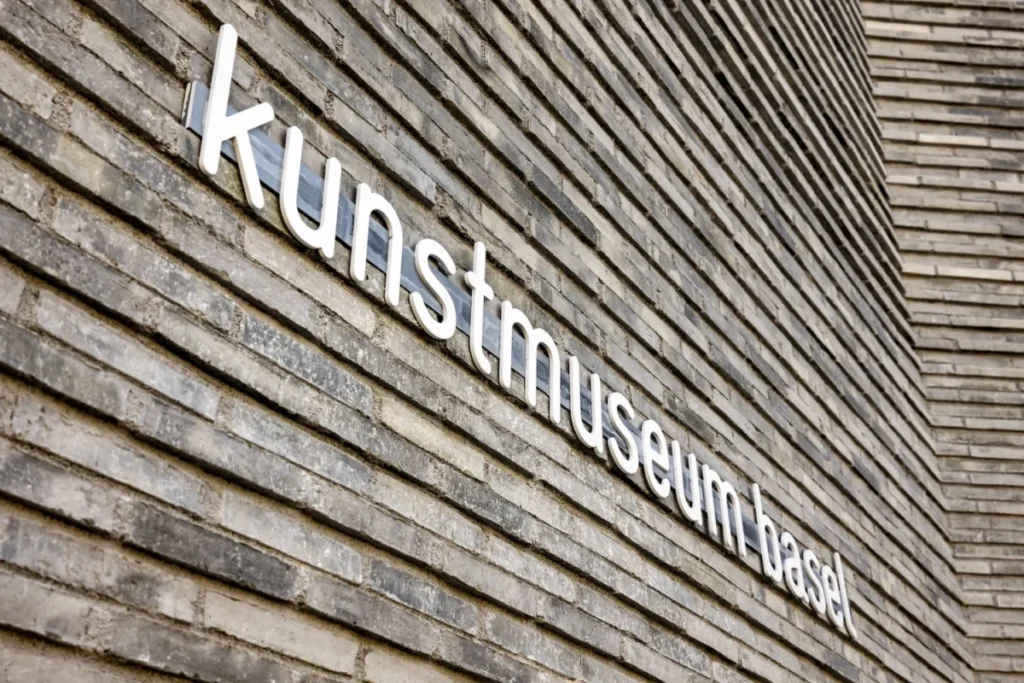
- Nazi-Era Looted Art: The Kunstmuseum Basel will utilize a $120,000 grant to scrutinize 336 drawings in its collection that have long been flagged as having problematic provenance. The investigation will focus on the fates of the original owners—often Jewish collectors forced to sell under duress—and will map the museum’s own acquisition strategies between 1933 and 1945.
Chronology of the Swiss Reckoning
The decision to fund these projects did not emerge in a vacuum; it is the culmination of decades of international pressure and an evolving domestic discourse regarding cultural ethics.
1998: The Washington Principles
The global conversation regarding Nazi-looted art was significantly galvanized by the 1998 Washington Conference Principles on Nazi-Confiscated Art. These principles urged nations to identify art confiscated by the Nazis and to achieve a "just and fair solution" with the original owners or their heirs. While Switzerland was initially slow to fully embrace these standards, the new funding confirms its commitment to these international norms.
2010s: The Colonial Turn
As the 21st century progressed, the focus of provenance research began to shift from the European theater of World War II to the broader, often overlooked history of European colonialism. The 2017 Sarr-Savoy report in France acted as a catalyst, arguing that African artifacts held in European museums were often acquired through colonial violence. Swiss museums, many of which hold significant ethnographic collections, found themselves under increasing public scrutiny.
2023–2026: The Development of the FOC Framework
Following years of advocacy by heritage scholars and NGOs, the Swiss Federal Office of Culture initiated a formalized grant process. The public call for proposals, which led to this week’s announcement, was designed to bridge the gap between academic research and museum practice, ensuring that the findings lead to actionable outcomes rather than remaining confined to academic journals.
Supporting Data: The Magnitude of the Task
The scale of the challenge facing Swiss curators is immense. The 26 projects funded by this $2.4 million grant are tasked with processing thousands of individual records.
- Data Volume: The Cameroonian project alone involves over 6,300 artifacts. For many institutions, the primary obstacle is not a lack of intent, but a lack of resources. Many smaller museums in Switzerland lack the dedicated staff or the linguistic expertise to parse colonial-era administrative records in foreign languages.
- Methodological Diversity: The funding model acknowledges that provenance is not one-size-fits-all. Some projects will focus on "provenance chains"—the paper trail of ownership—while others will focus on "oral history research," working directly with communities of origin to provide context that written records from the 19th and early 20th centuries often intentionally obscured.
- Collaborative Funding: By pairing Swiss institutions with partners in the countries of origin (such as the Gadjah Mada University collaboration), the FOC is ensuring that the "truth" being uncovered is not merely a unilateral, Eurocentric narrative, but one that incorporates the perspectives of those from whom the items were taken.
Official Responses and Institutional Perspectives
The announcement has been met with a mixture of relief and cautious optimism from the museum community.
"Provenance research is not just about historical accuracy; it is about building trust," said a spokesperson for the Federal Office of Culture during the press conference. "Our institutions cannot move forward in a globalized world if they are tethered to the unexamined secrets of the past. This funding is a down payment on that future."
However, the response from individual institutions remains nuanced. For the curators at the Natural History Museum in Basel, the focus is strictly on ethical engagement. "The goal is not simply to empty our shelves," one lead researcher noted. "The goal is to understand the history of our collection so that we can enter into a dialogue with descendant communities. If that leads to restitution, then that is the right path. If it leads to a new partnership or a different way of displaying these items, that is also a result."
Conversely, some critics argue that $2.4 million is a modest sum given the sheer number of artifacts in question. Skeptics point out that the cost of professional archival research, travel to sites of origin, and the administrative burden of restitution can quickly eclipse such grants. Despite these concerns, the professional consensus is that this initiative represents the most significant state-led investment in provenance research in Swiss history.
Implications: The Road Ahead
The long-term implications of these 26 projects extend far beyond the two-year funding window of 2027–2028.
1. Setting a Global Precedent
Switzerland’s model of state-funded, community-collaborative provenance research could serve as a blueprint for other nations struggling with the legacies of their own colonial and wartime acquisitions. By prioritizing transparency and international cooperation, Switzerland is positioning itself as a leader in the ethics of curation.
2. Redefining the Museum’s Role
These projects signal a transition in the fundamental mission of the museum. No longer seen merely as "keepers" of objects, museums are increasingly being viewed as "custodians of history." This shift implies a duty of care that includes the responsibility to disclose the circumstances of acquisition, even when those circumstances are unflattering or indicting of the institution’s founders.
3. The Future of Restitution
Perhaps the most significant implication is the inevitability of restitution dialogues. As these projects conclude, the "basis for further actions" mentioned by the FOC will likely result in a wave of formal claims. The Swiss government has signaled its willingness to engage with these outcomes, suggesting that the era of "permanent" museum collections is giving way to a more fluid, ethical model of stewardship.
4. Transparency as a Policy Pillar
Finally, the project requires all participants to make their findings accessible. By mandating that research results be documented and disseminated, the government is ensuring that the public—and not just the academic elite—can participate in the reckoning. This transparency is intended to prevent the "hidden history" of collections from being swept back under the rug once the funding expires.
In conclusion, the Swiss government’s $2.4 million investment is more than a line item in a budget; it is an acknowledgement that the objects in our museums carry the weight of the past. As these 26 projects begin their work in 2027, they will not only illuminate the origins of thousands of artifacts but will also challenge the very foundation of how the Swiss public views its cultural heritage. The path toward a more equitable museum sector is rarely straightforward, but with this commitment, Switzerland has ensured that the journey has officially begun.



