

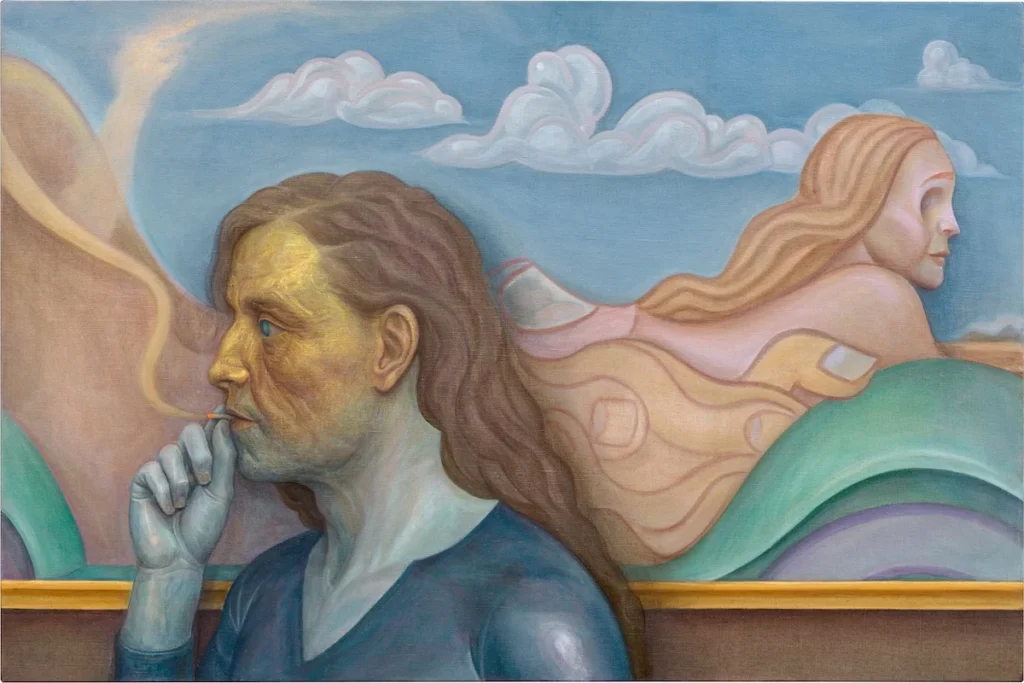
In the quiet, deliberate corners of the Canadian contemporary art world, few figures command as much intrigue—and critical reverence—as Steven Shearer. Based in Vancouver, Shearer has long operated as a phantom of the art scene, his work characterized by a haunting synthesis of classical portraiture and the raw, unvarnished aesthetic of contemporary subcultures. This week, his decades-long contribution to the visual arts was formally recognized as he was named the recipient of the prestigious Audain Prize, an honor that includes a $100,000 (CAD) award.
The prize, which celebrates the lifetime achievements of senior artists based in British Columbia, places Shearer in the company of the region’s most influential creators. By honoring an artist whose practice is as cerebral as it is visceral, the Audain Prize committee has underscored the importance of works that challenge the boundaries between "high" art and the chaotic, often discarded imagery of the digital age.
The Audain Prize: A Benchmark for Canadian Excellence
The Audain Prize is more than a monetary grant; it serves as a barometer for the health and evolution of the British Columbian art landscape. Established to honor senior artists who have made "outstanding contributions to Canadian art," the award is highly coveted, not least for the rigor of its selection process.
This year, the decision was entrusted to a committee of five esteemed curators, representing a powerhouse of institutional knowledge, including the Audain Art Museum, the Capture Photography Festival, the Marianne and Edward Gibson Art Museum at Simon Fraser University, and the Vancouver Art Gallery. The selection of Shearer—following in the footsteps of previous luminaries like Brian Jungen—signals a continued commitment to artists who engage deeply with the complex, sometimes uncomfortable realities of the human condition.
A Practice Rooted in Contradiction
To understand Steven Shearer is to understand a practice built on the friction between disparate worlds. While he is perhaps best known for paintings that evoke the moody, psychological intensity of historical portraiture, his portfolio is a sprawling, multidisciplinary endeavor.
Multidisciplinary Reach
Shearer’s artistic output is not confined to the easel. His work encompasses:
- Painting: Often characterized by a dark, romantic sensibility that bridges the gap between old-master techniques and modern alienation.
- Photography and Collage: Drawing heavily from the archives of the internet, youth subcultures, and the "trash" aesthetics of the late 20th century.
- Sculpture and Printmaking: Expanding his investigation of form and memory into the three-dimensional realm.
According to the official statement from the Audain Prize committee, Shearer’s work is "distinguished by an expansive engagement with images and objects drawn from both art history and everyday visual culture." His ability to weave heavy metal iconography, popular media, and the vernacular of the internet into cohesive, often unsettling images is what sets him apart from his contemporaries.
The Reclusive Artist: Navigating Fame from the Shadows
Perhaps the most compelling narrative surrounding Steven Shearer is his profound reclusiveness. In an era defined by the cult of the personality, where artists are often expected to be public-facing brands, Shearer has successfully maintained a "ghostly" presence.
The Faceless Creator
As reported by the Globe and Mail, Shearer’s commitment to anonymity is absolute. Even in a recent video produced by the Audain Prize to celebrate his win, the artist opted not to show his face. This is not merely a gimmick; it is a fundamental component of his artistic philosophy. For Shearer, the work—not the biography—must take center stage.
In a rare interview with the Guardian earlier this year, conducted ahead of his exhibition at David Zwirner in London, Shearer offered a glimpse into his rationale. "I wrote down lots of potential things to say, but it’s not my nature," he admitted. "All the hope or will to be able to communicate kind of goes into the pictures. And I try to stay out of the way once that’s happened."
This "staying out of the way" has led critics to devise their own interpretations of his temperament. Writer Eddy Frankel famously likened Shearer’s aesthetic to "Edvard Munch high on potent weed, or the fauvists drinking cheap cider in the woods behind school." It is a description that captures the tension between the refined and the reckless that defines his canvases.
Chronology of an Evolving Practice
Shearer’s career trajectory has been a steady, deliberate accumulation of influence. While he has been a stalwart of the Vancouver art scene for years, his international footprint has grown exponentially through his representation by global powerhouses like Galerie Eva Presenhuber and David Zwirner.
- Early Years: Emerging from the specific cultural milieu of the Pacific Northwest, Shearer began by cataloging the minutiae of youth culture—the flyers, the band posters, and the aesthetic markers of isolation.
- The Shift toward Portraiture: As his practice matured, the influence of historical art became more pronounced. He began to synthesize the angst of subculture with the gravity of traditional portraiture, creating a bridge between the "loner" in a bedroom and the "sitter" in a 17th-century oil painting.
- Institutional Recognition: His work entered the permanent collections of major museums worldwide, solidifying his status as an artist whose relevance transcends geographic boundaries.
- The Present Day: The Audain Prize win marks a career high point, providing a moment of formal reflection on his influence over the past three decades.
The Psychology of the Studio
In a revealing conversation with fashion designer Raf Simons for Interview magazine this past June, Shearer provided a rare look into the internal struggle that fuels his output. The studio, for Shearer, is a laboratory for "antisocial energies."
"I have ways in the studio of channeling my antisocial energies," he told Simons. "I used to slash the paintings and destroy them. Now I just do other things, and the paintings survive."
This admission of former destructive habits provides essential context for his current work. The "survival" of his paintings is not a sign of softening, but rather a sign of successful transformation. He has learned to transmute the raw, often violent impulses of his younger self into a more enduring form of expression.
Implications: Why Shearer Matters Now
The awarding of the Audain Prize to Steven Shearer is a significant statement by the Canadian art establishment. In a digital world increasingly dominated by fleeting, ephemeral imagery, Shearer’s work serves as a grounding force. He forces viewers to engage with the "trash" and the "subcultural" through a lens of extreme technical and historical care.
Challenging the Digital Filter
At a time when AI-generated imagery and social media filters threaten to flatten our visual culture, Shearer’s focus on the tangible—on the texture of paint, the weight of a sculpture, and the history of an image—is more vital than ever. He reminds us that even the most "antisocial" or "trashy" subject matter possesses a dignity when filtered through the human hand and the human psyche.
A Model for Future Artists
For younger artists, Shearer’s career provides a blueprint for how to maintain artistic integrity without succumbing to the pressures of the art market’s social machinery. By focusing on the "work" and allowing the "pictures to communicate," he has carved out a space where the artist can remain an observer rather than a performer.
Final Thoughts: The Enduring Mystery
As Steven Shearer accepts the Audain Prize, the art world is left to ponder the paradox he embodies. He is an artist who communicates profound volumes through his canvases while remaining silent in the public square. He is an artist who mines the depths of popular culture but retains the sensibility of a classical master.
The $100,000 prize will undoubtedly support his future projects, but the true value of the award lies in the validation of his singular path. Whether he is channeling his energies into a new series of portraits or continuing his archival exploration of the internet’s fringes, one thing remains certain: Steven Shearer will continue to work from the shadows, ensuring that his art remains the only voice he needs to project into the world.
In honoring him, the Audain Prize has not only celebrated a senior artist’s contribution but has also reaffirmed the value of mystery, introspection, and the transformative power of the canvas in an age that often demands we show everything, all at once.



