

In the high-stakes ecosystem of the New York art market, size has traditionally been the primary metric of success. For years, massive, sprawling fairs have dominated the calendar, often leaving collectors and critics alike exhausted by the sheer volume of "booth-fatigue." However, as the 2024 fall season kicks into high gear, Independent 20th Century is offering a radical alternative. By relocating to the iconic Marcel Breuer-designed building on Madison Avenue—the historic former home of the Whitney Museum—the fair is not just changing its address; it is fundamentally shifting the philosophy of the art fair experience.
Main Facts: A New Chapter in an Iconic Space
Independent 20th Century, the historiographic counterpart to the widely acclaimed Independent fair, has officially opened its doors at 945 Madison Avenue. After a successful stint in Lower Manhattan, the fair has moved into the Brutalist masterpiece that served as the Whitney Museum’s headquarters for decades and currently functions as the headquarters for Sotheby’s.

The move is both symbolic and structural. By occupying the clean, architectural lines of the Breuer building, Independent 20th Century has successfully moved away from the "trade show" aesthetic of white-walled stalls and fluorescent-lit corridors. Instead, the fair now prioritizes a "museum-quality" experience. With 57 exhibitors participating—a significant jump from the 31 participants in 2025—the fair has managed to grow in scale without sacrificing the intimate, curated atmosphere that has become its hallmark.
While the neighboring Armory Show draws thousands of visitors to a bloated landscape of 230-plus exhibitors, Independent 20th Century offers a focused, manageable, and intellectually rigorous counter-narrative. It is a deliberate pivot toward quality over quantity, proving that a fair can be both commercially viable and aesthetically elevating.

Chronology: From Tribeca to Madison Avenue
The evolution of the Independent brand has been a decade-long exercise in strategic growth.
- The Origins: Independent was established as a rebellion against the rigid, bureaucratic structures of traditional art fairs, designed by and for gallerists to foster better communication with collectors.
- Early 2024: The flagship Independent fair made a major move, vacating its long-term home at Spring Studios in Tribeca to take over the expansive Pier 36 on the Lower East Side. This allowed for a more fluid, open-plan presentation of contemporary works.
- September 2024: Independent 20th Century follows suit, moving from its previous downtown location to the prestigious East 75th Street address.
- The Current Run: The fair is now open to the public from September 24 through September 27, coinciding with the peak of the New York fall art week.
Expanding the Canon: A Commitment to Inclusivity
Independent 20th Century distinguishes itself from other historical fairs like TEFAF or the ADAA through a specific temporal mandate: the art produced between 1900 and 2000. However, the mission extends beyond simple chronology. The fair acts as a corrective lens for the art-historical canon.

The current iteration of the fair mirrors a broader, necessary shift within the global art market. There is a palpable impulse toward inclusivity, manifested in the prominence of female artists, queer creators, outsider artists, and voices from the Global South. By bringing these marginalized perspectives into the spotlight, the fair challenges the Eurocentric and male-dominated narratives that have historically defined 20th-century art.
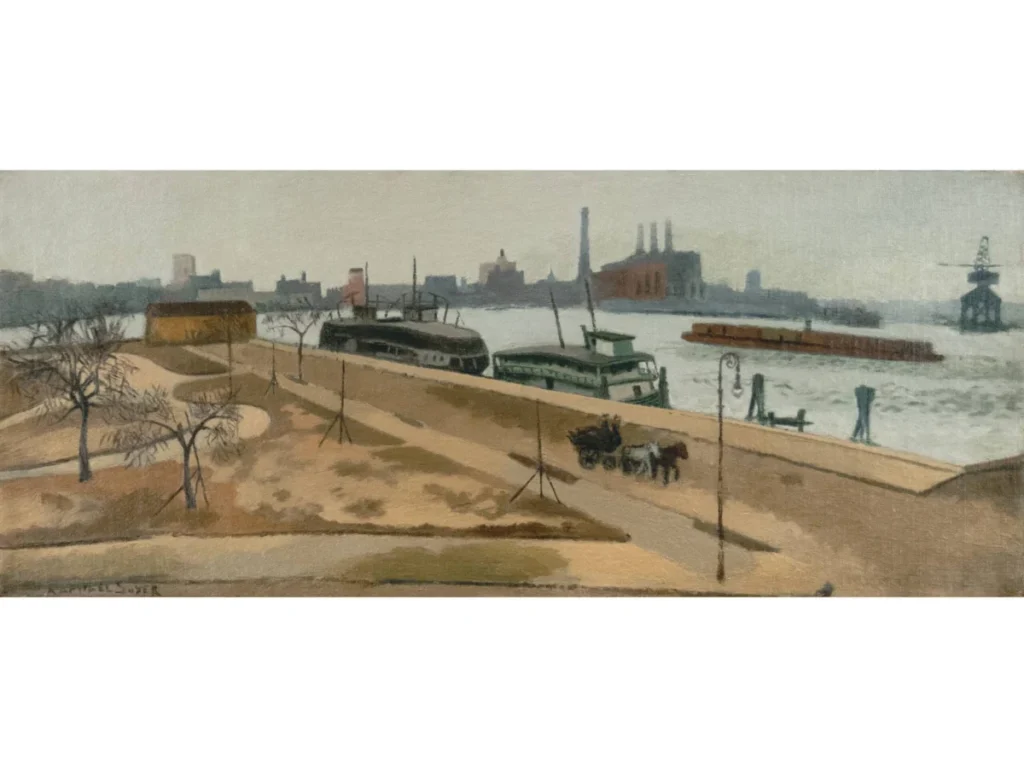
This boundary-blurring approach is evident in the fair’s layout. It is not uncommon to find a booth dedicated to the searing conceptualism of Jenny Holzer (presented by Sprüth Magers) in close proximity to the modernist masters like Picasso (John Szoke) or the social realism of Raphael Soyer (Forum Gallery). By placing these works in conversation, the fair suggests that the "historical" and the "contemporary" are not silos, but rather fluid states of artistic production.

Supporting Data: Curatorial Standouts and Highlights
The strength of the fair lies in its thematic presentations. Rather than disparate booths, many galleries have collaborated to create mini-exhibitions that function as scholarly contributions.
"Black Soho"
Perhaps the most ambitious presentation is "Black Soho," a collaborative effort between the galleries Ryan Lee and Salon 94. The project documents the vibrant, often overlooked art scene in New York City between 1961 and 1984. By featuring luminaries such as Emma Amos, Jean-Michel Basquiat, Camille Billops, Frederick J. Brown, Vivian Browne, Ed Clark, David Hammons, and Norman Lewis, the presentation serves as a vital historical document of Black artistic excellence during a transformative era of civil rights and urban change.

The Women of Stable Gallery
Berry Campbell brings a sharp focus to the mid-century period, highlighting the female artists who defined the legendary Stable Gallery (1953–1970). The presentation includes works by Elaine de Kooning, Joan Mitchell, Charlotte Park, and Janice Biala, effectively re-centering these women as the primary drivers of the Abstract Expressionist and post-painterly movements.
Solo Showcases
The fair also excels in its solo presentations:

- Luciano Fontana (Nahmad Contemporary): A departure from his famous "slashed" canvases, this selection highlights his earlier, experimental work, including sand-sprinkled and Murano glass-encrusted pieces.
- Bona de Mandiargues (Alison Jacques): A masterclass in surrealism from a self-taught artist whose works (1926–2000) offer a dreamlike, haunting exploration of the female psyche.
- General Idea (Mitchell-Innes & Nash): The collective’s darkly humorous, politically charged conceptual work remains as biting today as it was at its inception, providing a necessary jolt of social commentary to the fair’s polished atmosphere.
Implications: The Future of the Art Fair
The relocation of Independent 20th Century to the Breuer building serves as a litmus test for the future of the industry. As the traditional, gargantuan art fair model begins to show signs of exhaustion—evidenced by the waning appeal of the "everything-everywhere" approach—Independent is signaling a shift toward the "boutique-museum" model.
The implications for collectors and institutions are clear: there is a growing appetite for fairs that offer intellectual depth. When an art fair functions more like a biennial or a museum exhibition, it creates a space for discovery rather than mere transaction.

Furthermore, by occupying a building that is itself an architectural icon, Independent is elevating the status of the fair from a commercial marketplace to a site of cultural discourse. The choice of the Breuer building is not incidental; it reinforces the fair’s commitment to the history of art, providing a brutalist, austere backdrop that forces the viewer to engage deeply with the works on display.
Conclusion
As the art world continues to navigate the complexities of the 21st century, Independent 20th Century remains a vital anchor. By balancing the commercial demands of the market with a commitment to historical inclusivity and scholarly rigor, it has carved out a unique space that feels both urgent and timeless. Whether one is a seasoned collector, an art historian, or a casual observer, the fair offers a masterclass in how to present art in the modern age.

The fair is currently in session at 945 Madison Avenue, and for those who value the nuance of history over the noise of the masses, it is an essential destination. As the boundaries between the 20th century and the contemporary moment continue to dissolve, Independent 20th Century is poised to remain the definitive venue for those looking to understand where we have been, and where the art world is heading next.



