

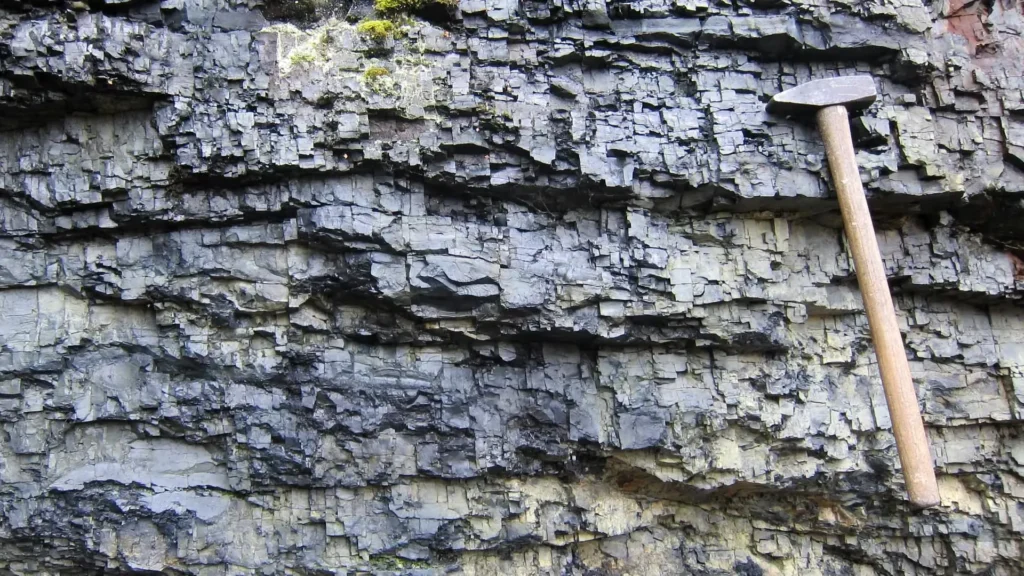
Between 2.5 and 2 billion years ago, Earth underwent the most profound chemical metamorphosis in its history. As oxygen began to accumulate in the atmosphere—a shift known as the Great Oxidation Event—it set in motion a cascade of biological and geological changes. This transition effectively laid the chemical foundation for the eventual rise of complex, multicellular life, including the plants and animals that would emerge half a billion years ago.
However, a new study led by researchers at Caltech suggests that our understanding of this critical era may be based on a flawed interpretation of the geological record. By re-examining the isotopic signatures trapped within ancient rocks in Russia, the team has challenged the long-held belief that a specific, famous chemical anomaly was the result of a planet-wide environmental shift. Instead, they argue that local, heat-driven processes may be responsible for what was previously hailed as a global phenomenon.
The Shunga-Francevillian Event: A Global Anomaly?
For decades, geologists have pointed to an unusual carbon-isotope signature as evidence that Earth’s carbon cycle became radically unbalanced on a global scale roughly 2 billion years ago. This signature, known as the Shunga-Francevillian event, has been observed in two primary locations: the Zaonega Formation in Karelia, Russia, and the Francevillian Basin in Gabon.
Carbon isotopes—atoms of carbon with varying numbers of neutrons—act as a chemical "fingerprint" for biological processes that occurred billions of years ago. By measuring the ratio of these isotopes in drill cores (long, cylindrical samples extracted from deep underground), scientists can reconstruct the environmental conditions of the ancient Earth, much like reading the growth rings of a tree.
The Shunga-Francevillian event is characterized by the massive burial of microbial organic matter beneath the seafloor. This burial sequestered vast amounts of carbon in rocks, leaving behind an isotopic signal that many researchers interpreted as a sign of a synchronized, global disruption.
"Earth, in a way, went crazy during that time interval when oxygen appeared in the atmosphere," says Aivo Lepland, a researcher at the Geological Survey of Norway (NGU) and a co-author of the study. "What we are trying to assess are the causes and consequences of Earth oxygenation. This information is archived in the rocks, so, in order to study what happened, you have to study rocks."
Chronology of a Geological Mystery
The timeline of this research spans from the deep past to the cutting-edge laboratories of today.
- 2.5 to 2.0 Billion Years Ago: The Proterozoic Eon witnesses the rise of atmospheric oxygen. In the Zaonega region of present-day Russia, massive amounts of organic material are deposited and buried in marine sediments.
- The Post-Deposition Era: A sheet of magma intrudes into these sediment layers, subjecting the buried organic material—including crude oil and kerogen—to intense, localized heating.
- The 20th and 21st Century: Scientists recover drill cores from Karelia and Gabon. The unique isotopic signatures within these rocks become a cornerstone of the "global disturbance" theory regarding the Earth’s early carbon cycle.
- Recent Years: Researchers at Caltech, led by Nivedita Thiagarajan and John Eiler, begin developing a new framework for understanding the formation of natural gas using isotope ratios.
- 2024-2025: The team publishes their findings in the journal Geology, suggesting that the Russian isotopic record is a product of localized hydrothermal activity rather than a global catastrophe.
- Summer 2025 and Beyond: A massive international effort involving 18 countries begins to analyze new drill cores from Gabon to see if the Russian findings hold true for the other half of the Shunga-Francevillian event.
Supporting Data: Magma, Methane, and Microbes
The Caltech study, published in Geology, offers a compelling alternative to the global-change hypothesis. The researchers focused on microscopic fluid inclusions—tiny pockets of gas trapped within rocks rich in pyrobitumen, an insoluble organic material created when crude oil or kerogen is "cooked" by intense heat.
By analyzing these trapped gases, the team reconstructed the thermal history of the Zaonega Formation. They discovered a significant thermal gradient: temperatures near the site of an ancient magma intrusion reached approximately 350 degrees Celsius, while, just 300 meters higher, temperatures dropped to about 72 degrees Celsius.
This heat-driven process provides a mechanical explanation for the isotope signals. The researchers propose that the intrusion of magma forced its way through marine sediments, "baking" the organic material stored there. This thermogenic process generated hydrocarbons, such as methane and propane. As these gases migrated upward through the sediment, they were consumed by methane-eating microbes near the seafloor. The biomass produced by these microbes carried a specific light carbon-isotope signature, which then became fossilized in the surrounding rocks.
"This chain of geological and biological processes can account for the unusual carbon-isotope signal recorded at the Zaonega Formation," explains Nivedita Thiagarajan, the study’s lead author. "It was interesting to see that some of the same signatures that we observe in modern oil and gas basins are also there and preserved in 2-billion-year-old samples."
Official Perspectives and Expert Analysis
The research, led by Thiagarajan under the supervision of John Eiler—the Robert P. Sharp Professor of Geology and Geochemistry at Caltech—marks a departure from established dogma. The team’s findings suggest that the scientific community may have been over-interpreting local basin-scale phenomena as evidence of a unified, planet-wide geological event.
"One major debate centers on an unusual carbon-isotope signal that has often been interpreted as evidence of a worldwide environmental change," says Thiagarajan. "We studied gases trapped in microscopic pockets within rocks from the Zaonega Formation… and found that the carbon-isotope signal at this key site can be explained by local phenomena that occurred in a several-hundred-square-kilometer sedimentary basin rather than across the entire globe."
The collaboration between Caltech and the Geological Survey of Norway (NGU) was instrumental in this re-evaluation. Lepland brought a unique collection of isotope measurements to the lab, which, when combined with the team’s new framework for hydrocarbon formation, allowed for a fresh interpretation of the ancient data.
The Implications: Is Our History of Earth Oxygenation Correct?
If the Shunga-Francevillian event is not the global, synchronized signal scientists once believed it to be, the implications for paleoclimatology are significant. For years, the event has been used as a "reference point" for the behavior of the early Earth. If that reference point is actually a collection of localized, heat-induced anomalies, researchers may need to recalibrate their models of how the Earth’s carbon cycle responded to the rise of oxygen.
However, the researchers remain cautious. They acknowledge that they cannot completely rule out other processes, nor can they definitively say that the Gabon site shares the exact same origin story as the Russian site.
"Because Zaonega is a reference site for the Shunga-Francevillian event, our findings raise important questions about whether it should be considered a worldwide event," says Thiagarajan.
To resolve this, the international scientific community is turning its eyes toward the Francevillian Basin in Gabon. The GOE-DEEP project, co-funded by the International Continental Scientific Drilling Program, is currently undertaking a rigorous analysis of new rock cores recovered from the region.
In February, these cores arrived at the NGU in Norway. An international team of researchers representing 18 different countries is scheduled to begin sampling these rocks later this year. By applying the same analytical techniques used on the Russian samples, the team hopes to determine if the Gabonese signal was also driven by local geology—or if it truly represents a global, billion-year-old secret.
"Now we can really put things together by doing a similar type of study on the Gabonese rocks to compare the two sites," says Lepland. "This is how science moves forward."
As the study of the Earth’s deep past continues to evolve, this research serves as a reminder that even the most "famous" signals in geology require constant, rigorous re-evaluation. The story of our planet’s oxygenation is far from settled; it is merely being rewritten, layer by layer, in the laboratories of the modern age.



