
In an era where global trade relies heavily on the seamless movement of goods across vast, often lawless stretches of the ocean, the safety of seafarers and merchant vessels has never been more critical. At the heart of this defensive architecture stands the International Maritime Bureau’s (IMB) Piracy Reporting Centre (PRC). Since its inception in 1991, the PRC has functioned as the global industry’s sentinel, a 24-hour nerve center dedicated to the prevention, documentation, and mitigation of maritime crime. As geopolitical instability and economic pressures fluctuate, the role of the PRC has evolved from a simple reporting agency into a sophisticated hub of intelligence and emergency coordination.
The Mandate: A 24-Hour Shield for Global Shipping
The IMB Piracy Reporting Centre was born out of necessity. By the late 20th century, the surge in maritime piracy—particularly in the volatile waters of Southeast Asia and the Gulf of Guinea—threatened the viability of international trade routes. The IMB recognized that without a centralized, independent body to record and broadcast threats, individual shipmasters were left to navigate increasingly dangerous waters in isolation.
The PRC serves as a singular, reliable point of contact for any vessel under threat or attack. Operating around the clock, the center performs three primary functions: monitoring, broadcasting, and liaison. When a shipmaster reports an incident, the PRC does not merely log the event; it initiates a chain of notification that alerts other vessels in the vicinity, provides critical situational awareness to relevant naval authorities, and maintains a continuous flow of communication with the affected crew. This rapid response mechanism has, over three decades, been instrumental in deterring would-be attackers and saving countless lives.
Chronology: Three Decades of Maritime Vigilance
The history of the PRC is inextricably linked to the changing geography of maritime crime.
The Formative Years (1991–2000)
The early 1990s saw the PRC establish its operational protocols. Initially, the focus was on the Malacca Straits, a vital artery for global oil and commodity transport. By creating a standardized reporting framework, the PRC brought transparency to a region where piracy was previously shrouded in under-reporting due to fear of insurance hikes or bureaucratic red tape.
The Peak of Somali Piracy (2005–2012)
Perhaps the most significant challenge in the Bureau’s history was the emergence of organized Somali piracy. This era saw the rise of mother-ships and long-range hijackings that disrupted shipping lanes in the Indian Ocean. The PRC became a critical source of intelligence, helping to coordinate the efforts of various international navies and private security contractors. During this period, the PRC’s data-driven approach allowed shipping companies to implement Best Management Practices (BMP), which fundamentally changed how merchant ships were hardened against boarding.
The Shift to the Gulf of Guinea and Global Diversification (2013–Present)
As piracy in the Indian Ocean subsided due to collective international naval action, the center pivoted its focus toward the Gulf of Guinea and the Americas. The nature of the crime shifted from hijacking for ransom to kidnapping for extortion and cargo theft. Today, the PRC continues to adapt, integrating satellite tracking and real-time digital reporting to stay ahead of increasingly sophisticated criminal syndicates.
Data as a Weapon: The Strategic Value of Reporting
A recurring theme in the IMB’s mission is the plea for transparency. The Bureau consistently emphasizes that the accuracy of their reporting is only as good as the information provided by shipmasters. The IMB urges all owners and captains to report even "suspected" incidents—the shadows in the distance, the unauthorized approach, or the suspicious radar blip.
The data gathered by the PRC provides an empirical foundation for maritime policy. Without this data, authorities would be unable to allocate naval assets effectively. Governments and international maritime organizations, such as the International Maritime Organization (IMO), rely on these reports to assess risk levels in specific coastal waters.
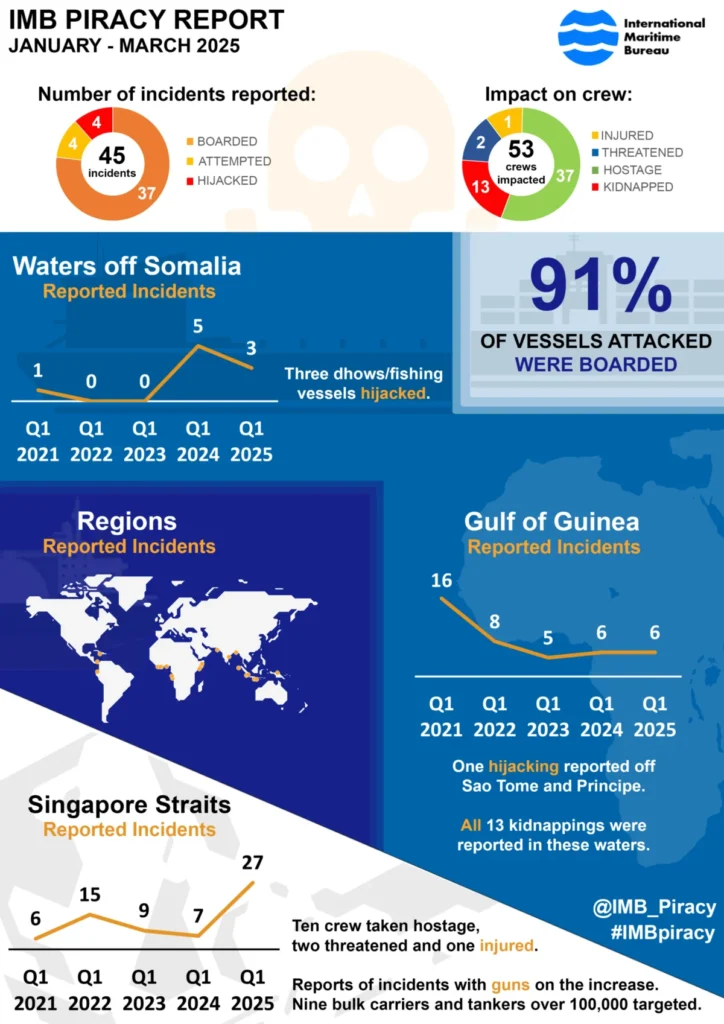
For instance, the 2024 Piracy and Armed Robbery Against Ships report, now available for request, offers an exhaustive breakdown of regional trends. These reports are not mere statistics; they are strategic documents that influence maritime insurance premiums, the deployment of armed guards, and the routing of multi-billion dollar cargo shipments. By documenting the "actual, attempted, and suspected" incidents, the PRC provides the forensic evidence needed to hold coastal states accountable for their security responsibilities.
Official Responses and Collaborative Security
The effectiveness of the IMB Piracy Reporting Centre is predicated on its independence and its ability to act as a bridge between the private sector and sovereign authorities.
The Role of the IMB Director
Michael Howlett, the current Director of the ICC International Maritime Bureau, has frequently championed the need for a collaborative approach. According to the Bureau, the fight against maritime crime is not one that can be won by the shipping industry alone. It requires a "tripartite" effort:
- Industry Action: Implementing strict hardening measures and vigilant watch-keeping.
- Naval Coordination: Utilizing the intelligence provided by the PRC to position naval assets for rapid intervention.
- Legal Prosecution: Ensuring that those apprehended for maritime crimes are processed through a robust judicial system, effectively ending the cycle of impunity that has plagued certain coastal regions.
The IMB works closely with law enforcement agencies globally, providing the raw data that allows for the identification of patterns. Whether it is a syndicate targeting specific types of vessels or an increase in nocturnal boardings, the PRC identifies these trends and issues warnings that are transmitted directly to the bridge of the ship, acting as a force multiplier for security.
Implications: The High Stakes of Maritime Security
The implications of maritime piracy extend far beyond the immediate threat to the crew. Piracy is an economic anchor on international trade. When a vessel is attacked, the resulting delays, insurance surcharges, and security costs are passed down the supply chain, ultimately increasing the cost of goods for the end consumer.
Furthermore, the rise of piracy in developing nations often indicates a breakdown in law and order that transcends the coastline. Piracy is frequently a symptom of broader instability, poverty, and corruption. By highlighting these issues through systematic reporting, the IMB exerts a form of "soft power," keeping the eyes of the international community on regions that might otherwise be ignored.
The Future of the PRC
As we look toward the future, the IMB is preparing for the digital age of maritime crime. Cyber-piracy, the hijacking of ship communications, and the use of drone technology by criminal groups are the new frontiers. The PRC is currently evolving its reporting infrastructure to ensure that it can handle these modern threats with the same tenacity it has historically applied to traditional boarding incidents.
Conclusion: A Call to Vigilance
The IMB Piracy Reporting Centre stands as a testament to the power of organization and data. It reminds us that the vastness of the ocean does not have to be a sanctuary for crime if there is a unified, global effort to record and report.
For shipowners, masters, and stakeholders, the PRC is more than just an office in London; it is a vital lifeline. By maintaining a constant dialogue with the Centre, the maritime community ensures that they are not just reactive participants in the security of their ships, but active contributors to a safer, more transparent global maritime domain.
The 2024 Piracy and Armed Robbery Against Ships report serves as a stark reminder of the work that remains. As the industry faces new and complex challenges, the PRC’s commitment to providing clear, actionable intelligence remains the most effective tool in the kit of the global merchant fleet.
Contact Information and Resources
For those seeking further information or looking to report an incident, the IMB maintains a professional team ready to assist.
- Director: Michael Howlett
- Organization: ICC International Maritime Bureau
- Direct Telephone: +44 207 423 6960
- Direct Email: [email protected]
- Official Reports: Interested parties may request a copy of the 2024 Piracy and Armed Robbery Against Ships report by visiting the official IMB portal.
By engaging with the IMB and contributing to its reporting network, the global shipping community continues to uphold the rule of law on the high seas, ensuring that the lifeblood of the global economy remains protected against those who seek to disrupt it.