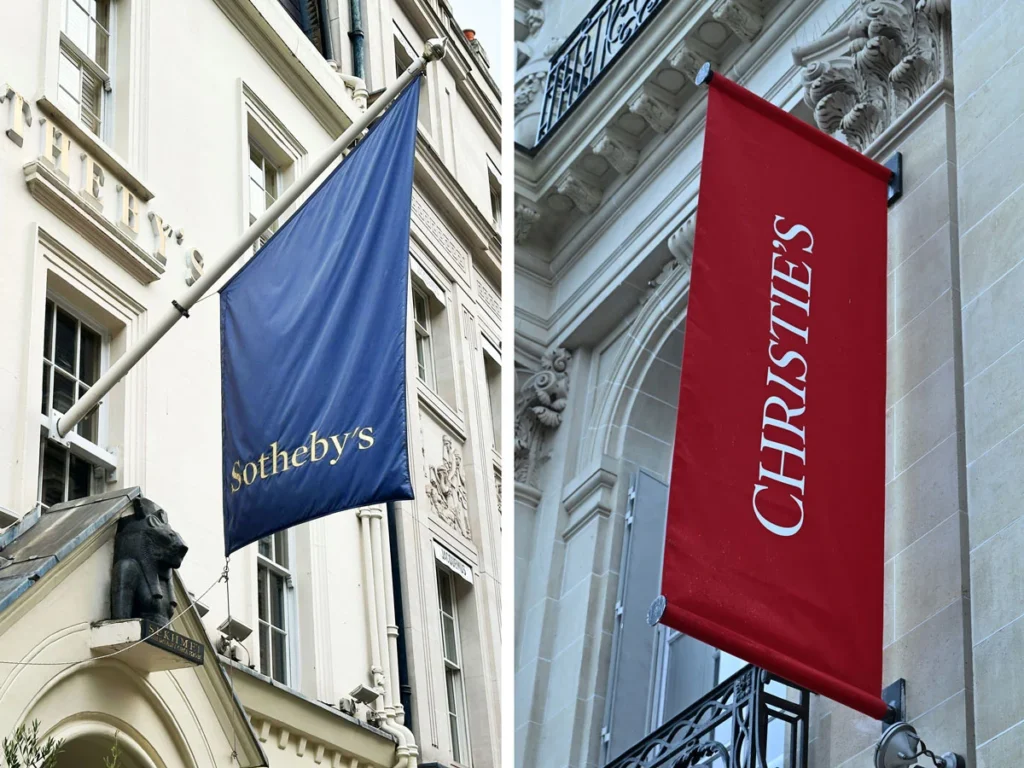
The global art market, typically characterized by a tranquil lull during the late summer months, is currently the site of a high-stakes corporate rivalry. As the industry prepares for the pivotal November marquee auctions in New York, the world’s two most dominant auction houses, Christie’s and Sotheby’s, are locked in a fierce competition to secure one of the year’s most anticipated consignments: the estate of the late Herbert Lust.
Lust, a legendary investment banker and a titan of postwar art collecting, passed away this past May at the age of 99. Even in his final years, Lust remained a fixture of the New York gallery scene, a man whose life was inextricably woven into the fabric of 20th-century art history. Now, with roughly 300 pieces from his vast collection—collectively valued in the region of $60 million—hitting the market, the battle for his consignment represents more than just a financial windfall; it is a contest over the legacy of one of the last great "obsessive" collectors of the modern era.
Main Facts: The $60 Million Consignment
The estate of Herbert Lust is currently shopping a selection of approximately 300 works to major auction houses. While the bulk of the collection consists of modestly scaled works and secondary pieces likely destined for "day sales," the collection is anchored by roughly ten "major" works that carry the lion’s share of the $60 million valuation.
The undisputed centerpiece of the offering is a significant sculpture by Alberto Giacometti. Sources familiar with the negotiations indicate that the work is likely an edition of Figure, demie grandeur (1964). Standing approximately 45 inches tall, this bronze is one of Giacometti’s more substantial late-career figures. Beyond the Giacometti trophy, the consignment includes notable works by:
- Hans Bellmer: Lust was arguably the world’s foremost private collector of the German Surrealist, once boasting that he owned more Bellmers than the top four global museums combined.
- Robert Indiana: A longtime friend of Lust, Indiana’s bold, graphic works formed a core pillar of the collection.
- Frank Stella and Mary Bauermeister: Representing the more abstract and avant-garde leanings of Lust’s postwar interests.
- Alexander Calder: Lust maintained a deep inventory of Calder’s mobiles and stabiles, many of which were suspended from the ceilings of his homes in Greenwich and Manhattan.
The "rainmakers" at Christie’s and Sotheby’s are currently in the final stages of pitching for the rights to sell these works, with a formal announcement expected as the fall season commences.
Chronology: A Century of Collecting
To understand the significance of the upcoming sale, one must look at the nearly 100-year trajectory of Herbert Lust’s life. His journey from a Fulbright scholar to a preeminent collector serves as a map of the postwar art world’s evolution.
1949: The Paris Awakening
The seeds of the Lust collection were sown in 1949, when Lust arrived in Paris on a Fulbright scholarship. It was during this period that he first encountered Alberto Giacometti. Initially, Lust was repulsed by the artist’s signature attenuated, skeletal figures, describing them as "awful." However, his perspective was fundamentally shifted by the intellectual climate of the time. After reading the existentialist philosopher Jean-Paul Sartre, who championed Giacometti as the definitive artist of the human condition, Lust reconsidered. "If Sartre and people like that said he was the greatest living artist," Lust later recalled, "there was something wrong with me." This epiphany sparked a lifelong obsession.
1950s–1980s: Building the Trove
While pursuing a successful career in investment banking, Lust used his financial acumen to build an unconventional collection. He did not follow a rigid corporate strategy; instead, his acquisitions were the result of an extraordinarily active social life and a "curious eye." He befriended the artists he collected, including Robert Indiana and Alexander Calder. Lust was also a neighbor and close friend of Joseph Hirshhorn, the founding benefactor of the Hirshhorn Museum and Sculpture Garden.
2017–2019: The Sotheby’s Connection
In recent years, Sotheby’s appeared to have gained the upper hand in cultivating a relationship with the aging collector. In 2017, the house successfully auctioned 27 works by Robert Indiana from Lust’s holdings. Two years later, Sotheby’s produced a documentary-style film at Lust’s home in Greenwich, Connecticut. The footage captured the 93-year-old collector "holding court" in a residence so overstuffed with masterpieces that it functioned as a private museum. This long-term "nurturing" of the client is a hallmark of Sotheby’s strategy under its current leadership, potentially giving them a "leg up" in the current negotiations.
2024: The Passing of a Legend
Following Lust’s death in May 2024 at the age of 99, his executors began the process of liquidating the remaining assets of the estate that had not already been bequeathed to public institutions.
Supporting Data: Market Context and Valuations
The $60 million estimate for the 300 works is driven largely by the high-end Giacometti and Bellmer pieces. To understand why auction houses are fighting so hard for this consignment, one must look at the recent performance of similar works.
The Giacometti Benchmark
The star lot, Giacometti’s Figure, demie grandeur, is part of an edition of six cast in 1964. Lust famously described this work as "the only nude [Giacometti made] that has a real face."
In the current market, Giacometti’s standing figures are among the most valuable sculptures in existence. For comparison:
- $25 Million: In 2022, Christie’s sold Femme de Venise III (a 46-inch bronze) for just over $25 million.
- $28.4 Million: In 2023, Sotheby’s sold Femme Leoni (60 inches) for $28.4 million.
- $141 Million: Giacometti’s L’Homme au doigt holds the record for the most expensive sculpture ever sold at auction, set at Christie’s in 2015.
Given its unique provenance and Lust’s personal connection to the artist, the Figure, demie grandeur could easily anchor a major evening sale and attract aggressive bidding from global collectors.
The Bellmer Advantage
Lust’s pragmatism as an investor was evident in his cornering of the Hans Bellmer market. He famously quipped that he could buy "50 great Bellmers for the price of one great Magritte." By amassing such a massive volume of the artist’s work, Lust effectively became a market-maker for Bellmer. The release of these works represents a rare opportunity for Surrealist collectors to acquire pieces with impeccable provenance.
Philanthropic Dispersals
It is important to note that the $60 million estate represents only a fraction of what Lust once owned. Over the decades, he donated thousands of objects to museums, including:
- The Tel Aviv Museum of Art: Received a staggering 200 Giacomettis, five Bellmers, and works by Indiana and Man Ray.
- The Hirshhorn Museum: In 2020, Lust donated over 70 photographs by masters such as Berenice Abbott, Henri Cartier-Bresson, and Eugène Atget.
Official Responses: A Wall of Silence
As is customary during active negotiations for major estates, both Christie’s and Sotheby’s have declined to provide official comments regarding their pursuit of the Lust collection.
Spokespeople for the auction houses typically cite client confidentiality and the sensitivity of estate settlements. However, industry insiders suggest that the "shopping" process involves detailed proposals regarding marketing budgets, guaranteed minimum prices, and the placement of the works within specific sales (e.g., the "Evening Sale" for masterpieces versus "Day Sales" for the 290 smaller works).
The estate’s representatives have also remained tight-lipped, though the valuation of $60 million has been corroborated by multiple sources familiar with the inventory.
Implications: The Market Barometer
The sale of the Herbert Lust collection arrives at a critical juncture for the art market. Following a period of post-pandemic cooling and high interest rates, the November auctions will serve as a vital barometer for the health of the high-end art economy.
1. The Power of Single-Owner Collections
The market has shown a consistent preference for "single-owner" sales—collections like Lust’s that have a clear identity and provenance. Buyers are often willing to pay a "provenance premium" for works that have been off the market for decades, as is the case with many of Lust’s acquisitions.
2. The Shift Toward Postwar Stability
While the contemporary market has seen some volatility, the "Blue Chip" postwar sector (Giacometti, Calder, Indiana) remains a safe haven for capital. The Lust estate offers exactly the kind of historical stability that risk-averse collectors are currently seeking.
3. Institutional Impact
While the auction houses fight over the $60 million, the public will soon benefit from Lust’s earlier generosity. In October, the Hirshhorn Museum will open "Carlotta Corpron: Light Is a Plastic Medium," an exhibition featuring 67 photographs, 54 of which were recent gifts from Lust. This highlights a recurring theme in Lust’s life: while he was a savvy investor, his primary motivation was a genuine, almost academic, love for the medium.
Conclusion: "Always Buy What You Love"
Herbert Lust’s legacy is defined by a rare combination of financial pragmatism and intellectual passion. He did not view art merely as an asset class, but as a lifelong companion. His advice to future generations of collectors was deceptively simple: "Always buy what you love."
As the November auctions approach, the art world will see the final chapter of this obsession play out on the auction block. Whether the collection lands at Sotheby’s or Christie’s, the sale of these 300 works marks the end of an era—the dispersal of a collection built not by a committee of advisors, but by a single man with a Fulbright scholarship, a copy of Sartre, and a "curious eye" that never closed.