
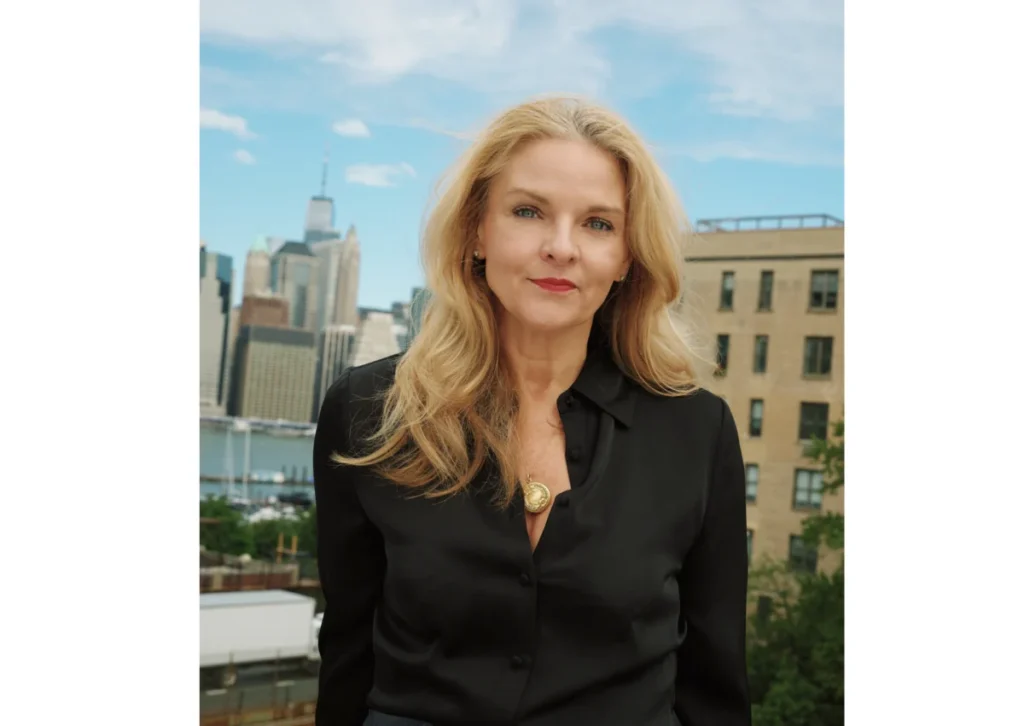
Artadia, the preeminent national nonprofit dedicated to providing unrestricted financial support to visual artists, has officially entered a new era. This week, the organization announced the appointment of Allison Derusha as its new executive director. A veteran arts strategist and seasoned fundraiser with over two decades of experience, Derusha arrives at a critical juncture for the organization, tasked with scaling its impact and fortifying its financial commitment to the creative community across the United States.
Her appointment marks the culmination of a period of leadership transition for Artadia, following the departure of former director Patton Hindle and the subsequent interim leadership of Bora Kim. As Derusha assumes the helm, the organization is poised to leverage her extensive background in institutional development to deepen its footprint in the seven cities where it currently operates: Atlanta, Boston, Chicago, Houston, Los Angeles, New York, and the San Francisco Bay Area.
A Legacy of Institutional Excellence
Derusha’s professional trajectory reads as a masterclass in arts philanthropy. With more than 25 years in the sector, she has built a reputation for navigating the complex intersection of private donor interest and institutional mission. Her resume includes pivotal roles at some of the most prestigious cultural institutions in the world, including the Solomon R. Guggenheim Museum, the American Ballet Theatre, the National Academy of Design, and the SculptureCenter.
Most recently, Derusha operated her own firm, A/D Consulting, where she advised a high-profile roster of clients. Her consultancy work was instrumental in securing resources for organizations such as Baryshnikov Arts, the Centre Pompidou, Performa, the Jacob’s Pillow Dance Festival, and the SCAD Museum of Art. According to official figures released by Artadia, Derusha has been directly responsible for raising more than $150 million over the course of her career—a track record that makes her an ideal candidate to steer Artadia’s future fundraising initiatives.
Chronology of a Leadership Transition
To understand the weight of Derusha’s appointment, it is necessary to examine the recent history of Artadia’s executive suite. The organization has navigated significant shifts over the past year, reflecting the broader volatility often seen in the nonprofit arts sector.
- The Hindle Era: Patton Hindle previously held the executive director role, steering the organization through various fundraising campaigns and program expansions. Her tenure concluded when she accepted a prestigious position as the director of arts at the Knight Foundation, a move that left a significant void in Artadia’s leadership.
- The Interim Period: Following Hindle’s departure earlier this year, Bora Kim stepped into the role of interim executive director. Kim’s steady hand ensured the continuity of Artadia’s grant cycles and national programming during the search for a permanent successor.
- The Strategic Realignment: Upon the announcement of Derusha’s hiring, Artadia confirmed that Kim would remain a vital part of the leadership team, transitioning into the role of deputy director. This move is widely viewed as a strategic decision to retain institutional knowledge while allowing Derusha to focus on high-level growth and external advocacy.
- The Formal Introduction: Derusha, who officially began her tenure earlier this month, is scheduled for her first major public appearance on September 23. The organization will host its annual New York luncheon at the National Arts Club, an event that serves as both a celebration of its current awardees and a vital fundraiser for future cycles.
Supporting Data: Why Artadia Matters
Founded in 1999, Artadia was born out of a specific, urgent necessity. During the 1990s, the National Endowment for the Arts (NEA) significantly curtailed its direct grant-making programs for individual artists, creating a vacuum in the support ecosystem for contemporary creators. Artadia was established as a direct response to this decline, stepping in to ensure that visual artists—who are often the most financially vulnerable participants in the art market—had access to capital that could be used at their own discretion.
The "unrestricted" nature of these grants is the hallmark of the Artadia model. Unlike project-based funding, which requires artists to adhere to rigid grant proposals and specific deliverables, Artadia’s support allows artists to pay for rent, studio equipment, childcare, or living expenses. This philosophy recognizes that the artist is the best judge of their own needs.
The data supports the effectiveness of this model. Over the last quarter-century, Artadia has built a network of thousands of alumni, many of whom have gone on to receive Guggenheim Fellowships, represent the U.S. at the Venice Biennale, and hold solo exhibitions at major museums worldwide. By identifying talent in its formative stages and providing a financial "floor," Artadia has acted as an essential incubator for American art.
Official Responses and Strategic Vision
In her first statement as executive director, Derusha emphasized that her leadership would be defined by a commitment to the "urgently relevant" nature of the nonprofit’s mission.
"I am honored to join Artadia and to lead an organization whose commitment to artists is both deeply rooted and urgently relevant," Derusha said. "The landscape for working artists is increasingly precarious. My goal is to not only expand our network but to significantly increase our financial commitment to these individuals. We need to ensure that the creative class has the stability required to produce the work that challenges, inspires, and defines our culture."
Artadia’s board of directors has expressed total confidence in her ability to bridge the gap between private philanthropy and public service. By bringing in a leader with deep ties to both the institutional world and the consulting sector, the board is signaling a move toward more aggressive, diversified fundraising strategies—a necessity in an era where public funding for the arts continues to face scrutiny.
The Broader Implications for the Art Market
The arrival of a leader with Derusha’s specific pedigree—someone who has worked with entities as varied as the Centre Pompidou and SCAD—suggests that Artadia is looking to broaden its reach beyond its current seven-city network.
Expanding the National Footprint
Industry analysts suggest that Artadia may be preparing for a period of geographic expansion. The organization’s current model is city-specific, allowing for deep community engagement in hubs like Houston and Chicago. However, with Derusha’s experience in large-scale national fundraising, there is speculation that the organization may look to identify new regions where the artist-support ecosystem is currently underdeveloped.
The Professionalization of Artist Advocacy
Derusha’s transition from a consultant for high-profile institutions to a nonprofit executive reflects a trend toward the professionalization of artist-support organizations. As the art market becomes increasingly financialized, nonprofits like Artadia must operate with the same strategic precision as private galleries and museums to survive. Her appointment suggests that Artadia intends to remain a permanent, professionalized fixture of the art world, rather than a grassroots project that fluctuates with the economic climate.
Addressing the "Precarity Crisis"
Perhaps most significantly, Derusha’s mandate arrives at a time when the "starving artist" trope is being replaced by the reality of the "priced-out artist." In cities like New York, San Francisco, and Los Angeles, the rising cost of studio and residential space is pushing artists out of the very cities where they contribute the most to the cultural fabric. Artadia’s model of unrestricted grants is an essential counter-measure to this displacement. Under Derusha’s leadership, the organization is expected to double down on its advocacy for artists’ financial well-being as a matter of urban policy and cultural sustainability.
Looking Ahead: The Road to the Future
As the arts sector prepares for the upcoming fall season, all eyes will be on the National Arts Club on September 23. The luncheon will serve as a bellwether for the organization’s future. It is here that Derusha will begin the process of building relationships with the major donors, board members, and, most importantly, the artists who form the backbone of Artadia.
The organization’s transition from Hindle to Kim, and now to Derusha, represents a successful evolution. While many nonprofits struggle during leadership handoffs, Artadia has maintained its momentum, ensuring that the flow of funds to artists remains uninterrupted.
For the visual artists currently working in Artadia’s seven cities, the change in leadership is more than an administrative note—it is a signal that the organization intends to grow, evolve, and continue its essential work of ensuring that artistic production remains a viable, supported pursuit in the 21st century. With a $150 million fundraising track record and a clear mandate to scale, Allison Derusha is poised to take Artadia into a new, more robust chapter of its history.