
For centuries, volcanologists have grappled with a fundamental enigma: why do two volcanoes with nearly identical chemical compositions and geological settings behave like polar opposites? While one might unleash a spectacular, high-energy display of fire fountains and rapid-fire debris, another may exhibit a sluggish, effusive flow that crawls across the landscape.
A groundbreaking study led by an international research team at The University of Manchester has finally provided a missing piece to this complex puzzle. By peering into the microscopic life cycle of magma, scientists have identified a phenomenon known as "superheating"—a thermal state that fundamentally alters the internal structure of molten rock, dictating the tempo and intensity of an eruption before it even breaches the surface.
The Core Discovery: Dissolving the Seeds of Complexity
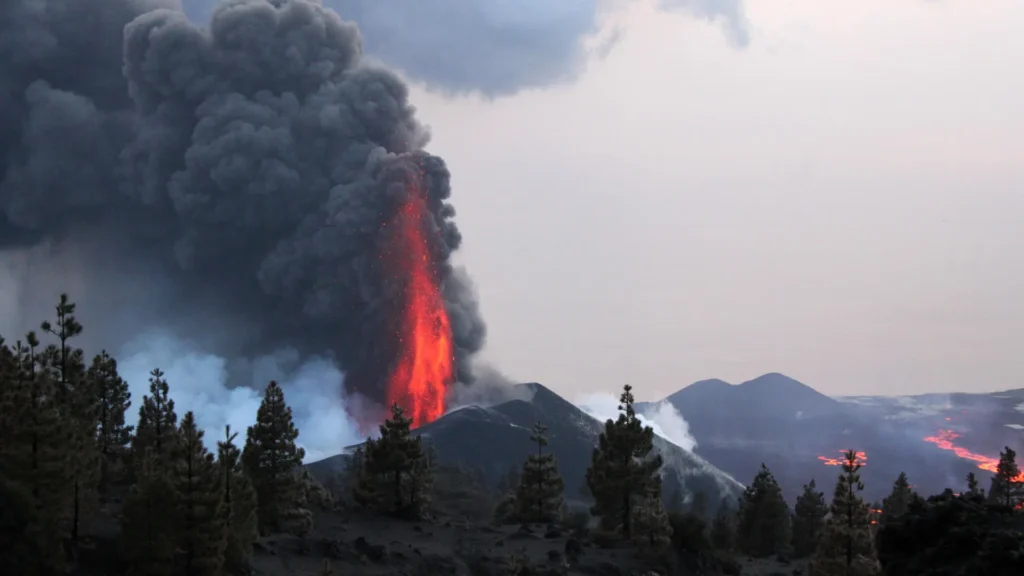
Published in the journal Nature Communications, the research focuses on the 2021 Tajogaite eruption on the island of La Palma, Spain. The team discovered that when magma is subjected to intense heat—rising well above the temperature at which its constituent minerals remain stable—a process of "superheating" occurs.
Under normal conditions, magma acts as a cradle for crystals. Tiny, pre-existing mineral structures, often referred to as "seeds" or "nuclei," serve as the scaffolding upon which new crystals grow as the magma cools during its ascent. However, the study reveals that superheating acts as a thermal reset button. The intense heat effectively dissolves these existing seeds, stripping the magma of the microscopic templates required for new crystals to take hold.
Beyond merely erasing these seeds, superheating reorganizes the magma at a molecular level, creating a more uniform, homogeneous liquid. This transition is not merely academic; it is a mechanical pivot point. Because crystals are the primary drivers of magma viscosity—the "thickness" of the molten rock—their absence keeps the magma thin and fluid for significantly longer periods. This fluidity dictates how quickly magma can traverse the Earth’s crust and whether it erupts with the explosive force of a fountain or the quiet, creeping spread of a lava flow.
Chronology: From the Slopes of La Palma to the Lab Bench
The investigation into the Tajogaite eruption was not a simple matter of geological survey; it required a cross-continental effort to simulate the extreme conditions of the Earth’s interior.
The Collection Phase
Following the 2021 Tajogaite eruption, researchers collected fresh magma samples from the vent. These samples provided the raw material to study the exact substance that had recently moved through the volcanic plumbing system of La Palma.
The Synchrotron Breakthrough
The heart of the research took place at the Diamond Light Source in the United Kingdom. Using high-energy synchrotron X-ray microtomography, the team performed a feat of modern engineering: they observed, in real-time, the crystallization process within magma samples as they were subjected to volcanic-grade temperatures and pressures.
Long-Duration Complementary Analysis
Recognizing that real-time X-ray observation requires specific time constraints, the team conducted complementary "ex-situ" experiments in Prague. By heating and cooling samples over extended periods in controlled laboratory environments, the scientists were able to bridge the gap between instantaneous observation and the long-term, slow-moving processes that occur deep within the crust.
Supporting Data: The Eight-Hour Difference
The most striking evidence of the power of superheating lies in the comparative data collected during these experiments. When magma samples were subjected to standard conditions, the growth of new crystals began within a mere 20 minutes of cooling.
However, when the researchers introduced a phase of strong superheating, the result was a dramatic delay. Crystal formation was inhibited for more than eight hours. This eight-hour window represents a massive difference in the life cycle of a volcanic eruption.
In numerical models—designed to simulate the upward migration of magma—this delay proved decisive. Magma that remained crystal-free for hours stayed at a lower viscosity, allowing it to accelerate rapidly toward the surface. This rapid ascent is the primary mechanism behind the formation of sustained, high-energy lava fountains. Conversely, in samples where crystals formed early, the magma thickened, slowed, and allowed gases to escape more gradually, leading to a far less violent, effusive eruption style.
Official Perspectives: Shifting the Paradigm of Volcanology
The implications of this research were not lost on the scientists who led the study. They argue that the "thermal history" of magma—its temperature fluctuations before it breaks the surface—must now be considered a primary variable in predicting volcanic behavior.
Dr. Barbara Bonechi, lead author and Research Associate at The University of Manchester, highlighted the complexity of the previous scientific landscape. "The history of crystal and bubble growth can dramatically control how a magma erupts," Dr. Bonechi explained. "Until now, we did not fully understand the dynamics of crystal growth for magmas that received an injection of superheat just before ascent. But using our newly developed X-ray transparent pressure vessel, we can actually observe these processes ‘in situ’ for the first time."
Dr. Margherita Polacci, a Senior Lecturer in Volcanology at The University of Manchester and co-author of the study, emphasized the practical shift this discovery necessitates for hazard assessment.
"Current volcanic hazard models typically focus on magma chemistry, gas content, and pressure changes," Dr. Polacci noted. "While these factors are undeniably important, this work suggests that pre-eruptive thermal history and crystallization kinetics may also play a decisive role in controlling magma ascent. By integrating these variables into our models, we can move closer to a more nuanced understanding of eruptive behavior, which is essential for improving the accuracy of volcanic forecasts and public safety protocols."
Implications for Future Hazard Assessment
The shift from a "chemical-only" model to a "thermal-history" model marks a significant maturation in the field of volcanology. For years, authorities have relied on monitoring gases and seismic tremors to anticipate volcanic activity. While these methods remain vital, they often fail to explain why the style of an eruption—the difference between a lava flow that allows for evacuation and a lava fountain that poses a threat to aircraft and nearby infrastructure—can change so abruptly.
By understanding that a pulse of heat from below can "reset" the crystallization clock, scientists can now interpret monitoring data with greater precision. If sensors detect signs of deep-seated thermal pulses, authorities may be able to better anticipate whether an impending eruption will be characterized by explosive energy or steady effusion.
A New Era of Predictive Geology
The research serves as a reminder that the Earth’s crust is a dynamic laboratory. Magma is not a static liquid moving through a pipe; it is a complex, reactive substance that remembers its own thermal history. As researchers continue to refine these numerical models, the ability to predict volcanic hazards will likely become more granular, allowing for more targeted risk management in regions prone to volcanic activity.
This study into the Tajogaite magma is more than just a discovery about crystals; it is a fundamental revision of how we perceive the internal engine of a volcano. By shedding light on the "superheating" process, the team at The University of Manchester has provided a lens through which we can better view the volatile, unpredictable, and awe-inspiring power of the Earth beneath our feet.