
Introduction
The retail landscape for big-and-tall apparel is undergoing a profound transformation, and Destination XL Group (DXL) finds itself at the epicenter of this structural change. In its latest second-quarter earnings report, the retailer confirmed a continuation of its sales decline—a trend that has persisted over the last several quarters. However, leadership remains cautiously optimistic, citing a "four-pillar" growth strategy and a clear path toward renewed profitability. As the company navigates the dual pressures of changing consumer habits and broader economic uncertainty, the path forward involves a delicate balance of aggressive store optimization and an embrace of emerging consumer health trends.
Main Facts: A Challenging Quarter
Destination XL Group’s performance in the second quarter was marked by a persistent dip in sales, reflecting a broader malaise in the apparel sector. While interim CEO Lionel Conacher has publicly signaled that a "resumption in sales growth is imminent," the data indicates that the company is still finding its footing.
The primary driver behind the current sales shortfall is a notable decline in customer traffic. Executive leadership attributes this to a "perfect storm" of factors: changing spending priorities, delayed purchasing decisions among its core demographic, and the tangible impact of weight-loss medication usage, specifically GLP-1 agonists. While the company is attempting to pivot, the financial reality remains stark: the need to increase the productivity of its physical footprint has become a top priority for the board.
Chronology of Challenges
To understand the current state of DXL, one must look at the recent trajectory of its financial performance:
- Fourth Quarter (Previous Fiscal Year): The company reported a significant 6% year-over-year sales decline, signaling deep-seated volatility in the market.
- First Quarter (Current Fiscal Year): DXL experienced a 2.1% year-over-year sales decrease, which was viewed at the time as a sign of stabilization despite the continued downward pressure.
- Second Quarter (Current Reporting): The decline in sales was reported as "somewhat worse" than the previous quarter, indicating that the anticipated turnaround has been slower than initial internal projections.
- September 2, 2024: In a move to catalyze change, the company appointed industry veteran Jimmy Olsson to the newly created role of Chief Growth Officer. Olsson brings a wealth of experience from retail giants, including Walmart, Coach, American Eagle Outfitters, and Gap Inc., tasked with spearheading a four-pillar growth strategy.
Supporting Data: The Impact of GLP-1s and Traffic Trends
One of the most compelling aspects of DXL’s current predicament is how openly it is discussing the impact of GLP-1 weight-loss medications on its business model. According to executive leadership, internal surveys reveal that a "meaningful portion" of the DXL customer base is currently utilizing these medications.
The behavioral impact is clear: when customers are actively undergoing a weight-loss journey, they tend to stop purchasing apparel entirely. This "waiting period" creates a significant vacuum in sales that the company is struggling to fill. However, the data also provides a glimmer of hope. A majority of these customers have indicated that they intend to return to DXL once they reach a stable, new size.
Furthermore, the company’s "FitMap" body-scanning technology has provided a data-backed incentive for customer retention. Having scanned over 150,000 customers, DXL has identified that the most recent 12-month cohort of scanned customers actually spends more than their non-scanned counterparts. This suggests that while the industry faces a shift in consumer body types, the value proposition of "perfect fit" remains a powerful tool for customer lifetime value.
Official Responses and Strategic Pillars
The company is not standing idle. The appointment of Jimmy Olsson as Chief Growth Officer is the cornerstone of their new, aggressive turnaround plan. During the recent earnings call, Olsson outlined a four-pillar strategy designed to revitalize the brand:
- Driving Traffic: Addressing the "traffic miss" is the top priority. The company plans to use data-driven marketing to re-engage dormant customers and attract new ones.
- Sharpening Product Storytelling: Moving away from generic marketing, the company intends to highlight the unique benefits of its apparel, specifically catering to the specific needs of the big-and-tall demographic.
- Enhancing Fit Technology: Leveraging the success of the FitMap scanning technology to ensure that customers feel confident in their purchases, regardless of their current weight-loss stage.
- Strengthening Customer Reasons to Shop: By expanding private label brands and improving the overall in-store experience, DXL aims to make itself an indispensable destination rather than a transactional one.
Interim CEO Lionel Conacher underscored that these strategies are not just theoretical, but are being deployed to "sharpen the business" in a highly competitive retail environment.
Implications: The Future of the Physical Store
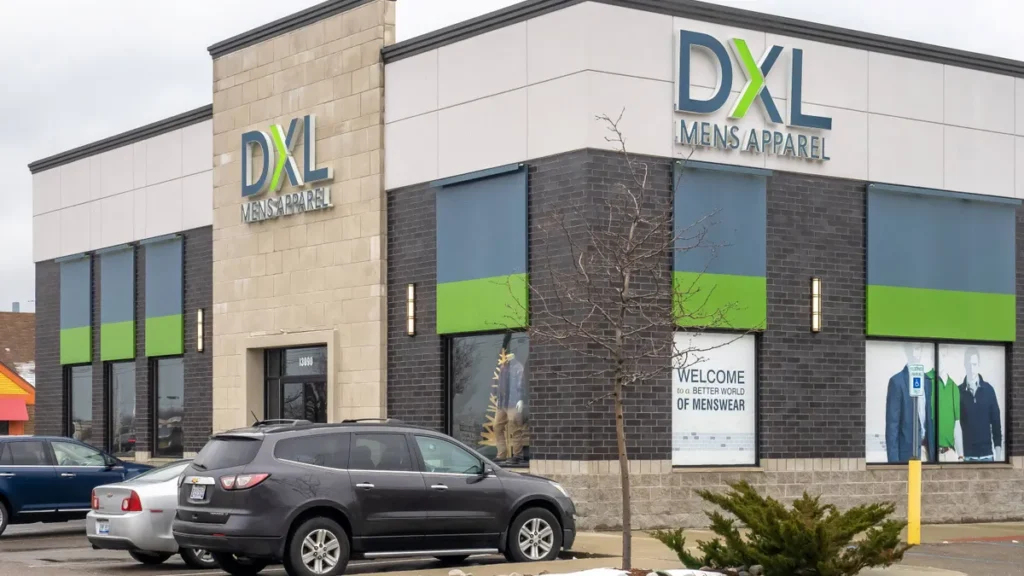
Perhaps the most significant long-term implication of DXL’s strategy is its approach to its physical real estate portfolio. Management has signaled that the current store count is not necessarily optimized for current demand.

"The punchline here is we need to improve our return on assets," explained leadership. The company plans to close three locations this year. However, this is just the beginning. Looking ahead to next year, the company has several dozen leases coming up for renewal. Each of these will be scrutinized on a case-by-case basis. The strategy is to identify stores that have a high probability of transferring their volume to a nearby, more productive location. By consolidating its footprint, DXL hopes to increase the efficiency of its remaining stores and boost overall profitability.
The Role of Private Label and Brand Awareness
Beyond physical stores, the pivot toward private label brands is a strategic move to insulate the company from the volatility of third-party supplier issues and to improve margins. By controlling the design and manufacturing process, DXL can ensure that its product quality remains high while pricing remains competitive.
The focus on "new customer acquisition" was also highlighted as a priority by Olsson, who admitted that the previous quarter’s traffic miss was a stark indicator that the brand’s reach needs to be expanded. "I want to be direct and transparent with you," Olsson said, signaling a new culture of accountability within the executive suite.
Conclusion: A Delicate Balancing Act
Destination XL Group is currently in the middle of a complex transition. The intersection of changing health trends, evolving consumer demographics, and the necessity for a leaner, more productive retail footprint presents a unique set of challenges.
However, the company’s willingness to address the "elephant in the room"—the impact of GLP-1 medications—demonstrates a level of transparency that is rare in the retail sector. By focusing on its core strength of "fit," investing in proprietary technology, and ruthlessly optimizing its physical locations, DXL is positioning itself to not only survive the current cycle but to capture a more loyal and engaged customer base in the future. Whether these efforts will be enough to achieve the "imminent" growth promised by its leadership remains the primary question for investors and industry analysts alike as the fiscal year moves into its final stages.