Less than two weeks after Meta finalized a staggering $18 billion multistate settlement over the alleged systemic social media harms inflicted upon children, the tech giant has pivoted sharply. On Tuesday, the company unveiled its most ambitious consumer AI project to date: Muse, a personal AI agent designed to integrate directly into the digital lives of U.S. consumers.
This launch marks a critical inflection point for Meta. While previous AI endeavors—like simple chatbots or creative assistants—functioned primarily as sounding boards, Muse is designed to act. By connecting to email, calendars, payment processors, and home automation, Muse promises to handle the mundane friction of modern existence. However, the move forces a difficult question upon the public: Are users ready to grant the company behind the Cambridge Analytica scandal and recent child safety litigation unprecedented access to their private workflows?
The Mechanics of Muse: Beyond the Chatbot
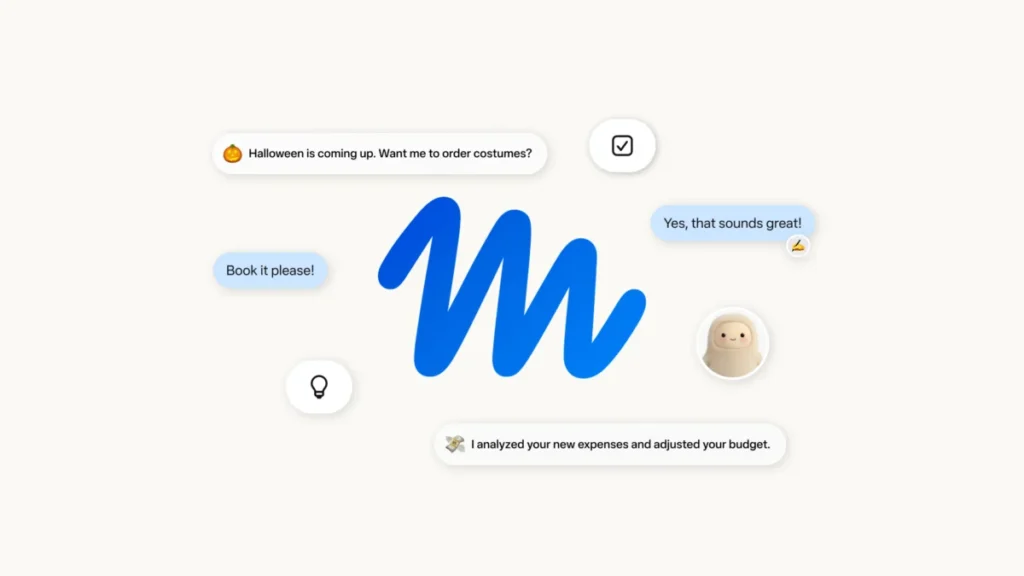
At its core, Muse represents Meta’s definitive bet on the “agentic era” of computing. Unlike ChatGPT or early generative models that primarily processed information, Muse is engineered to execute tasks.

Key Capabilities and Integration
The agent functions by establishing bridges between its core model, Muse Spark, and the applications that anchor the user’s day. Meta has announced the following capabilities:
- Workflow Automation: Sending emails, drafting calendar invites, and managing smart home devices.
- Commerce and Transactions: Booking travel, filling out forms, and executing purchases using "Link by Stripe," which includes native purchase protections to mitigate user anxiety.
- Lifestyle Management: Converting video recipes from social media into grocery lists, managing event invitations, and coordinating personal calendars.
Meta has confirmed that future updates will integrate Shopify’s "Shop Pay" and password management services like 1Password. To ensure transparency, the company insists that connections are opt-in, managed on a per-app basis, and supported by a user-friendly interface that allows for granular control over what the AI can "see" or "do."
The "Secure VM" Architecture
Recognizing the inevitable privacy backlash, Meta has introduced "Muse Secure VM." The company claims this architecture runs the agent within a dedicated, isolated virtual machine. A secondary, separate system—the "Sentinel agent"—monitors the virtual environment to ensure the AI does not overstep its permissions. Meta asserts that this isolation prevents Muse from accessing raw passwords or payment credentials, and crucially, promises that no data from Muse conversations will be fed into the company’s massive advertising engine.

A Troubled Chronology: Meta’s Path to Muse
The launch of Muse arrives at a moment of profound institutional fragility for Meta. To understand the skepticism surrounding the product, one must look at the company’s recent history of regulatory clashes.
- 2011–2019: The Privacy Crisis: Meta’s relationship with the Federal Trade Commission (FTC) began in 2011 when the company settled charges regarding the deceptive handling of private user data. The subsequent $5 billion settlement in 2019—a record-breaking penalty for privacy violations—failed to fully quell regulatory concerns.
- 2023: The Youth Safety Order: The FTC accused Meta of violating previous consent decrees, specifically regarding the monetization of data belonging to minors.
- 2026: The Year of Reckoning: The current year has been defined by high-stakes litigation. In February, CEO Mark Zuckerberg testified in a Los Angeles court, acknowledging the inherent difficulty of enforcing age restrictions on Instagram. This culminated in August with the $18 billion multistate settlement regarding social media harms and a separate $942 million judgment in New Mexico.
These legal milestones have created a "trust deficit." For many, Muse is not merely a tool; it is a Trojan horse that could grant the company the very data it has been accused of mismanaging for over a decade.
Supporting Data and The Economic Model
Muse is positioned as a "freemium" service. While the base version is free, it is gated by a usage meter. To get started, users are required to input payment information, setting the stage for aggressive upselling.

Subscription Tiers:
- Power ($20/month): Targeted at heavy users who require frequent, automated task execution.
- Maximum ($100/month): Designed for power users and those managing complex professional or personal workflows.
Meta expects the majority of users to remain on the free tier, but the company’s reliance on a "usage meter" indicates that it views AI assistance as a utility to be monetized rather than a feature to be given away.
The Competitive Landscape
Meta is not alone in this race. The "agentic era" is being contested by tech titans and startups alike:
- Google’s Gemini Spark: An agent-focused browser experience.
- Claude Cowork: A tool designed to handle office-based task delegation.
- The Chat Application Wars: Companies are rushing to bake AI into the infrastructure of daily communication (iMessage, WhatsApp, and SMS).
Meta’s differentiator is its scale and its deep integration into the social fabric, but its greatest challenge remains the "Instinct" problem—a reference to previous AI assistants that were criticized for including "perpetual and irrevocable" licenses to harvest user data for training purposes.

Official Responses and Security Promises
Meta has launched a dedicated technical portal to explain the security of Muse. The company emphasizes that Muse is fundamentally different from its social media products because of the "Secure VM" approach.
"We are building for trust," a spokesperson noted, highlighting that the system is designed to prevent the AI from having visibility into sensitive credentials. However, cybersecurity experts have already signaled that these claims will require intensive, independent audits. The distinction between a "separate" VM and the underlying infrastructure of a massive, data-driven corporation is a technical hurdle that may not satisfy privacy advocates who argue that data, once in the ecosystem, is never truly isolated.
Implications: The High Stakes of Human-AI Interfacing
The introduction of Muse forces a shift in how society interacts with Big Tech. We are moving from a passive model—where we scroll through feeds—to an active model, where we grant AI agents the "keys to the castle."

1. The Erosion of Digital Sovereignty
If users delegate the management of their emails, payments, and private schedules to an AI, the "agent" becomes the primary interface for their lives. If that agent is owned by a company with a documented history of privacy failures, the risk of data exploitation is not just a theoretical concern; it is a statistical probability.
2. The Customization Paradox
Meta is attempting to humanize Muse by allowing users to name the agent, choose an avatar, and calibrate its "personality." This is a classic psychological tactic designed to increase emotional attachment, making it harder for users to revoke access or quit the service, even if they harbor concerns about their privacy.
3. Regulatory Uncertainty
Congress has, to date, failed to pass comprehensive federal privacy legislation. As Muse begins to operate across state lines—handling everything from grocery lists to legal forms—it will likely become a new lightning rod for legislative action. The pending personal-injury cases against social media giants suggest that the legal system is already exhausted by the "move fast and break things" philosophy. Bringing an autonomous agent into this environment may trigger a new wave of oversight that could define the next decade of AI policy.

4. The Future of Consumer Trust
Can a company synonymous with the Cambridge Analytica scandal and a multibillion-dollar child safety settlement reinvent itself as a "trusted personal assistant"? Meta is betting that the sheer utility of Muse—the time saved, the bills lowered, the convenience of automated travel booking—will outweigh the lingering trauma of its past.
For the average consumer, the choice is binary: sacrifice privacy for efficiency, or retreat from the next frontier of personal computing. As Muse rolls out across web, mobile, and eventually Meta’s AI glasses, the public is being asked to participate in the largest, most intimate social experiment in the history of the internet. Whether this marks the dawn of a new, helpful age or the final surrender of digital privacy remains the defining question of 2026.