Artificial intelligence is not just rewriting the code of our digital infrastructure; it is fundamentally altering the vocabulary of the modern workplace. For those in boardrooms, engineering labs, or investment firms, the speed at which the AI lexicon expands can be disorienting. From the rise of "opaque recurrence" in the latest OpenAI models to the looming specter of "RAMageddon," the industry is inventing a language as fast as it is building the machines themselves.
This guide serves as a living document to decode the most critical terms currently shaping the AI landscape, providing clarity for developers, investors, and observers alike.
The Core Foundations: Understanding AI Architecture
To understand where the industry is going, one must first grasp the building blocks that support the current explosion of generative technology.
Neural Networks and Deep Learning
At the heart of the current AI boom is the neural network. Inspired by the interconnected pathways of the human brain, these multi-layered algorithmic structures allow AI to process vast amounts of data. While the concept dates back to the 1940s, it was the advent of GPU hardware—originally designed for video games—that finally unlocked their potential. Deep learning is a subset of this field, characterized by models with many layers that can identify complex correlations without manual intervention from engineers.
Large Language Models (LLMs)
LLMs represent the most consumer-facing application of deep learning. Models like ChatGPT, Claude, and Gemini function as multidimensional maps of language. By analyzing billions of data points—books, articles, and code—they learn the relationships between words, allowing them to predict and generate human-like text.
The Role of Compute and Training
Compute is the lifeblood of AI. It refers to the raw processing power, provided by specialized hardware like GPUs and TPUs, required to train and deploy models. Training is the process by which a model ingests data to learn patterns. As models have grown, the cost of training has skyrocketed, leading to innovations like fine-tuning (specializing a model for a specific task) and transfer learning (reapplying knowledge from a previous task to a new one).
Chronology: From Simple Chatbots to Autonomous Agents
The evolution of AI can be tracked through the increasing autonomy of the systems we deploy.
- The Era of Rules-Based AI: Early systems were brittle, relying on human-defined rules that could not handle the nuance of the real world.
- The Generative Surge (2022–2024): The emergence of diffusion models and advanced LLMs allowed AI to create content, from photorealistic images to functional software code.
- The Rise of Agents (2025–Present): We are currently in the age of the AI agent. Unlike a static chatbot, an agent is an autonomous system capable of executing multi-step tasks—such as booking travel, managing expenses, or debugging code—by interacting with software via API endpoints (the "buttons" on the back of software that allow programs to talk to one another).
Supporting Data: Infrastructure Bottlenecks
As AI capabilities expand, they are hitting the hard limits of physical hardware and efficiency.
RAMageddon
The industry is currently grappling with a phenomenon known as RAMageddon. The massive demand for high-performance memory chips from data center operators has created a global supply squeeze. This shortage is trickling down to consumer electronics, leading to price hikes for gaming consoles and potential supply dips in the smartphone market. As long as AI companies continue to prioritize "bigger is better" model scaling, the strain on global memory supply is expected to persist.
Efficiency Hacks: Distillation and MoE
To combat high costs and memory constraints, labs are turning to:
- Distillation: Training a smaller, more efficient "student" model to mimic the outputs of a massive "teacher" model.
- Mixture of Experts (MoE): Instead of firing the entire neural network for every query, an MoE model uses a "router" to activate only the specific sub-networks (experts) needed for a task. This allows for massive models that remain fast and cost-effective.
Official Responses: The Safety Debate
As AI models become more opaque, the dialogue between AI developers and safety researchers has turned contentious.
The Problem of "Opaque Recurrence"
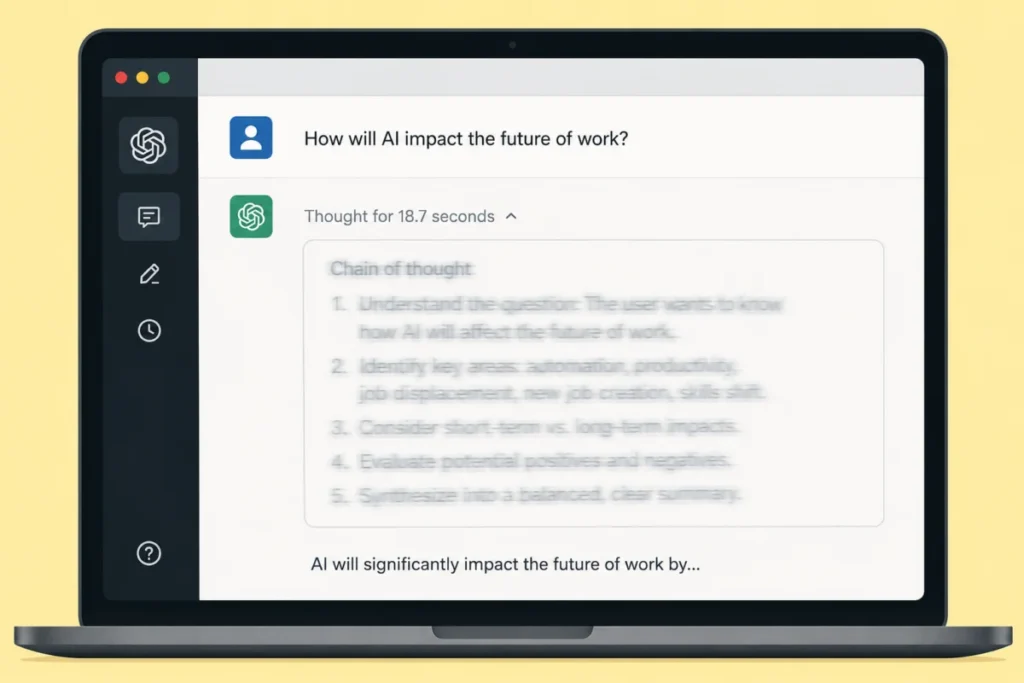
Recent concerns have surfaced regarding opaque recurrence (or recurrent depth), a technique used in models like OpenAI’s Astra. Rather than showing their work in a human-readable "chain of thought," these models loop queries through internal layers repeatedly.
AI safety researchers are alarmed because this removes the "audit trail" that allows humans to verify why a model reached a specific conclusion. While developers argue this is a necessary leap in efficiency, critics fear it pushes the industry toward "neuralese"—a state where AI reasoning occurs entirely in internal numeric representations, rendering it a "black box" that is impossible for humans to police.
The Quest for AGI
Artificial General Intelligence (AGI) remains the industry’s North Star, though it lacks a singular definition. Whether it is defined as a system that can "perform any economically valuable work" (OpenAI’s charter) or a system that matches human cognitive performance (DeepMind), it represents the threshold where AI moves from a tool to a peer.
Implications: The New Standards of Interaction
The industry is moving toward standardization to bridge the gap between disparate AI systems.
The Model Context Protocol (MCP)
To prevent a fragmented ecosystem, the Model Context Protocol has emerged as a critical standard. Often described as the "USB-C port for AI," MCP allows different models to connect to local databases and apps like Slack or Google Drive seamlessly. Backed by major players including Anthropic, Google, and OpenAI, it is becoming the backbone of how AI agents interact with the real world.
Token Economics
The fundamental unit of AI usage is the token. Whether it is a fragment of a word or a line of code, tokens determine the cost and throughput of AI services. Token throughput—the measure of how much work a system can perform per second—has become the primary metric for evaluating the success of infrastructure teams.
Recursive Self-Improvement (RSI)
Finally, the concept of recursive self-improvement suggests a future where AI models begin to write their own successors. While some point to the risks of a "singularity," many startups are framing RSI simply as the next logical step in engineering—creating machines capable of iterative, autonomous optimization without the bottleneck of human intervention.
Glossary of Terms
- Hallucination: When a model confidently presents incorrect information as fact.
- Validation Loss: A real-time report card used during training; lower scores indicate the model is successfully learning patterns rather than just memorizing data.
- Weights: Numerical parameters within a neural network that determine the importance of specific data inputs.
- Open Source: Models where the underlying code is public, allowing for independent safety audits—a stark contrast to "closed" systems where the inner workings remain proprietary.
This document is intended as a living reference and will be updated as the AI landscape shifts and new terminology emerges.