

The global art market is undergoing a period of significant structural realignment. From the strategic repositioning of blue-chip artist estates to high-level executive appointments within the world’s most prestigious cultural institutions, the last few weeks have signaled a broader trend toward professionalization, geographic expansion, and the consolidation of influence. As galleries strengthen their rosters and museums rethink their curatorial and board-level hierarchies, the industry is entering a phase defined by both historical reflection and future-oriented growth.
Strategic Realignment: The Mira Schendel Estate and Market Shifts
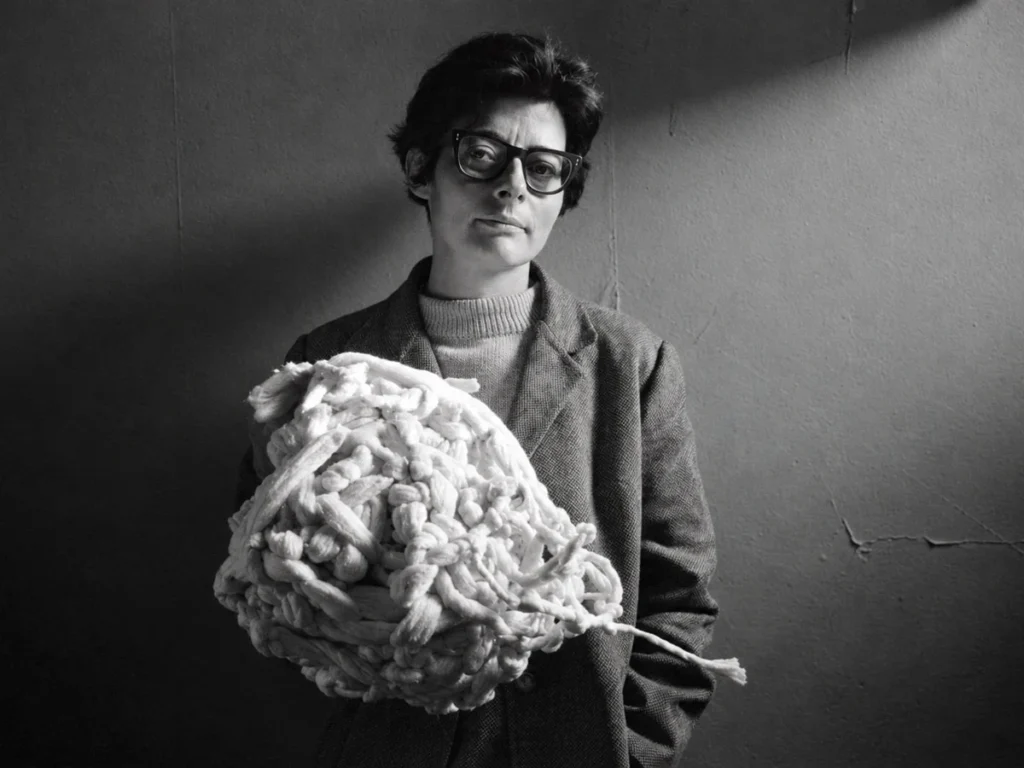
Perhaps the most significant development in recent weeks is the dual-gallery representation of the estate of Mira Schendel. After a decade under the aegis of the mega-gallery Hauser & Wirth, the Swiss-born Brazilian modernist’s estate has transitioned to the care of London-based Lisson Gallery and São Paulo’s Gomide & Co.
The Return to Lisson
This move represents a symbolic homecoming for Schendel, who held three exhibitions with Lisson Gallery beginning as early as 1968. For Lisson CEO Alex Logsdail, the acquisition of the estate is more than a business transaction; it is a recognition of Schendel’s profound influence on the evolution of 20th-century abstraction. "She was an absolute visionary," Logsdail noted in a formal statement. "Her practice informed ideas around abstraction, language, and concrete poetry, and speaks to inherent beauty."
The partnership is already yielding concrete results. The Dia Art Foundation recently announced the acquisition of Schendel’s seminal work, Still Waves of Probability, with critical financial support from top-tier collector Ken Griffin. The collaborative roadmap for the estate is ambitious, with Lisson planning a group show in November 2027, followed by a major retrospective dedicated to Schendel’s works on paper—a collection that will include previously unseen drawings, offering a fresh perspective on her technical rigor.
Chronology of Recent Industry Appointments and Movements
The art world is currently witnessing a "game of musical chairs" among top-tier talent, reflecting a desire by institutions and galleries to sharpen their public-facing strategies.
- August–October 2026: A period marked by executive turnover. Amelia Redgrift, former chief communications officer at Pace Gallery, transitioned to Chanel to lead integrated communications for the brand’s Culture & Heritage division. This move underscores the increasing synergy between luxury fashion conglomerates and global cultural initiatives.
- November 2, 2026: Layla Bermeo is set to assume her elevated role as the chair of the Art of the Americas department at the Museum of Fine Arts, Boston (MFA). Bermeo, a scholar known for her focus on the complex artistic exchanges between the United States and Latin America, has been a pivotal force in the MFA’s recent acquisitions, including works by Remedios Varo and Norval Morrisseau.
- Late 2026/Early 2027: The Dallas Museum of Art (DMA) prepares for a transition in its leadership. John R. Eagle, a veteran trustee, will assume the role of board chairman for the 2026–27 fiscal year, while current chair Sharon Young will step into the role of president.
- Future Outlook: The New York Historical Society has appointed Arnold Chavkin as the incoming board chair, following a unanimous vote, to succeed Agnes Hsu-Tang. Simultaneously, the Los Angeles Nomadic Division (LAND) is expanding its reach, announcing that artist Rosha Yaghmai will create a site-specific commission for the Ruth Foundation for the Arts, marking LAND’s first non-West Coast exhibition in a decade.
Supporting Data: Institutional Gifts and Financial Milestones
The movement of art is rarely limited to the commercial sphere; institutional transfers continue to shape the historical narrative. The Philadelphia Museum of Art (PMA) recently transferred 130 portraits by the celebrated New York photographer Carl Van Vechten to the Chrysler Museum of Art in Norfolk, Virginia. These images, captured between the 1930s and 1950s, provide an intimate look at the cultural milieu of the time. The collection, which includes rare portraits of Walter P. Chrysler Jr., will anchor a 50-work survey at the Chrysler Museum next May, following an appearance in the upcoming exhibition Define Yourself!

The "Big Number": The $3 Billion Impact
In the broader ecosystem of philanthropy, the financial magnitude of recent donations is staggering. Ken Griffin’s $3 billion contribution to Carnegie Mellon University—split between the university’s general fund and the development of a satellite campus in Miami’s Wynwood district—is a transformative event for American higher education. By aiming to "invert the traditional higher education model," the project, set to break ground next year, will prioritize "societal challenges" over traditional majors. This massive injection of capital into a cultural and educational hub like Miami highlights the growing trend of high-net-worth individuals shaping the geographic centers of academic and artistic innovation.
Official Responses and Professional Implications
The professionalization of these roles suggests an industry that is increasingly aware of its public responsibility. When a dealer like Candice Madey joins the London-based Josh Lilley Gallery as a U.S. senior director, it is not merely a staffing change; it is a calculated expansion of international market reach. Similarly, the appointment of Arnold Chavkin at the New York Historical Society signals a commitment to continuing the momentum of the museum’s recent capital projects, specifically the $175 million Tang Wing for American Democracy.
The industry is also grappling with its own history. The recent trend of staging exhibitions that highlight the "storied collector"—such as the Gustave Fayet exhibition at the Fondation Louis Vuitton and the Paul Cassirer retrospective at the Alte Nationalgalerie—reveals an internal push toward transparency. As Art in America critic Kelly Presutti astutely observed, there is a lingering tension in how we view the "art market" versus the "museum." The effort to trace the mechanisms by which art is bought, sold, and eventually donated is a crucial step in de-mystifying the provenance of the world’s most canonical collections.
Implications for the Future of the Market
The current landscape points toward three primary implications for the art market:
- The Rise of the "Mega-Estate": As demonstrated by Mira Schendel, the management of an artist’s legacy is moving toward a hybrid model—combining global blue-chip galleries with regional specialists. This ensures that the artist maintains both a high-profile international presence and a deeply rooted, scholarly engagement with their home region.
- Institutional Synergy: The movement of personnel like Amelia Redgrift from the gallery world to the corporate-luxury sector (Chanel) indicates that "culture" is being integrated into the core brand identity of global luxury, likely leading to more robust funding for the arts, albeit with more complex commercial ties.
- The Curatorial Shift: Appointments like that of Layla Bermeo at the MFA Boston reflect a broader mandate in museums to prioritize curators who specialize in transnational narratives. The shift away from Eurocentric perspectives toward more complex, cross-border historical analysis is becoming the new gold standard for major museum departments.
As we look toward 2027 and beyond, the art market is clearly prioritizing stability, legacy, and the integration of diverse cultural perspectives. Whether through the massive financial influence of patrons like Ken Griffin or the granular, scholarly work of museum curators and gallery directors, the industry is recalibrating itself to face a future where the art object is as much a subject of academic study as it is a pillar of the global economy. The synthesis of these movements suggests a robust, albeit rapidly changing, landscape that will continue to challenge our understanding of how value—both monetary and cultural—is assigned to the work of human creativity.



