In the competitive landscape of modern retail, where consumer loyalty is increasingly ephemeral, Victoria’s Secret & Co. has identified a potent catalyst for growth: the intersection of emotional heritage and high-stakes entertainment. As the lingerie giant reports a significant financial resurgence, it is pivoting away from purely transactional retail toward a strategy rooted in "brand experience." By reintroducing archival fragrance lines and leaning into digital storytelling, the company is proving that the path forward may well be paved by the icons of the past.
Main Facts: A Dual-Engine Growth Strategy
Victoria’s Secret is currently executing a two-pronged strategy designed to reclaim its market dominance. The first pillar involves the tactical deployment of "nostalgia marketing." Much like Gap Inc.’s recent success in reissuing 1990s-era fragrances, Victoria’s Secret is mining its own extensive history. The company has begun re-releasing limited-edition archival scents and refreshing legacy collections—such as the perennial favorites Bombshell and Tease—with contemporary twists.
The success of this approach was recently quantified when the "Bringback" special-edition release of Pink’s iconic square-bottle scents sold out online in under 24 hours. This sell-through velocity indicates that for Victoria’s Secret, history is not merely a record of past sales but a functional asset that drives immediate, high-margin revenue.
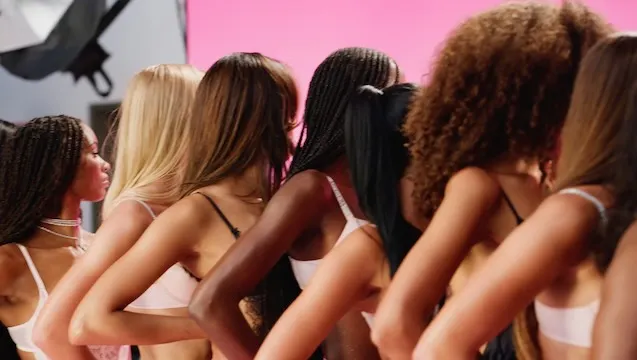
The second pillar is the company’s evolution into what CEO Hillary Super describes as an "entertainment brand." Moving beyond the traditional retail model, Victoria’s Secret is investing in long-form content, such as the newly premiered YouTube documentary series Angels Among Us. This initiative is designed to build a narrative bridge between the brand’s high-fashion legacy and the modern, values-driven consumer.
Chronology: From Stagnation to Strategic Pivot
The current upward trajectory follows a challenging period of brand identity realignment.
- Mid-2020s: Victoria’s Secret grappled with a shrinking customer base and a perception of being out of sync with contemporary body-positivity standards.
- Early 2026: The company began testing the waters with modern iterations of core fragrances, such as the Tease Strawberry Bisou collection, gauging consumer appetite for "updated nostalgia."
- Month prior to Q2 Earnings: The launch of the "Bringback" campaign for Pink fragrances served as a proof-of-concept for the brand’s archival strategy. The rapid depletion of stock provided the empirical data necessary to commit to further "archive drops."
- Q2 2026: The company reported a 10% year-over-year increase in net sales, signaling that the strategic pivots were beginning to yield tangible financial results.
- Current Quarter: The brand continues to roll out its "entertainment-first" agenda, including the Angels Among Us docuseries and a packed calendar of collaborative campaigns for the upcoming holiday season.
Supporting Data: By the Numbers
The financial health of Victoria’s Secret & Co. is currently defined by a "broad-based performance" that spans multiple categories and channels.
Q2 Financial Highlights
- Net Sales: The company reached $1.6 billion in net sales for the second quarter, a 10% increase year-over-year.
- Comparable Sales: Comps rose 9%, with brick-and-mortar locations seeing a robust 7% growth.
- Profitability: Gross margins expanded by 320 basis points to 38.8%. Crucially, two-thirds of this margin expansion was attributed to higher merchandise margins, driven by a reduction in promotional discounting and a higher volume of regular-price sales.
- Net Income: Net income nearly tripled during the quarter, surpassing $85 million.
- Full-Year Guidance: Reflecting newfound confidence, the company raised its full-year net sales guidance to a range of $7.1 billion to $7.18 billion, up significantly from last year’s $6.6 billion performance. Adjusted operating income is now projected to reach up to $590 million, a substantial leap from the $403 million recorded in the previous year.
Performance Drivers
The bra category remains the engine of the business, growing in the "mid-teens" across both the namesake brand and the Pink sub-brand. According to GlobalData Managing Director Neil Saunders, this is a significant development: "The fact that growth is broad-based, with success across channels and regions, demonstrates that there is genuine traction behind the numbers. It effectively reverses a long period of continuous erosion of the customer file."
Official Responses: The Leadership Perspective
CEO Hillary Super has been vocal about the necessity of this pivot. During the earnings call, she emphasized that the brand’s heritage is its greatest untapped resource.
"We have decades of iconic scents and formats across Victoria’s Secret and Pink, and we are bringing them back in ways that feel relevant today," Super stated. She argued that these releases do more than just generate sales; they "reinforce the deep emotional connection our customers have with our fragrance heritage."
Addressing the shift toward "fashiontainment," Super noted that while Victoria’s Secret is not necessarily following the exact structural blueprint of Gap Inc.’s dedicated entertainment platform, the company is firmly positioning itself as a media-forward organization. "Beyond the docuseries and the fashion show, we have an exciting and packed calendar ahead," she promised, noting that product innovation, strategic partnerships, and "emotionally connected campaigns" will be the hallmarks of the company’s strategy through the fall and holiday seasons.
Implications: The Retail Landscape of Tomorrow
The implications of Victoria’s Secret’s recent success are profound for the retail sector at large.
1. The Power of "Emotional Equity"
Victoria’s Secret is proving that legacy brands possess an "emotional equity" that newer, digitally native competitors cannot easily replicate. By curating their own history, these brands create a barrier to entry for competitors. Nostalgia, when paired with modern production quality, creates a "low-risk, high-reward" product cycle.
2. The Blurring Lines Between Media and Retail
The move toward an "entertainment brand" model suggests that the future of retail is omnichannel in a new sense—not just across devices, but across content formats. By producing documentaries and digital media, Victoria’s Secret is essentially turning its marketing spend into consumer content. This increases "time-on-brand," a critical metric in an age where consumer attention is the scarcest commodity.
3. Operational Discipline
While the narrative of the company is focused on nostalgia and entertainment, the underlying data reveals a disciplined operational turnaround. The 320-basis-point expansion in gross margins is a testament to inventory management and a reduction in the "discount trap" that has plagued apparel retailers for years. By selling products at full price, Victoria’s Secret is signaling that its brand value has been successfully restored.
4. A Template for Legacy Turnarounds
For other struggling retail giants, Victoria’s Secret provides a clear template:
- Audit your archives: Identify products with high historical resonance.
- Modernize, don’t clone: Reintroduce heritage products with updated formulations or modern sustainability/packaging standards.
- Content as Commerce: If you have a story, tell it via long-form media.
- Prioritize Full-Price Sales: Use the "buzz" created by nostalgia drops to pull back on aggressive discounting.
As the company looks toward the holiday season, the market will be watching to see if this momentum can be sustained. However, the data from the second quarter suggests that the "Angels" of Victoria’s Secret have successfully navigated their way back into the good graces of the consumer, proving that sometimes, to move forward, you have to revisit the essence of who you were.