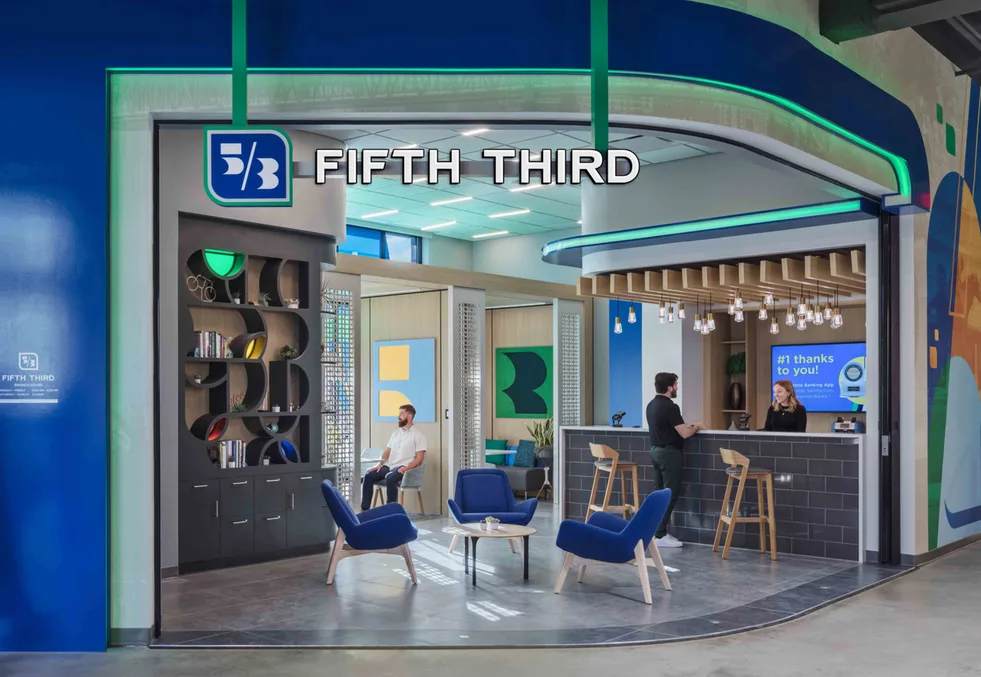
In an era where financial institutions face increasingly sophisticated physical and digital threats, Fifth Third Bank has taken a decisive step toward safeguarding its assets, employees, and customers. By standardizing its sprawling infrastructure on a unified video surveillance and management platform from March Networks, the bank has effectively transformed its approach to corporate security. With over 1,500 branches and 80 high-density corporate facilities across the United States, Fifth Third has created a centralized, responsive, and highly efficient security ecosystem that serves as a benchmark for the modern financial sector.
The Architecture of Safety: A Centralized Approach
At the core of Fifth Third Bank’s security philosophy is the belief that safety is a proactive, rather than reactive, endeavor. The bank operates a sophisticated, 24/7 Security Operations Center (SOC) that functions as a nerve center for the organization’s entire national footprint.
Darrin Steinmann, Vice President and Director of Corporate Security Investigations, Security Operations, and Security Strategy, describes the facility not merely as a monitoring station, but as a critical lifeline. "Our Security Operations Center is the 911 center for Fifth Third," Steinmann explains. "When employees call with a concern, we respond in real time with video, alarms, and coordination with law enforcement."
This centralized model allows for rapid incident response. By integrating video surveillance with alarm systems and direct communication channels, the SOC can provide law enforcement and on-site staff with actionable intelligence the moment a threat is identified.
Chronology: Scaling to a National Standard
The journey to this unified security environment was not an overnight transition. As Fifth Third expanded its footprint through organic growth and strategic acquisitions, the need for a standardized security technology became paramount.
Phase 1: Identifying the Infrastructure Gap
Recognizing that disparate, legacy security systems across thousands of locations created operational silos, bank leadership sought a scalable solution that could accommodate both small branches and massive, high-rise corporate hubs. The objective was to replace fragmented hardware with a single, enterprise-grade management platform.
Phase 2: Implementation of the March Networks Ecosystem
Fifth Third selected March Networks to provide the backbone of its security infrastructure. The deployment was massive in scale:
- Total Coverage: Over 1,500 financial centers and 80 high-rise facilities.
- Hardware Density: More than 30,000 cameras and 1,100 high-performance recorders.
- Centralized Management: All devices integrated into a single, cohesive software platform.
Phase 3: The Exterior Expansion
Recognizing that security threats often begin outside the branch, the bank initiated a strategic rollout of exterior surveillance. Currently 60 percent complete, this initiative has provided the bank with full perimeter visibility, effectively extending the security net from the lobby to the parking lot and adjacent properties.
Supporting Data: The Impact of Technological Precision
The effectiveness of Fifth Third’s security strategy is supported by impressive metrics that demonstrate the return on investment for both the bank and the communities it serves.
Precision Surveillance
The camera environment is purpose-built for the unique challenges of banking. The deployment includes:
- EL20 Multi-Sensor Cameras: Designed for broad-area coverage of lobbies and large open spaces.
- 360-Degree Cameras: Essential for eliminating blind spots in complex branch layouts.
- Dome Cameras: Strategically placed to capture high-definition, eye-level imagery of tellers and customers.
- Dedicated ATM Cameras: Engineered to capture clear, identifiable facial images, which are crucial for fraud prevention and investigation.
Performance Metrics
The results of this technological investment are tangible. According to Jason Walter, Senior Security Strategy Manager at Fifth Third Bank, the shift to comprehensive exterior coverage has been a "game-changer." The bank has reported that the increased visibility—and the subsequent ability to provide high-quality evidence to law enforcement—has driven apprehension rates for criminal incidents to over 80 percent.
These high apprehension rates translate into significant financial and operational benefits, including faster cash recovery, lower insurance premiums, and a reduction in the long-term economic impact of criminal activity.
Official Responses and Strategic Vision
The leadership at Fifth Third views security not just as a cost center, but as a cornerstone of customer trust.
"When you are responsible for security across this many locations, you need technology you do not have to worry about," says Jason Walter. "March Networks gives us that confidence."
By removing the "worry" from the technology stack, the security team can focus on its primary mission: the protection of people. The partnership between Fifth Third and March Networks represents a strategic alignment where the technology is designed to serve the human element of security. Whether it is verifying a suspicious transaction or coordinating with local authorities during an active incident, the system is designed to provide the clarity needed to make life-saving decisions in seconds.
Beyond the Branch: Societal Implications
Perhaps the most profound aspect of Fifth Third’s security evolution is how it has expanded the bank’s role within the community. The "financial center" is no longer just a place to deposit money; it is a monitored environment that contributes to the overall safety of the neighborhood.
Assisting Law Enforcement
The bank’s high-definition, wide-area exterior coverage often captures incidents that occur on or near bank property, even when they do not involve the bank itself. From vehicle accidents at busy intersections to criminal activity in adjacent retail lots, Fifth Third frequently collaborates with local law enforcement through lawful video requests. This practice turns the bank’s security investment into a public safety resource, fostering stronger relationships with local agencies and the communities they serve.
Operational Resilience
The utility of the video infrastructure extends well beyond security. Other departments have found creative ways to leverage the network:
- Property Management: Teams use the cameras to assess damage from extreme weather events (hurricanes, blizzards) or vandalism without requiring staff to travel to the site, significantly reducing risk and operational downtime.
- Fraud and Legal: These departments utilize the visual evidence to verify claims, resolve disputes, and expedite investigations, saving countless hours of manual reconciliation.
Conclusion: A Blueprint for Modern Banking
Fifth Third Bank’s partnership with March Networks serves as a compelling case study for the modern financial sector. By prioritizing centralized management, high-density coverage, and a "security-first" culture, the bank has successfully navigated the complexities of managing a massive, distributed workforce and facility network.
As the financial landscape continues to evolve, the integration of physical security with digital intelligence will remain a critical success factor. Through its commitment to high-tech surveillance and its proactive role as a community partner, Fifth Third Bank has demonstrated that the most effective way to protect a financial institution is to build a foundation that is as robust as it is invisible to the customer—ensuring that while the technology is always watching, the focus remains on the people it protects.
The bank’s 80 percent apprehension rate and the multi-departmental utility of its video network prove that when security is treated as a strategic asset, the benefits extend far beyond the balance sheet. For Fifth Third, the mission is clear: provide a safe environment for customers and staff, support the professionals who maintain public order, and remain a reliable, responsible pillar in every community it serves.