Introduction: The Battle for the Potomac Skyline
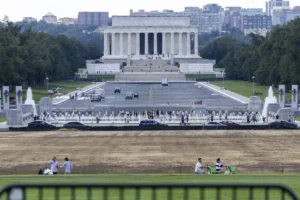
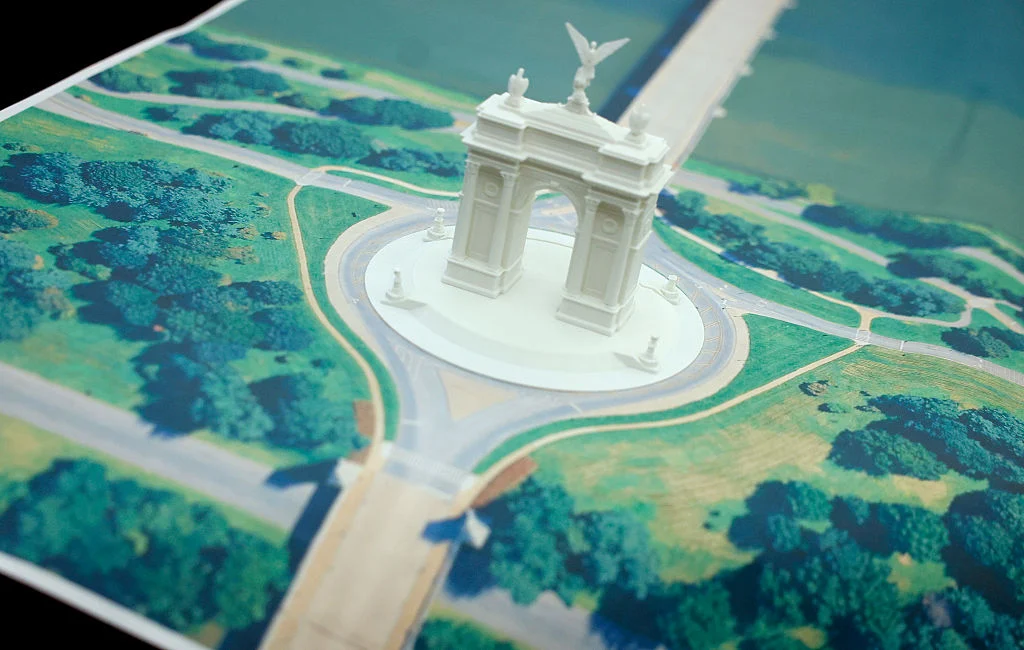
A legal showdown of historic proportions is unfolding in the nation’s capital as a group of Vietnam veterans, backed by leading architectural historians, fights to halt the construction of a controversial 250-foot "triumphal arch" commissioned by President Trump. The proposed structure, intended to stand in Memorial Circle—directly across the Potomac River from the Lincoln Memorial in Arlington, Virginia—has ignited a firestorm of constitutional and aesthetic concerns.
On Friday, plaintiffs Michael Lemmon, Shaun Byrnes, Jon Gundersen, and architectural historian Calder Loth filed an urgent motion for a 14-day temporary restraining order (TRO) in federal court. Their action follows a provocative announcement by Interior Secretary Doug Burgum, who stated on social media platform X that "excavation work" for the monument would commence within two weeks. The administration has hailed the project as a "Great Piece of American Architecture," yet critics argue it represents an unprecedented executive overreach that threatens the sacred sightlines of the capital’s most hallowed ground.
The Chronology of Contention
The friction between the executive branch and preservationists is not new, but it has reached a fever pitch regarding the Memorial Circle site.
- February 2025: The plaintiffs initially filed suit against President Trump, White House advisor Vince Haley, and the National Park Service (NPS), challenging the legal authority behind the project, which lacks congressional authorization.
- April 2025: A fragile truce was reached. The administration agreed to dismiss the initial motion, contingent upon a written promise from the NPS to provide at least 14 days of notice before beginning any construction or demolition work related to the arch.
- October 2025: President Trump officially debuted the architectural model of the monument. In a candid interview with CBS News, the president revealed that the structure—intended to be 250 feet tall, dwarfing the 162.5-foot Arc de Triomphe in Paris—is dedicated to himself.
- November 2025 (Current): Following Secretary Burgum’s announcement of imminent excavation, the plaintiffs returned to court, arguing that the administration’s latest move violates the April agreement and attempts to create a "fait accompli" before the judiciary can determine the project’s legality.
The Architectural and Historical Stakes
The proposed arch is not merely a construction project; it is a fundamental alteration of the District’s ceremonial landscape. Since 1912, the placement of monuments in Washington, D.C., has been strictly governed by congressional oversight to ensure that new additions respect the integrity of the capital’s master plan.
The veterans and historian Calder Loth contend that the 250-foot monument would permanently disrupt the visual axis between the Lincoln Memorial and Arlington National Cemetery. For those who served, the site is a place of solemn reflection, not a backdrop for political ego. By placing a massive, self-dedicated structure at this nexus, critics argue the administration is prioritizing personal legacy over the collective memory of the American people.
The legal filing is scathing: "The imminent course of action that Secretary Burgum has announced to the American people is unlawful many times over," the plaintiffs state. They argue that once excavation begins, the physical damage to the site—and the momentum of the project—will be impossible to reverse, regardless of what the court eventually decides regarding the project’s legality.
Official Responses and Administrative Justifications
In response to the emergency filing, the Trump administration issued a document aiming to "clarify Plaintiffs’ misunderstanding." Government lawyers asserted that the upcoming activity is not the start of the arch’s construction, but rather "long-disclosed Phase 1B archaeological survey work."
According to the administration, this phase is a regulatory necessity mandated by the National Historic Preservation Act. They claim the work will be limited to digging four small test pits to ensure the soil is free of historical artifacts. "This activity is not construction, or demolition in preparation for construction, of an arch," the filing states, characterizing the veterans’ alarm as a tactical misinterpretation of routine bureaucratic procedure.
However, the plaintiffs remain unconvinced. Their legal counsel at the Public Citizen Litigation Group argues that the administration has consistently demonstrated a "blaze-ahead" strategy, prioritizing speed over statutory compliance. They contend that by "salami-slicing" the project into smaller phases, the government is attempting to circumvent the court’s oversight, effectively building the monument one permit at a time until the project is too advanced to stop.
A Broader Pattern of Executive Remodeling
The controversy surrounding the triumphal arch is part of a wider, systemic effort by the Trump administration to reshape the capital’s aesthetic environment without legislative approval. Over the past year, the administration has implemented a series of radical changes to the nation’s most prominent public spaces:
- The White House East Wing Demolition: In one of the most drastic moves in modern preservation history, the administration razed the East Wing of the White House last October. The stated purpose was to replace it with a massive, bunker-style ballroom. While preservationists fought the move, the Supreme Court ruled 5–4 this week that the project could proceed, citing a lack of standing for the National Trust for Historic Preservation to sue the executive office.
- The Kennedy Center Controversies: The administration has faced repeated criticism for unilaterally altering the Kennedy Center, including the addition of the president’s name to the structure in violation of its founding charters, and the abrupt removal of a significant sculpture by Joel Shapiro.
- Gilding the Past: Recent reports have highlighted the "regilding" of historical equestrian statues near the Lincoln Memorial, a stylistic shift that critics argue reflects an attempt to impose a new, nationalistic visual language onto the capital’s historic core.
These actions suggest a philosophy that views federal landmarks not as protected public assets, but as canvases for the current administration to project its brand and values.
Implications: Constitutional Authority and Public Trust
The struggle over the triumphal arch poses a profound question about the separation of powers. Does the president have the authority to alter the landscape of the nation’s capital at will, or is that power reserved exclusively for the legislative branch?
The plaintiffs conclude their filing with a plea for the court to intervene before the site is permanently scarred: "This court should enter a temporary restraining order blocking Defendants’ efforts to blaze ahead with an unlawful course of conduct in the hope that they can render the arch a fait accompli before this Court has had the chance to reach a final determination."
If the court allows the excavation to proceed, it could set a dangerous precedent, signaling that executive agencies can initiate major, unauthorized projects under the guise of "archaeological surveys." Conversely, an injunction would represent a significant check on the executive branch’s power to unilaterally transform the national identity.
For the veterans who stand in opposition, this is not just about a pile of stone and steel. It is about protecting the sanctity of the capital’s memorials from a political culture that seems increasingly willing to place individual glory above the rule of law. As the two-week deadline for the excavation looms, the eyes of the nation are fixed on a small circle of land in Arlington, waiting to see if the law—or the bulldozer—will prevail.