In a significant stride toward globalizing its circular fashion mission, Nona Source—the innovative, LVMH-backed platform dedicated to the resale of deadstock materials—is bringing its celebrated “La Grande Braderie” event to London. This move marks a pivotal expansion for the company, signaling a transition from a French-centric operation to an international powerhouse in the sustainable materials sector.
By hosting this high-profile market in the heart of the U.K.’s creative capital, Nona Source is not merely selling fabric; it is actively democratizing access to luxury-grade materials for students, independent designers, and non-professional makers who were previously locked out of the supply chains of the world’s most prestigious fashion houses.
The Main Facts: A Strategic Expansion
From October 7 to October 10, The Mills Fabrica, situated near London’s King’s Cross, will host the inaugural London edition of “La Grande Braderie.” The event promises to offer a curated selection of exceptional deadstock fabrics and premium leathers sourced directly from the legendary Maisons under the LVMH Moët Hennessy Louis Vuitton umbrella.
Unlike standard industry trade shows, this event is specifically engineered to bridge the gap between high-end production and grassroots creativity. By opening these doors to U.K.-based students and emerging designers, Nona Source is dismantling the traditional exclusivity of luxury fashion supply chains. The event serves as a physical manifestation of the platform’s core mission: to prove that circularity is not just a corporate buzzword, but a scalable, practical business model that benefits the entire fashion ecosystem.
Chronology: From Parisian Roots to London Expansion
To understand the significance of this expansion, one must look at the trajectory of Nona Source since its inception in 2021.
2021: The Birth of a Circular Vision
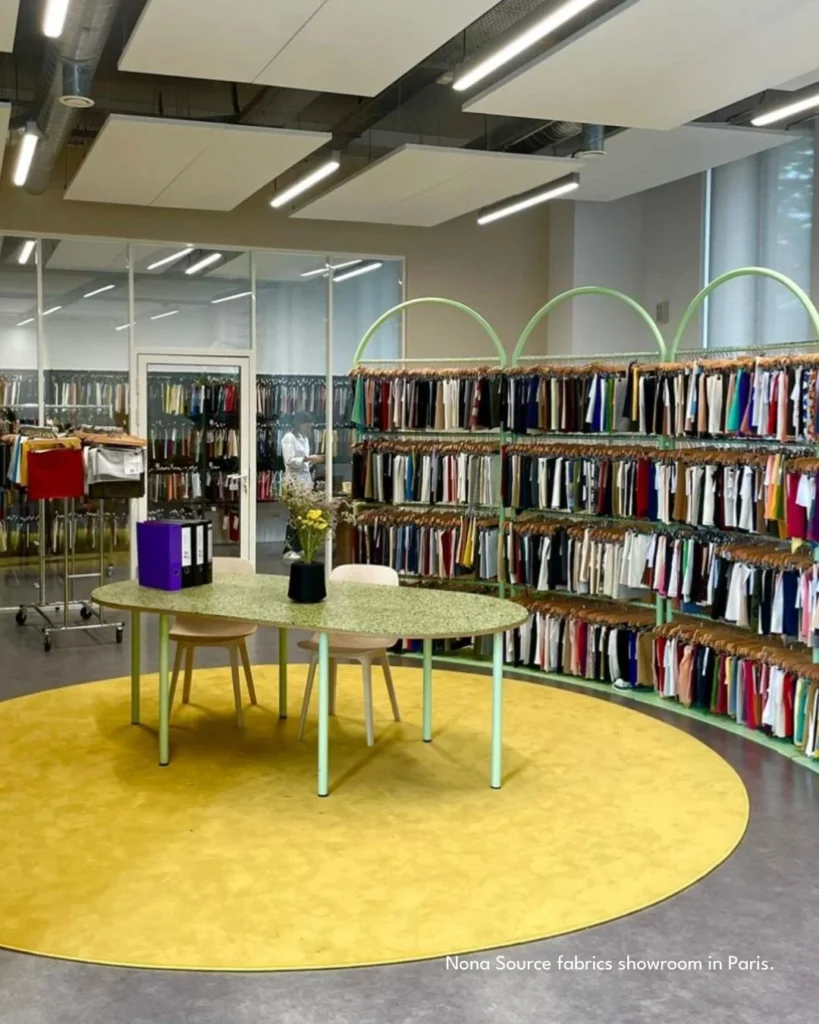
Nona Source launched with a singular, disruptive premise: to prevent high-quality luxury materials from becoming landfill waste. By establishing a Paris-based showroom and a robust e-commerce platform, the company provided designers with a portal to purchase surplus textiles, leathers, and yarns at discounted prices.
2022: The First London Footprint
The relationship between Nona Source and the London fashion scene began in earnest in 2022 when the company established its first long-term pop-up showroom at The Mills Fabrica. This venue, known for its focus on sustainability and textile innovation, provided the perfect incubator for Nona Source to test the appetite of the London market.
Early 2024: Collaborative Foundations
The seeds for the current "La Grande Braderie" event were sown earlier this year during a professional pop-up collaboration with The Materialist, a prominent London-based marketplace specializing in high-end surplus fabrics. The success of this collaboration highlighted a critical demand for circular sourcing in the U.K.
October 2025: The Launch of the London Braderie
The decision to host the London Braderie represents the culmination of years of relationship-building. It solidifies London not just as a one-off destination, but as a permanent, essential pillar of Nona Source’s international growth strategy.
Supporting Data: The Scale of Circular Impact
The necessity of such an initiative is backed by staggering figures. Nona Source has emerged as a leader in the circular economy, proving that the luxury sector can indeed be part of the solution rather than the problem.
- The Power of Volume: In 2025 alone, the Nona Source initiative facilitated the reuse of approximately 19,000 yards of luxury fabric and 3,300 square yards of premium leather. These materials, which might otherwise have been discarded, have been diverted into the hands of creators who use them to craft new, sustainable collections.
- The Parisian Precedent: The “La Grande Braderie” is not a new experiment; it is a proven model. Over the past five years in Paris, the event has consistently attracted over 2,500 visitors per edition, establishing a reliable community of practitioners who rely on these periodic sales to fuel their creative output.
- Economic Accessibility: By offering materials at discounted rates, Nona Source lowers the barrier to entry for small-scale designers. This economic accessibility is the engine behind the company’s growth, allowing the platform to serve as a vital link between industrial surplus and individual innovation.
Official Responses and Strategic Rationale
Nona Source has been clear about why London was chosen as the first city to host its flagship event outside of France.
“The city emerged as a natural next step thanks to its strong concentration of fashion schools, young designers and growing focus on sustainable innovation,” representatives for the company stated. The choice of location is deeply symbolic; London’s educational institutions are globally renowned for fostering avant-garde design, and Nona Source is positioning itself as the primary resource for these future industry leaders.
The partnership with The Materialist is also central to the initiative’s philosophy. By integrating fabrics from both LVMH Maisons and The Materialist, the event emphasizes a "shared belief that transforming the fashion industry requires collective action across the entire ecosystem." This collaborative spirit suggests that Nona Source is not interested in building a siloed platform, but in fostering an interconnected, circular economy that spans multiple stakeholders.
Regarding the return to The Mills Fabrica, the company noted: “Returning to this venue for La Grande Braderie is both symbolic and strategic, marking the next chapter of Nona Source’s growth in London while celebrating a long-term partnership built around shared values.”
Implications: The Future of Fashion Supply Chains
The arrival of Nona Source in London carries profound implications for the global fashion industry.
1. The Normalization of Deadstock
For decades, the use of "deadstock" was viewed as a secondary option—a compromise for those who could not afford virgin materials. Nona Source is successfully re-branding deadstock as a premium, ethical choice. By curating only the highest quality materials from luxury Maisons, they are elevating the prestige of circularity.
2. Empowering the Next Generation
By prioritizing access for students and non-professional makers, Nona Source is embedding circularity into the design process of the next generation. Young designers who start their careers using surplus materials are far more likely to integrate sustainability into their long-term business models, effectively changing the future of the fashion industry from the ground up.
3. A Model for Corporate Responsibility
LVMH’s backing of Nona Source serves as a blueprint for how luxury conglomerates can manage their environmental footprint. Rather than ignoring the waste produced by high-end production, the group has monetized and repurposed it. This strategy turns a potential waste-management liability into a brand-building asset that fosters goodwill and genuine environmental impact.
4. Beyond France: The Global Potential
With the success of the London model, it is highly likely that Nona Source will look to replicate this success in other fashion capitals—such as Milan, New York, or Tokyo. The “La Grande Braderie” has proven that the appetite for circular luxury is not limited by geography. If the platform continues to expand at its current rate, it could fundamentally alter the sourcing landscape for independent designers worldwide.
Conclusion
As the doors open at The Mills Fabrica this October, the fashion world will be watching. The event is more than a sale; it is a declaration of intent. By bringing the “La Grande Braderie” to London, Nona Source is signaling that the era of linear fashion—take, make, and waste—is rapidly losing ground to a more thoughtful, circular, and collaborative future.
Whether it is the student looking for their first meter of high-end silk or the independent label seeking sustainable production materials, the participants in this event are part of a growing movement that is redefining what it means to be a "luxury" brand in the 21st century. As the company prepares for its subsequent events in Paris later this year, the message remains clear: the future of fashion is already here, and it is waiting in the surplus of the past.