By Ana Palacio
September 1, 2026
The recent surge of migrants into the Spanish exclave of Ceuta—a small, high-stakes territory clinging to the North African coast—has served as more than just a localized humanitarian event. For the European Union, it has functioned as a diagnostic test, revealing the structural weaknesses of a bloc that prides itself on internal cohesion but struggles with the cold realities of geopolitical leverage. As the dust settles on this mid-summer crisis, the implications for EU foreign policy, border management, and the sanctity of international law are profound.
The Facts: A City Under Pressure
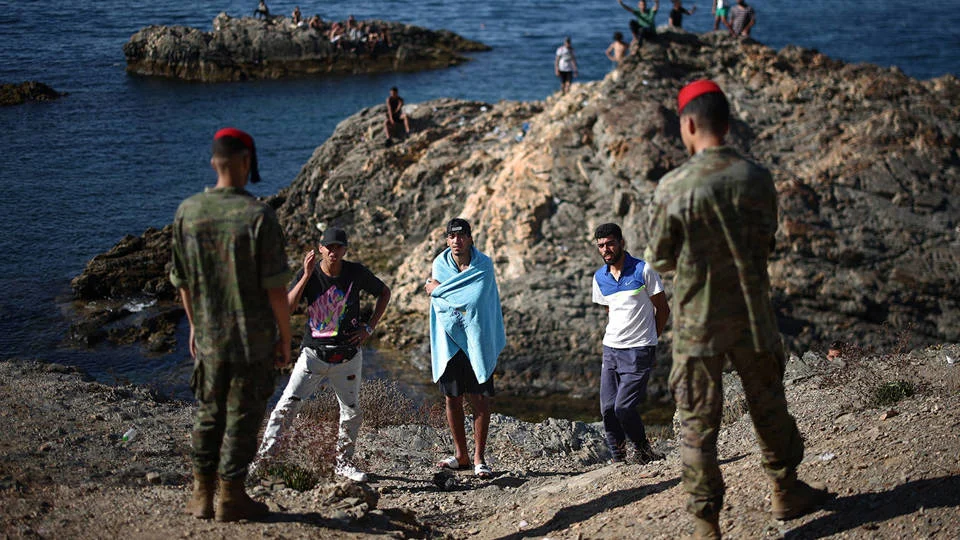
At the end of July 2026, the fragile equilibrium of Ceuta—a 7-square-mile Spanish autonomous city surrounded by Morocco—was shattered. Tens of thousands of migrants descended upon the border fence in a matter of days, overwhelming local security infrastructure and forcing an immediate, large-scale deployment of Spanish military and police units.
While the immediate "human wave" tactics saw the vast majority of these individuals eventually return to Moroccan territory, the aftermath is far from resolved. Several thousand migrants, a significant proportion of whom are unaccompanied minors, remain within the enclave. This has created a logistical and humanitarian bottleneck that has pushed Ceuta’s local services to the brink of collapse. The city, which serves as a symbolic and physical outpost of the European Union, is currently struggling to house, process, and provide for a population that its infrastructure was never designed to accommodate.
The presence of so many minors complicates matters exponentially, as European and Spanish legal frameworks impose strict, non-negotiable requirements for the protection and care of children, creating an administrative paradox that defies quick solutions.
Chronology of the Crisis
To understand how a stable border can transform into a flashpoint overnight, one must look at the timeline of the July surge:
- Mid-July 2026: Intelligence reports and local monitoring groups begin to note unusual activity near the Moroccan border towns surrounding Ceuta. Rumors of a "breach" begin to circulate on social media platforms popular among youth in North Africa.
- July 25–27: The situation deteriorates rapidly. Tens of thousands of individuals gather at the border perimeter. Spanish authorities report a systematic weakening of border surveillance, with Moroccan security forces appearing to step back from their traditional enforcement roles.
- July 28: The peak of the surge. Thousands breach the outer perimeters. The Spanish government, under immense pressure, declares a state of emergency within the city, mobilizing the Spanish Armed Forces to support the Civil Guard and National Police.
- August 1–5: Through a combination of negotiations and voluntary returns, the majority of the crowd disperses. The "humanitarian relief" phase begins, characterized by the establishment of makeshift reception centers.
- Late August: A diplomatic standoff ensues. Spain seeks to clarify the status of the remaining minors, while the broader European community attempts to calibrate a response that balances humanitarian obligations with the necessity of border security.
Supporting Data: The Scale of the Challenge
The data emerging from the Ceuta surge paints a stark picture of the migration landscape in 2026. According to internal reports from the Spanish Ministry of the Interior, the volume of entries in those few days represented nearly 40% of the total annual migration intake typically expected in the region.
Furthermore, the demographic profile of the arrivals is telling:
- Minors: Estimates suggest that nearly 35% of those who remain in the city are under the age of 18.
- Origin: While the majority are Moroccan, there has been a marked increase in migrants from sub-Saharan transit hubs, indicating that Ceuta is being used as a secondary route for wider African migration flows.
- Logistics: The cost to the regional government of Andalusia and the municipal government of Ceuta has already exceeded €40 million in emergency spending, covering health services, temporary housing, and legal processing.
These figures underscore a uncomfortable truth: Europe’s border security is increasingly dependent on the cooperation of third-party nations. When that cooperation fluctuates, the "fortress" status of the EU is revealed to be a voluntary arrangement, rather than a permanent state of affairs.
Official Responses: Between Diplomacy and Deterrence
The reaction from Brussels and Madrid has been a masterclass in delicate diplomacy. The Spanish government, led by the Prime Minister, has characterized the event as an "unacceptable challenge to national sovereignty." However, they have been careful to avoid inflammatory rhetoric that might permanently damage relations with Rabat.
The Madrid Perspective
Spain has emphasized the need for a "Europeanized" response. They argue that Ceuta is not just a Spanish city, but a frontier of the Schengen Area. By framing the crisis as a European issue, Madrid is pressuring the European Commission to provide both financial aid and stronger diplomatic backing in its dealings with Morocco.
The Brussels Perspective
European Commission officials have issued statements affirming the "inviolability of EU borders." However, behind closed doors, there is clear frustration. Brussels is trapped between two mandates: the duty to uphold the Geneva Convention regarding asylum seekers and the political pressure from member states to prevent uncontrolled migration. The EU has pledged technical support and increased funding for border management, but it has stopped short of formal sanctions against Morocco, reflecting a deep-seated fear that alienating Rabat would lead to an even greater influx of migrants.
Implications: The Fragility of European Identity
The events in Ceuta are symptomatic of three deep-seated crises in the European project:
1. Cohesion Without Trust
European leaders have long operated under the assumption that they could maintain a unified front on migration through financial incentives and common policy frameworks. Ceuta demonstrates that without a foundation of genuine trust—not just between EU member states, but between the EU and its neighbors—this cohesion is fragile. We are seeing a "transactional" approach to border security, where stability is purchased rather than built. When the transaction fails, the entire framework of cooperation disintegrates.
2. The Trap of Dependence
Europe has outsourced much of its migration control to North African and Balkan transit countries. While this has effectively reduced the number of unauthorized arrivals over the last decade, it has created a dangerous dependency. By relying on Morocco to police the border, Europe has surrendered its agency. Dependence without limits leads to vulnerability; when the partner country experiences internal instability or chooses to exert political pressure, Europe finds itself without a plan B.
3. The Erosion of International Law
Perhaps most concerning is the erosion of the norms that form the bedrock of Europe’s strategic identity. The "selective enforcement" of international law—where humanitarian obligations are prioritized or ignored based on political expediency—threatens the moral authority of the European Union. If the EU cannot provide a consistent, rights-based approach to the minors in Ceuta, it loses the standing to criticize human rights abuses elsewhere. We risk creating a "normative deficit" that makes it increasingly difficult to project European values on the global stage.
Conclusion: A Path Toward Strategic Autonomy
The Ceuta crisis is a wake-up call. It is clear that the status quo—relying on the goodwill of neighbors and reactive crisis management—is unsustainable. To move forward, Europe must shift from a posture of reactive containment to one of proactive engagement.
This requires, first, a more robust internal burden-sharing mechanism. It is untenable for border states like Spain, Italy, and Greece to shoulder the administrative and financial weight of the EU’s external frontiers alone. Second, the EU must diversify its migration partnerships. By broadening its diplomatic reach and investing in the long-term stability of source countries, Europe can reduce the "push factors" that make the dream of reaching European soil so compelling.
Finally, Europe must rediscover its own strategic identity. If it wishes to remain a beacon of human rights and the rule of law, it must ensure that its borders reflect these values, rather than contradicting them. The children currently stranded in the streets of Ceuta are not merely a logistical problem; they are a test of whether Europe still believes in the principles it so frequently professes. The events of this July were a warning. The next surge—and there will be a next surge—must be met with a policy that is as grounded in reality as it is in the values that define the European project.