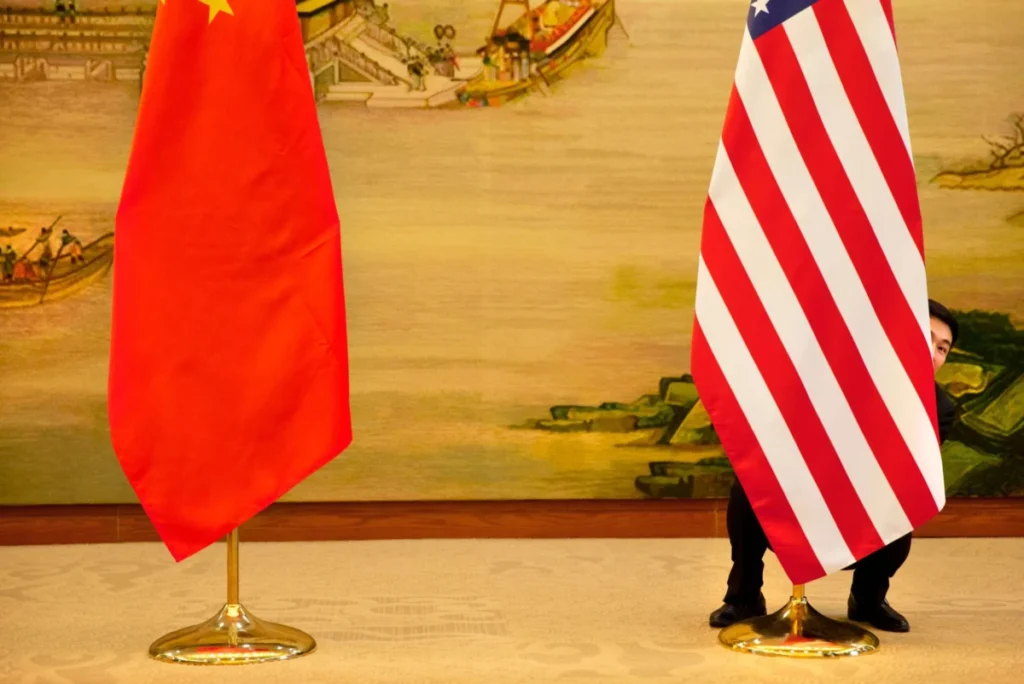
In a strategic shift that marks a pivotal moment for the future of automation, Washington has significantly tightened the regulatory noose around foreign-made robotics. Throughout July and August of this year, the U.S. government implemented aggressive restrictions on advanced robotic systems and levied steep tariffs on imported drones and their sub-components. These measures, justified under the banner of national security, signal a deepening commitment to insulating domestic critical infrastructure from potential foreign surveillance and supply chain vulnerabilities.
As these policies transition from executive orders to market reality—with drone tariffs taking effect in September and expanded component levies slated for 2027—the global robotics sector faces an existential question: Is the era of a unified, globalized robotics market coming to an end, or is it merely fracturing into competing, regionalized ecosystems?
A Chronology of Containment: From Telecom to Humanoids
The current regulatory climate did not materialize overnight; it is the culmination of a multi-year effort to purge high-risk foreign technology from the American digital backbone. The foundation for this policy was laid in 2021 with the establishment of the FCC’s "Covered List." Originally designed to address security threats posed by telecommunications and video surveillance giants like Huawei, ZTE, and Hikvision, the list has undergone a strategic evolution.
By mid-2026, the scope of this restriction expanded significantly. Washington moved to categorize specific advanced robotic systems under the same umbrella of concern, reflecting a growing consensus that robots—capable of navigating sensitive environments and collecting vast amounts of spatial data—pose risks similar to those of networked surveillance cameras.
The trajectory is clear:
- 2021: The FCC introduces the "Covered List," targeting specific Chinese telecom and surveillance firms.
- July 2026: Washington expands restrictions to include advanced foreign-made robotic systems.
- August 2026: President Trump announces steep tariffs on imported drones and critical components to bolster national security and domestic supply chains.
- September 2026: Drone tariffs officially take effect, marking the beginning of a higher-cost environment for U.S. importers.
- 2027 (Projected): Implementation of secondary tariffs on a broader range of drone components, further pressuring the supply chain.
The Scale Gap: Why Sanctions Cannot Replace Production
While the U.S. remains the undisputed global leader in frontier AI, software innovation, and high-end semiconductor design, the manufacturing reality of the robotics age presents a different set of challenges. Industry analysts note that China has successfully leveraged its vast manufacturing base, supply-chain depth, and lower labor costs to achieve an early, commanding lead in physical deployment.
According to a report by Counterpoint Research, the first half of 2026 saw a 300% year-over-year surge in global humanoid robot shipments. Of these 22,000 units, a staggering 86% were produced by just five companies: AgiBot, Unitree, Galbot, UBTECH, and Leju Robotics. All five are Chinese entities.
This is not merely a matter of quantity; it is a matter of the "virtuous cycle" of manufacturing. As Ankur Saxena, an investment director at TDK Ventures, explains, lower price points allow Chinese firms to deploy more units into real-world environments. This deployment generates massive amounts of operational data, which is then fed back into the development cycle to refine software and improve hardware durability. Simultaneously, high production volumes drive down per-unit costs, creating a moat that Western competitors—who often rely on boutique, high-cost manufacturing processes—find difficult to cross.
"You cannot sanction your way around a cost curve," says Saxena. "You can only out-build it, and America has yet to begin making the decade-long investment that will require."
The Strategic "Middle Ground" and the Rise of Regionalism
The fear among industry insiders is that the U.S. is inadvertently forcing the market into a binary choice that may leave it isolated. Rather than a clean split, many experts foresee a fragmented global map. Chinese manufacturers, faced with a closed U.S. market, are already pivoting toward price-sensitive, labor-starved regions in Southeast Asia, Latin America, and the Middle East.
This expansion mirrors the trajectory of the Chinese electric vehicle (EV) industry: initial domestic saturation, followed by aggressive international pricing, and eventually, the establishment of localized production facilities.
However, the void left by Chinese firms in the U.S. market is not automatically being filled by American domestic production. Instead, a complex "middle ground" is emerging, involving Asian manufacturers from Japan, South Korea, and Taiwan. These nations possess deep expertise in precision manufacturing, automotive assembly, and electronics—all critical pillars of robotics.
"The alternative to China isn’t a purely domestic U.S. supply chain; it’s a diversified, allied one," Saxena notes. Companies like Hyundai (which owns Boston Dynamics) and Toyota are emblematic of this shift, utilizing their existing automotive manufacturing prowess to bridge the gap between high-end, high-cost research robots and the mass-market, industrial-grade machines needed for factory floors.
Implications for the Future of Automation
The implications of these restrictions ripple far beyond trade deficits. They fundamentally alter how roboticists design their machines. Yang Fang, of the California-based agtech firm Beagle Technology, suggests that we are entering an era of "contextual robotics."
"Robotics is becoming increasingly regional," says Fang. "Designers are optimizing for the specific labor needs, regulatory requirements, and working conditions of their home markets." For a U.S.-based agricultural robot, the priority may be maximizing uptime in North American field conditions, whereas a Chinese unit might be built to prioritize the specific manufacturing-heavy requirements of a domestic industrial complex.
The Drone Industry as a Microcosm
The drone market serves as the clearest bellwether for this fragmented future. As noted by Bentzion Levinson, CEO of Heven AeroTech, the industry is splitting into two distinct ecosystems. One is a U.S.-led, NDAA-compliant, high-security market where reliability and provenance are paramount. The other is a China-led, high-volume market that dominates the consumer and commercial sectors through sheer cost efficiency.
Levinson warns that the next stage of this competition will not be about the airframes themselves, but about the "payload architecture." As drone capabilities expand, the limiting factor is no longer the motors or the chassis—it is energy density, battery longevity, and specialized sensor integration. Whoever wins the battle for the next generation of battery and energy-management architecture will likely dictate the standards of the next decade.
Official Responses and Industry Outlook
The industry reaction to these protectionist measures has been mixed. Agility Robotics, a U.S.-based manufacturer of the Digit humanoid, has publicly welcomed the FCC’s decision. They argue that proactive regulation prevents the "drone-ification" of the humanoid market—a scenario where foreign technology becomes so deeply embedded in U.S. infrastructure that the risk becomes systemic and irreversible.
Yet, even proponents of tighter regulation express concern. There is a delicate balance to strike: while security is a primary driver, the robotics industry requires global access to specialized components, research talent, and raw materials. A policy that is too restrictive risks choking the very innovation needed to remain competitive in the long term.
Ultimately, the global robotics landscape is shifting from a centralized, efficiency-driven model to one defined by geopolitical friction and regional security priorities. While the U.S. market will undoubtedly become more secure, it will also become more expensive and potentially slower to iterate. For Chinese firms, the challenge will be maintaining their cost-advantage while navigating a global market that is increasingly wary of their presence. For everyone else, the race is on to build the regional alliances and manufacturing foundations necessary to compete in a world where a robot’s origin is just as important as its performance.