The energy landscape is undergoing a silent but seismic shift. While the world’s attention has been dominated by the manufacturing of "green" hydrogen through electrolysis—a process requiring massive amounts of renewable electricity—a different, older, and potentially more disruptive energy source is being rediscovered beneath our feet: natural hydrogen.
For decades, the energy industry focused on petroleum, coal, and minerals, often dismissing hydrogen seepage as a geological curiosity. Today, that perception has inverted. Exploration for naturally occurring hydrogen is accelerating across Canada, the United States, and Australia. If commercial production can be proven at scale, it promises to open a new category of locally produced, off-grid energy that could bypass the limitations of aging electrical grids and expensive long-distance pipelines.
The Nature of the Resource
Most of the hydrogen currently utilized in industrial processes is "manufactured." Conventional, or "grey," hydrogen is stripped from natural gas through steam methane reforming—a carbon-intensive process. "Green" hydrogen, by contrast, uses renewable electricity to split water molecules.
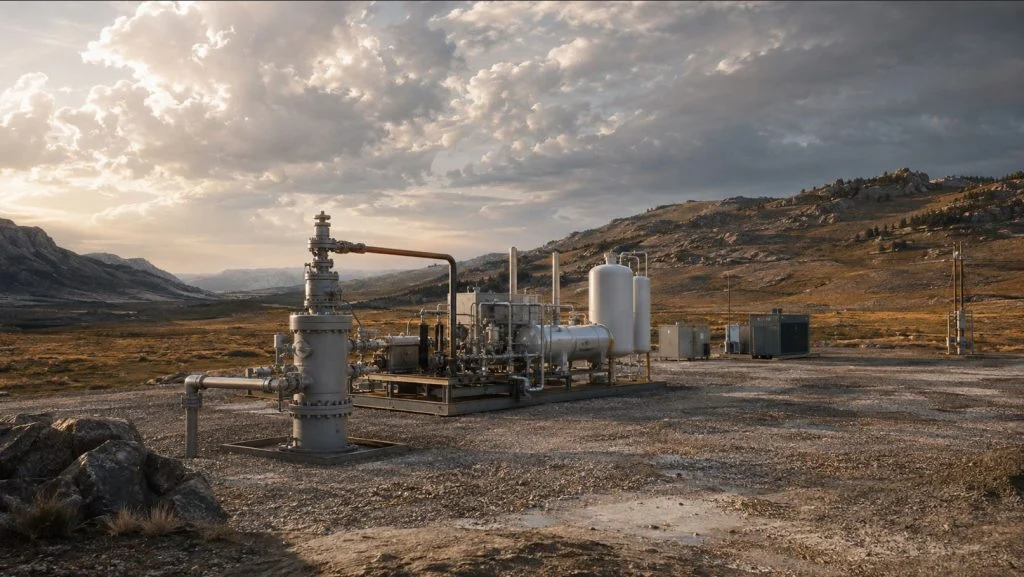
Natural hydrogen, sometimes called "white" or "gold" hydrogen, is fundamentally different. It is a primary energy resource that already exists in the Earth’s crust. If large-scale accumulations can be tapped economically, these wells could feed fuel cells or turbines directly at the source. By generating electricity near the point of extraction, developers could provide a stable, dispatchable power source for remote mines, industrial hubs, and the rapidly expanding fleet of artificial intelligence data centers, effectively decentralizing the power grid.
A Chronology of Discovery and Ambition
The journey toward natural hydrogen as an energy pillar did not begin in a laboratory, but rather by accident in the Sahel.
- 1987: During routine water drilling in the village of Bourakébougou, Mali, workers encountered a gas pocket that caused a blowout. The well was eventually plugged, but not before it was discovered that the gas was nearly 98% hydrogen.
- 2012: The Bourakébougou field was reopened to provide electricity for the local village. It remains the world’s first and most famous natural-hydrogen-to-electricity development, serving as a vital proof-of-concept.
- 2021: Recognizing the potential for a new energy sector, the South Australian government amended its petroleum legislation to include hydrogen, effectively opening the door for systematic exploration.
- 2023: Gold Hydrogen Ltd. drilled Australia’s first dedicated natural hydrogen wells on the Yorke Peninsula, reporting concentrations as high as 86%.
- Present Day: A flurry of activity across North America has seen junior resource companies and private equity firms applying petroleum-style exploration techniques—3D seismic imaging, deep-well drilling, and reservoir engineering—to hydrogen targets in Saskatchewan, Nova Scotia, Kansas, and Nebraska.
Supporting Data: The Magnitude of Potential
The scientific community has begun to quantify the potential size of this resource, and the numbers are staggering. In a landmark study published in Science Advances, the U.S. Geological Survey (USGS) modeled the global in-place geologic hydrogen resource at approximately 5.6 trillion tonnes.
While the USGS acknowledges significant uncertainty, the sheer scale is difficult to overlook. According to their estimates, just 100 billion tonnes—less than 2% of the "most probable" global resource—would theoretically satisfy the world’s projected hydrogen requirements for reaching net-zero emissions for the next 200 years.
It is important to note that these figures are not "reserves." A reserve implies that the resource is proven to be economically and technically extractable. These figures represent a "resource base"—a signal that the hydrogen is there and warrants the multi-billion-dollar exploration cycle currently being initiated by the mining and petroleum sectors.
The North American Exploration Vanguard
Canada and the United States have emerged as the primary testing grounds for these extraction methodologies.
Canada: From Saskatchewan to the Atlantic
In Saskatchewan, MAX Power Mining Corp. is advancing the Lawson natural hydrogen system. Following the identification of a discovery well, the company has completed extensive 3D seismic work over the 28-square-kilometre "Lawson Complex." This is a critical transition; moving from a "find" to a "validated system" requires rigorous modeling of reservoir performance, a task now supported by energy consultancy GLJ Ltd.
Meanwhile, on the Atlantic coast, Québec Innovative Materials Corp. (QIMC) has been reporting record-breaking mud-gas hydrogen concentrations in Nova Scotia. At the Bennett Hill site, QIMC recorded concentrations of 27.8% at a depth of 374 meters. While mud-gas readings are preliminary, they provide the subsurface mapping necessary for the next phase: pilot-scale production testing.
Other players like First Atlas Resources Corp. and Primary Hydrogen Corp. are rapidly building portfolios, signaling that Saskatchewan and the Maritimes could soon become the first "natural hydrogen districts" in the country.
The United States: The Midcontinent Rift
The U.S. is witnessing a similar, albeit more capital-intensive, buildout. The Midcontinent Rift, spanning parts of Kansas and Nebraska, has become a hotspot. HyTerra Ltd. has secured over 80,000 acres in Kansas, with its Sue Duroche-3 well returning concentrations as high as 96.1%.
Perhaps most telling is the involvement of institutional capital. Denver-based Koloma has raised over US$300 million to pursue hydrogen exploration. This influx of private equity suggests that the sector has graduated from speculative junior mining interest to a serious asset class for major energy investors.
Strategic Implications: Powering the AI Revolution
The most compelling argument for natural hydrogen is its potential to address the "energy bottleneck." As artificial intelligence and machine learning data centers proliferate, they require massive, consistent, and reliable power. Existing grids are often constrained, and building new transmission lines takes years of permitting and regulatory hurdles.
Natural hydrogen presents a radical alternative: the "power-to-the-source" model. By locating energy-intensive industries near productive hydrogen fields, companies could bypass the grid entirely.
Furthermore, the geological expertise required to find hydrogen is already well-honed. The techniques used to locate oil and gas—seismic reflection, geochemical sniffing, and structural drilling—are exactly what is being applied here. Even the concept of geological storage, such as the use of depleted gas fields in the North Sea for storage as researched by Durham University, complements the broader strategy of integrating hydrogen into the global energy mix.
The Path Forward
Despite the enthusiasm, the industry remains in its infancy. Critics and cautious analysts point to unresolved variables:
- Flow Rates: Can the hydrogen be extracted at a speed that makes commercial sense?
- Replenishment: How fast do these underground reservoirs recharge, and are they truly "renewable" on a human timescale?
- Impurities: What other gases are trapped with the hydrogen, and what is the cost of separation?
The answers to these questions will be found in the field. The success of the Bourakébougou project proved that the Earth can be a reliable hydrogen generator. The current wave of drilling in Canada, the U.S., and Australia is now testing whether that miracle is a local anomaly or a global, scalable reality.
If successful, natural hydrogen will do more than just add a new fuel to the market. It will rewrite the geography of energy production, providing a dependable, low-carbon, and locally sourced power supply to the most remote and energy-hungry corners of the planet.
Resource World Magazine Inc. has prepared this editorial for general information purposes only and should not be considered a solicitation to buy or sell securities in the companies discussed herein. The information provided has been derived from sources believed to be reliable but cannot be guaranteed. This editorial does not take into account the reader’s investment criteria, financial condition, or goals. Recipients should perform their own due diligence and consult with a professional advisor before making any investment decisions.