For centuries, volcanologists have been haunted by a fundamental inconsistency in their field: why do two volcanoes with nearly identical chemical compositions and tectonic settings produce such wildly different eruptive styles? In some cases, a vent might unleash spectacular, towering lava fountains that threaten wide swaths of terrain; in others, the same volcanic system might produce a sluggish, effusive flow that, while destructive, lacks the explosive energy of its counterpart.
A groundbreaking study led by researchers at The University of Manchester has finally uncovered a critical piece of this geological puzzle. By peering into the microscopic world of magma dynamics, scientists have identified a phenomenon known as "superheating"—a thermal process that fundamentally alters the internal architecture of molten rock, dictating the tempo and intensity of an eruption before it even breaks the surface.
The Mechanism: How Superheating Rewrites Magma’s Destiny
At the heart of this discovery is the lifecycle of crystals within magma. Under normal conditions, magma contains "crystal seeds"—microscopic particles that act as templates for larger crystals to grow. As magma rises toward the Earth’s surface, cooling and pressure changes typically encourage these seeds to proliferate. This process increases the viscosity (thickness) of the magma, effectively acting as a brake on its ascent.
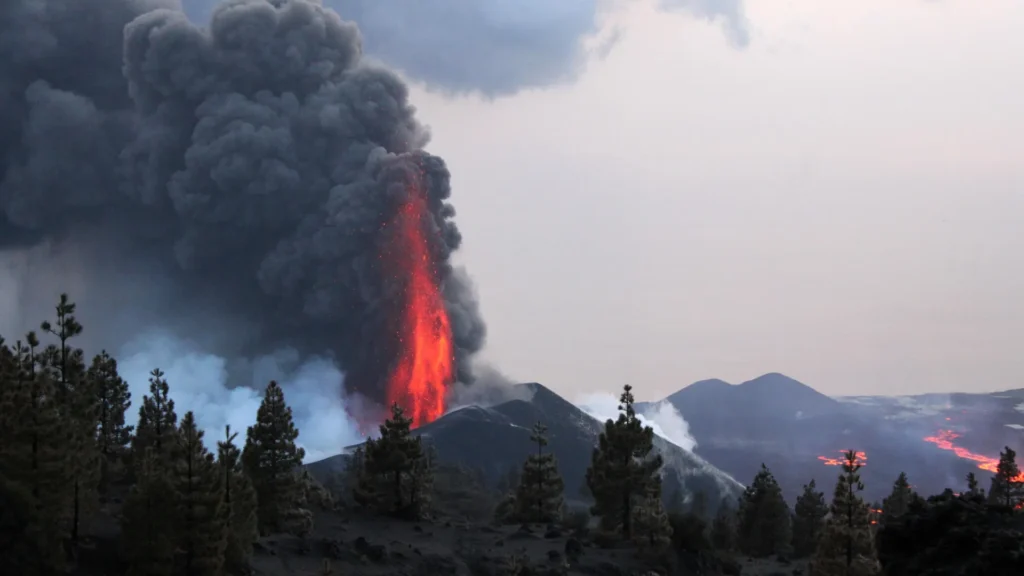
However, the international research team, focusing on the 2021 Tajogaite eruption on the island of La Palma, Spain, found that when magma is subjected to intense heat—surpassing the threshold at which these crystals remain stable—a process of "superheating" occurs.
This thermal shock effectively "dissolves" the pre-existing crystal seeds. Furthermore, the heat reorganizes the magma at a molecular level, creating a more uniform internal structure that is fundamentally resistant to the nucleation of new crystals. By suppressing the growth of these crystals, superheating keeps the magma in a lower-viscosity, more fluid state for an extended period. This delay in crystallization changes the physics of the ascent, allowing the molten rock to travel through the crust at significantly higher velocities.
Chronology of Discovery: From the Slopes of La Palma to the Synchrotron
The journey to this discovery began with the 2021 eruption of Tajogaite, an event that provided a pristine, high-fidelity sample of volcanic activity. Recognizing the unique opportunity to study the thermal history of this specific eruption, Dr. Barbara Bonechi and her team at The University of Manchester embarked on a multi-year research program.
Phase 1: In-Situ Observation
The researchers utilized the Diamond Light Source, the UK’s national synchrotron science facility. By placing magma samples inside an X-ray transparent pressure vessel, the team used synchrotron X-ray microtomography to observe the magma in real-time. This allowed them to watch, at a microscopic scale, the moment-by-moment formation (or lack thereof) of crystals under simulated volcanic pressures and temperatures.
Phase 2: Long-Duration Complementary Experiments
Recognizing that some geological processes occur over timescales longer than those possible in a synchrotron, the team conducted parallel experiments in Prague. These "ex-situ" tests allowed for the observation of crystal nucleation over extended periods, providing a comprehensive dataset that bridged the gap between rapid synchrotron observations and long-term magmatic storage.
Phase 3: Numerical Modeling
With the experimental data in hand, the team integrated their findings into complex numerical models of magma ascent. By simulating how the "crystallization delay" affected the movement of magma through the Earth’s crust, they were able to demonstrate a direct link between thermal history and eruptive outcome.
Supporting Data: The Eight-Hour Threshold
The experimental results were striking in their clarity. When magma samples that had not been subjected to superheating were monitored, crystal formation began within approximately 20 minutes—a timeframe consistent with standard models of volcanic ascent.
In stark contrast, samples that underwent intense superheating displayed a dramatic resilience. Crystal formation was suppressed for more than eight hours. This massive shift in the timing of crystallization has profound implications for how magma behaves as it moves through the volcanic plumbing system.
According to the team’s models, this delay keeps the magma relatively fluid during its transit. As the magma remains thin, it rises rapidly. When it reaches the surface, this high-velocity, low-viscosity material is primed to produce dramatic lava fountains—a signature of high-energy eruptions. Conversely, if crystallization begins early, the magma thickens, moving sluggishly and allowing dissolved volcanic gases to escape in a slow, controlled manner, resulting in the "gentler" effusive eruptions often seen in basaltic systems.
Official Responses and Scientific Perspectives
The research, recently published in the journal Nature Communications, has been hailed as a significant advancement in understanding the pre-eruptive conditions of volcanic systems.
Dr. Barbara Bonechi, lead author and Research Associate at The University of Manchester, emphasized the technological leap required for this study: "The history of crystal and bubble growth can dramatically control how a magma erupts; in particular, as more crystals grow, they eventually have a dramatic effect on magma viscosity. Until now, we did not fully understand the dynamics of crystal growth for magmas that received an injection of superheat just before ascent. But using our exciting and newly developed X-ray transparent pressure vessel combined with synchrotron X-ray microtomography, we can actually observe these processes ‘in situ’."
Dr. Margherita Polacci, a Senior Lecturer in Volcanology and co-author of the study, highlighted the potential for this research to shift the focus of volcanic monitoring. "Current volcanic hazard models typically focus on magma chemistry, gas content and pressure changes," Dr. Polacci noted. "This work suggests that pre-eruptive thermal history and crystallization kinetics may also play an important role in controlling magma ascent and eruptive behavior, with implications for volcanic hazard assessment."
Implications: A New Frontier in Volcanic Forecasting
The implications of this study extend far beyond the laboratory. By identifying "superheating" as a variable that dictates the intensity of an eruption, scientists have gained a new lens through which to interpret seismic and geochemical data collected during volcanic crises.
Improving Hazard Assessment
Currently, volcanic hazard models often struggle to predict the specific "style" of an eruption. If monitoring data can eventually be refined to detect signs of pre-eruptive thermal history, authorities might be able to better anticipate whether an eruption will be characterized by explosive fountains or more manageable lava flows. This nuance is vital for emergency planning and evacuation strategies, as the two eruption styles pose vastly different risks to infrastructure and local populations.
Refined Geophysical Monitoring
The study suggests that the thermal "memory" of magma is written into the crystals that eventually solidify. By analyzing the crystals within volcanic rocks after an eruption, geologists may be able to "read" the thermal history of that specific eruption, providing a post-mortem analysis that can improve future forecasts for the same volcano.
Future Research Directions
The research team is now looking toward incorporating these findings into global hazard maps. The challenge, as noted by the authors, lies in the complexity of natural systems. While the lab experiments provided a controlled environment, real-world magma bodies are subject to chaotic variables, including complex geometry and varying rates of magma injection.
However, by establishing the "superheating" mechanism as a fundamental physical reality, the Manchester team has provided a new, essential variable for the next generation of predictive models. As our ability to monitor volcanic systems improves—through more sensitive satellite imagery, ground-based gas sensors, and refined seismic networks—the inclusion of "thermal history" data could represent the next great leap in our ability to forecast the temperaments of Earth’s most volatile mountains.
In the high-stakes world of volcanic risk management, this understanding provides a crucial, if microscopic, advantage: the ability to see the invisible heat that determines the destructive power of a volcano, long before the first drop of lava reaches the light of day.