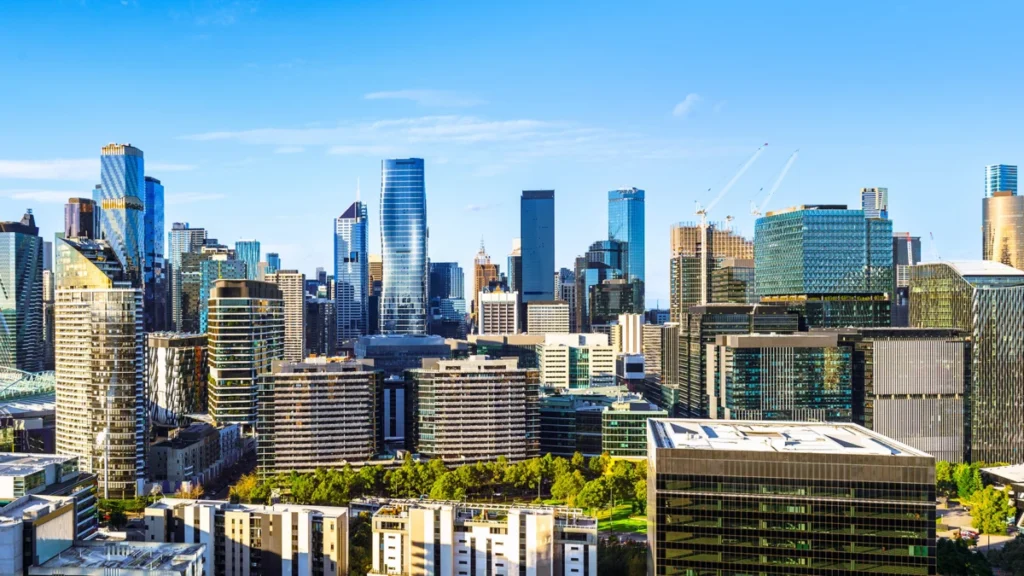
For decades, the standard playbook for real estate investment has been anchored to the suburb. Whether in London, New York, or Sydney, buyers are taught to look at median house prices, school catchments, and local amenities within a specific postcode. However, in Melbourne’s rapidly evolving central grid, that geographic resolution is far too coarse.
The Melbourne skyline is not a single, monolithic market. It is a collection of several dozen, vertically stacked, and independently priced ecosystems. Two apartments located just one hundred meters apart, within towers completed within the same three-year window, can behave like entirely different asset classes. They exhibit divergent resale patterns, distinct rental histories, varying owners corporation (OC) fee structures, and, most importantly, separate buyer pools. To navigate this landscape, investors must shift their focus from the street level to the building level.
The Evolution of the Vertical City: A Chronology of Density
Melbourne’s transition into a high-density vertical city was not a slow evolution but a rapid, deliberate pivot. Following the mid-2000s, the city began to shed its "low-rise" reputation, with the CBD and Southbank undergoing a massive vertical expansion.
- The Early 2000s (The Foundation): The initial wave of modern high-rise development focused on establishing a residential footprint in the city. Buildings like Freshwater Place set a new standard for luxury, blending residential, retail, and commercial spaces.
- The 2010s (The Vertical Boom): This decade saw an explosion of "sky-high" residential towers, such as Eureka Tower and later, Australia 108. The focus shifted toward sheer height and "lifestyle" amenities, catering to an influx of international students, corporate professionals, and offshore investors.
- The 2020s (The Maturity Phase): Today, the market is defined by differentiation. Buildings are no longer just "apartments"; they are curated environments. The "brief" of a building—whether it was designed for owner-occupiers, high-end luxury, or student housing—has become the primary driver of its long-term asset performance.
Supporting Data: Why Building-Level Analysis Matters
The disparity between buildings is rarely captured in the broad statistics favored by the media. When a headline declares that "Melbourne apartment prices have risen by X percent," it masks the reality that some towers have surged in value while others have stagnated.
The performance of an apartment is dictated by its "DNA." Key factors include:
- Floor Plate Efficiency: How much of the internal space is usable vs. lost to hallways or structural columns.
- Glazing and Thermal Performance: Modern buildings with high-spec glass perform better for climate control, reducing ongoing utility costs.
- The Investor-to-Owner Ratio: A building dominated by transient student rentals has a vastly different depreciation profile than one occupied by long-term residents.
- Management Quality: The efficacy of the Owners Corporation (OC) is perhaps the most undervalued metric. Poor management leads to deferred maintenance, which eventually necessitates "special levies" that can cost owners tens of thousands of dollars.
Real estate experts note that while portal listings provide a snapshot of current asking prices, they fail to provide the historical context required for due diligence. To understand the true value of an apartment, one must access granular data: the sales history of comparable units within that specific tower, the rental yield consistency, and how the building’s value held up during the previous market cycles.
Agencies such as Melcorp Real Estate have moved to fill this information void. By profiling roughly forty key towers—including high-profile addresses like Shadow Play, Victoria One, and Swanston Square—they provide a "building report card" that transcends suburb-level averages. This shift toward deep-dive, building-specific analysis is the new gold standard for serious investors.
The Geography of the Grid: Sub-Markets within the CBD
The Melbourne CBD is not uniform; it is a patchwork of sub-markets. Understanding these distinct zones is essential for any buyer.
- The Eastern CBD (Collins & Russell): Characterized by premium heritage influence and high-end retail, this area attracts a demographic that values prestige and proximity to corporate headquarters.
- The Northern End (La Trobe & Franklin): A hub of high-density, student-centric, and investor-focused stock. While these assets can offer high rental demand, their capital growth drivers differ significantly from the premium sector.
- Southbank: Perhaps the most distinct sub-market, Southbank offers a different proposition entirely. With its proximity to the Yarra River and views of Port Phillip Bay, it contains a high concentration of premium, taller towers. It functions as a luxury destination rather than just a transit hub.
- The Perimeter (South Yarra & Toorak): While technically outside the CBD, these areas are often compared to the city. However, they operate on a different logic—lower density, older demographics, and a "prestige suburb" feel that appeals to a different buyer base than the central grid.
The Penthouse Tier: A Separate Market Economy
Perhaps the most striking evidence that Melbourne’s vertical market is segmented is the performance of the penthouse tier. These residences do not follow the rules of the general apartment market; they are effectively in a league of their own.
In buildings like 35 Queens Bridge Street, the gap between a standard two-bedroom unit and a top-floor residence is vast. While a mid-level apartment might trade at a clear, market-dictated price per square meter, penthouses often trade "off-market" and "on application."
These transactions are shielded from the public eye because they rely on private networks and exclusive databases. A buyer looking for a luxury penthouse in Melbourne is not competing in a standard auction; they are participating in a private, negotiated procurement process. For high-net-worth individuals, the goal is to access the "off-market" inventory—those exceptional properties that are matched with buyers before they ever touch a listing website.
Implications for Future Buyers
For those looking to enter the Melbourne market, the implications of this "vertical segregation" are clear: The building is the asset.
1. The Due Diligence Requirement
Before committing, buyers must move beyond the "curb appeal" of a building. It is imperative to ask for the building’s specific sales and rental history. If the building is managed by an opaque body or if maintenance costs are rising, the capital gains potential of the apartment is effectively capped.
2. Understanding Costs
Investors often underestimate the impact of Owners Corporation fees. A building with a concierge, a pool, a gym, and a rooftop garden is a lifestyle luxury, but it is also a high-maintenance asset. These fees are not optional; they are a permanent, recurring cost that must be factored into the yield calculation.
3. Navigating the Auction and Legal Environment
Melbourne’s auction system is notoriously fast-paced and unforgiving. Unlike some international markets where cooling-off periods are standard, a winning bid at a public auction is a binding contract. A 10% deposit is expected on the spot. International buyers, in particular, must ensure they have their Foreign Investment Review Board (FIRB) approvals and tax structures settled well before they attend an auction.
4. The Power of Specialized Agencies
Because so much of the best stock in Melbourne moves privately, the traditional strategy of "browsing the portals" is increasingly inefficient. Working with agencies that have deep, two-decade-long histories in the central grid provides an edge. These agents possess the "institutional memory" of how a building has performed since it was completed—data that no algorithm can replicate.
Conclusion
The era of the "one-size-fits-all" city investment is over. Melbourne’s vertical density has created a sophisticated, nuanced landscape where the physical structure of a tower dictates its financial destiny. To succeed in this market, the modern buyer must stop thinking like a suburban shopper and start thinking like a vertical developer.
By prioritizing building-level data, understanding the specific "brief" of a tower, and securing access to off-market channels, investors can navigate the complexities of the skyline. As Melbourne continues to grow upward, the winners will be those who recognize that while the city is shared, the value of the home is determined by the tower in which it sits.
FAQ: Navigating the Vertical Market
Q: Why do apartments in neighbouring Melbourne towers sell for such different prices?
A: Buildings are developed under different "briefs." One tower may have been designed as high-end owner-occupier stock with premium materials, while its neighbor was designed as high-density, investor-grade stock. These structural and design choices influence how the building ages, its prestige, and its attractiveness to future buyers.
Q: Which parts of central Melbourne hold the most premium apartment stock?
A: Southbank is generally regarded as the hub for premium high-rise living due to its riverfront access, bay views, and taller, more modern floor plates. The eastern end of the CBD, near Collins Street, also maintains a high-prestige profile due to its proximity to the city’s commercial and luxury retail centers.
Q: Why are Melbourne penthouses often listed without a price?
A: Penthouses occupy a unique, thin market segment. Because they are rare and have no direct "comparables" in the same building, they are typically sold via "Expression of Interest" or "Private Sale." This allows the seller to target a specific, affluent buyer pool rather than relying on public listing metrics.
Q: What ongoing costs should apartment buyers budget for?
A: Beyond the purchase price, buyers must account for Owners Corporation (OC) fees, which cover building insurance, concierge services, and amenity maintenance. Other costs include state-based stamp duty, legal conveyancing fees, and potential FIRB (Foreign Investment Review Board) fees for international purchasers.