By Kaushik Basu
August 24, 2026
In the hallowed halls of economic forecasting, we are accustomed to interpreting trends through the broad, smoothing lens of aggregate indicators. We look at GDP growth, headline inflation, and the monthly unemployment rate as the ultimate barometers of national health. However, as we navigate the complexities of the mid-2020s, these traditional metrics are increasingly failing us. They are not merely becoming less accurate; they are becoming deceptive, obscuring a widening, structural divide between a cohort enjoying rapid income growth and a burgeoning segment of the population facing deteriorating job prospects and systemic instability.
The current economic landscape is characterized by a paradoxical "Great Divergence." While some regions and sectors operate in a state of high-octane expansion, others are effectively trapped in a recessionary malaise. As Artificial Intelligence (AI) accelerates its integration into the workplace, this disparity is poised to deepen, creating a bifurcated economy where the "boom" and the "bust" coexist within the same national borders.
Main Facts: The July 2026 Paradox
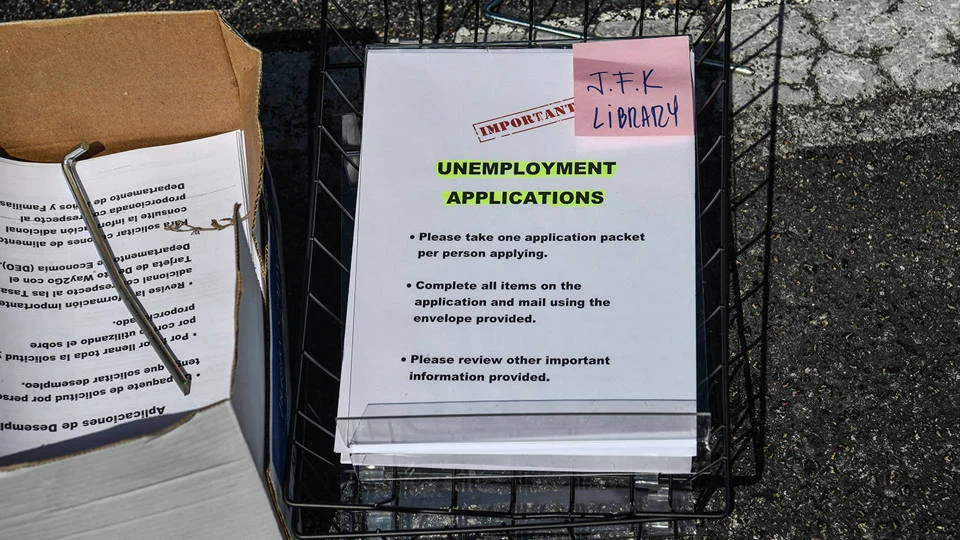
Something strange—and perhaps ominous—is happening in the United States labor market. According to the latest data released by the Bureau of Labor Statistics (BLS), the US economy shed 23,000 jobs in July 2026. Under conventional macroeconomic theory, such a contraction should signal a rise in the unemployment rate as layoffs outpace hiring. Yet, the unemployment rate defied expectation, falling to 4.1%.
This contradiction serves as the primary evidence for a labor market that is no longer behaving in a linear, predictable fashion. A closer look at the household survey versus the establishment survey reveals the friction: while traditional brick-and-mortar and middle-skill administrative roles are being pruned, there is a frantic, localized hiring spree in specialized tech, green energy, and high-level service sectors. The economy is not shrinking in a uniform way; it is shedding weight in legacy sectors while frantically grafting new, automated limbs onto its structure.
Chronology: The Road to the July Inflection Point
To understand the current labor market, we must trace the timeline of the post-2024 economic realignment.
- Early 2025: The initial wave of enterprise-level AI implementation began moving beyond "pilot programs." Companies shifted from using AI for basic automation to re-engineering entire workflows.
- Q4 2025: The first signs of "Skill Mismatch" emerged. While job openings remained high in technical fields, the "quit rate" in traditional retail and administrative support sectors hit a decade-low, signaling that workers were fearful of leaving their posts, even as those posts became increasingly precarious.
- Spring 2026: Regional disparities became acute. Tech hubs like Austin, San Francisco, and Raleigh saw surging tax revenues and low unemployment, while manufacturing-heavy regions in the Midwest and service-heavy rural areas began to see a steady creep in long-term unemployment claims.
- July 2026: The BLS reported the anomalous 23,000 job loss. This served as the "canary in the coal mine," marking the first month where the churn of AI-driven displacement officially outpaced the creation of traditional roles.
Supporting Data: Dissecting the Divergence
The headline unemployment rate of 4.1% masks a much more jagged reality. When we disaggregate the data by sector and education level, the story changes drastically.
The K-Shaped Labor Recovery
We are witnessing a classic "K-shaped" trajectory. The upper arm of the K consists of those in the "Cognitive-Technical" tier. These workers have seen their real wages grow by 4.2% year-over-year. They are largely shielded from displacement because their roles involve the synthesis of AI tools, strategy, and human-centric empathy—three areas where current LLMs and autonomous systems struggle.
Conversely, the lower arm of the K contains "Routine-Cognitive" and "Routine-Manual" workers. In this tier, wage growth has stalled at 1.8%, significantly below the headline inflation rate. These workers are not just facing the risk of unemployment; they are facing "task-obsolescence." When a company replaces a customer service department with a sophisticated AI agent, the employees aren’t just losing a job; they are losing a profession that may never return.
Regional Variations
The geographic data is equally telling. Labor force participation in the Northeast corridor has remained robust, buoyed by the concentration of financial and professional services. However, in states like Ohio, Michigan, and parts of the South, the labor participation rate has dipped to levels not seen since the 2008 financial crisis. This suggests that for a significant portion of the population, the "job search" has effectively ended—not because they found work, but because they have been discouraged by the lack of viable opportunities.
Official Responses and Policy Rhetoric
The Federal Reserve and the Department of Labor have adopted a cautious, wait-and-see posture. In recent briefings, Treasury officials have highlighted the "resilience" of the consumer and the "tightness" of the labor market for highly skilled professionals.
However, there is an underlying tension in these official statements. The Fed is struggling with a classic dilemma: if they raise interest rates to combat the localized inflation seen in high-growth hubs, they risk pushing the struggling regions into a full-blown depression. If they lower rates to stimulate the lagging regions, they risk overheating the already-booming tech sectors.
Legislative responses remain fragmented. Proposals for "AI Transition Grants" and "Lifelong Learning Accounts" have been introduced in Congress, yet they remain bogged down by partisan debate. The central government appears hesitant to acknowledge that this is a structural shift, preferring to frame it as a cyclical transition—a stance that is increasingly at odds with the lived experience of millions of American workers.
Implications: The Future of the Social Contract
The implications of this widening divide are profound, extending far beyond the realm of economics and into the stability of our social fabric.
The Erosion of Middle-Class Mobility
The American middle class has traditionally functioned as the bridge between labor and capital. As AI erodes the mid-level administrative and analytical roles that once sustained this bridge, we risk a society defined by a small, ultra-productive elite and a massive, stagnant underclass. If the primary mechanism for social mobility—the entry-level office job—is automated, the ladder to the middle class is essentially removed.
The Political Economy of Resentment
History teaches us that economic divergence is a primary driver of political polarization. When large swaths of the country feel that the economic system is no longer "rigged" for them, but rather "designed" to exclude them, the result is often a surge in populist movements that reject the status quo entirely. The July 2026 data is not just an economic statistic; it is a political warning.
A Call for Economic Reimagination
We cannot solve the problems of 2026 with the policy tools of 1996. We require a fundamental rethinking of the social contract. This includes:
- Portable Benefits: Decoupling health insurance and retirement benefits from specific employers, allowing workers to navigate a "gig-heavy" economy without losing their safety net.
- Radical Educational Reform: Shifting from "front-loaded" education (degrees earned at 22) to "continuous" education models that allow workers to retrain every five to seven years as their skill sets become obsolete.
- Regional Investment Zones: Directing capital not just to tech hubs, but to "transition regions," providing tax incentives for companies that build AI-adjacent infrastructure in areas currently suffering from industrial decay.
Conclusion
The Bureau of Labor Statistics’ report for July 2026 should be read not as a minor fluctuation in employment, but as a fundamental shift in the nature of work. The contradiction of falling unemployment alongside job losses is the signature of a transition period where old jobs are disappearing faster than the economy can define new ones.
If we continue to view the economy through the narrow, aggregated lens of the past, we will miss the seismic shift occurring beneath our feet. The challenge of the next decade is not merely to "create jobs," but to ensure that the AI-driven future does not leave half of the population behind. The divergence is clear; the question now is whether our policy responses will be equally clear-sighted, or whether we will continue to be misled by the very data meant to guide us.