By Max Garland
Published August 24, 2026
In the modern retail landscape, the battlefield has shifted from the storefront to the doorstep. As consumer expectations for instant gratification reach a fever pitch, Walmart is leaning into its most significant competitive advantage: its sprawling physical footprint. By transforming its thousands of brick-and-mortar locations into hyper-local fulfillment centers, the retail giant is successfully scaling high-speed delivery options, even as it tests the limits of what consumers are willing to pay for speed.
The Shift Toward Instant Fulfillment
For decades, the retail mantra was "low prices every day." Today, that has evolved into "low prices and instant arrival." Walmart is currently spearheading a massive expansion of its delivery ecosystem, moving beyond traditional two-day shipping to offer windows as short as 30 minutes.
This strategic pivot is not merely an experiment; it is a core pillar of the company’s growth. During the second quarter of 2026, Walmart reported a staggering 48% year-over-year increase in gross merchandise value (GMV) tied to "fast delivery"—defined as services that fulfill orders in three hours or less. This surge suggests that the "Amazon effect" has reached a point of maturity where the average consumer is no longer asking if they can get an item quickly, but how fast they can get it.
Chronology of a Logistics Transformation
The path to this current fulfillment dominance has been paved with systematic investments over the past several years:
- 2023-2024 (The Infrastructure Phase): Walmart accelerated the retrofitting of its U.S. supercenters, integrating automated storage and retrieval systems (AS/RS) to turn back-of-house storage into high-velocity pick-and-pack zones.
- Early 2025 (The Partnership Expansion): The company deepened its commitment to aerial logistics, expanding its drone delivery partnership with Wing into seven new major markets, effectively bypassing ground traffic for small-parcel, high-demand items.
- Mid-2025 (The Sam’s Club Integration): Recognizing the success in its core retail brand, Walmart expanded one-hour delivery services to hundreds of Sam’s Club locations, capturing the bulk-buying demographic.
- Q2 2026 (The Data Milestone): Executives reported that store-fulfilled deliveries accounted for a record-setting 37% of total delivery volume, specifically within the fee-based "fast delivery" tiers.
Data-Driven Growth: The Economics of Speed
While skeptics have long argued that the costs of rapid delivery would erode retail margins, Walmart’s latest financial data paints a different picture. The retailer is seeing a clear willingness from its customer base to subsidize the cost of speed.
For members of Walmart+, the company’s paid subscription program, the 30-minute delivery option is available for an additional $10 fee. Despite this surcharge, adoption is at an all-time high. CFO John David Rainey noted that deliveries requiring an extra fee to expedite speed now represent 37% of all store-fulfilled orders.
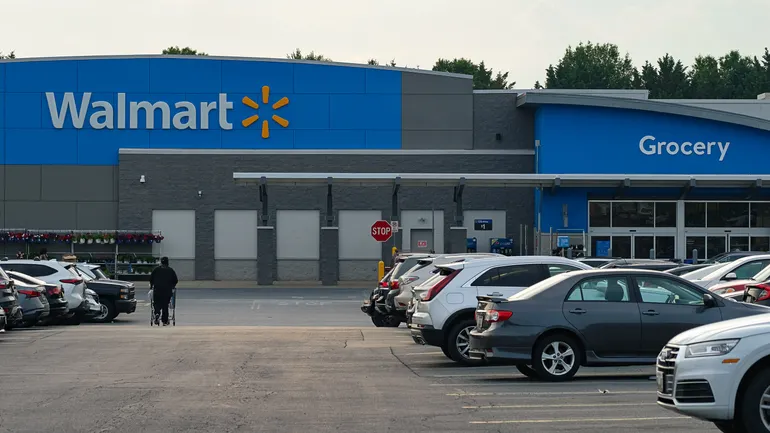
This growth is supported by a massive shift in how the company moves inventory. Currently, 80% of all e-commerce orders are fulfilled directly from store locations. However, when looking exclusively at the "fast delivery" category, that figure hits 100%. By utilizing the store as the primary fulfillment node, Walmart minimizes the "last-mile" distance, significantly reducing the fuel and labor costs that typically plague delivery services.

Automation: The Invisible Engine
The secret behind this velocity is not just more drivers; it is a sophisticated, automated supply chain. Walmart has successfully implemented automated freight systems in 3,100 of its U.S. stores.
Under this model, goods are received at the store already palletized and categorized by automated systems at the distribution center level. This reduces the man-hours required for unloading and stocking, allowing store associates to focus their time on picking and packing online orders. As John Furner, CEO of Walmart U.S., noted, these automated efficiencies are what allow the company to maintain a competitive price point while offering services that were previously considered "luxury" logistics.
Official Responses: The Strategic Vision
Company leadership remains bullish on the synergy between physical stores and digital speed. During the recent earnings call, John Furner emphasized that the company’s physical presence is not a relic of the past, but the ultimate asset for the future.
"Speed matters, and we have a significant competitive advantage," Furner stated. "Our physical footprint, fulfillment infrastructure, and local delivery capabilities allow us to move closer to customers while maintaining an attractive cost structure."

The sentiment was echoed by CFO John David Rainey, who highlighted that the company’s push for automation is directly linked to profitability. "They also strengthen the economics of our omnichannel model, and as we improve density and utilization across our network, speed and profitability reinforce one another," Rainey said. By densifying the network, Walmart is ensuring that as delivery volume increases, the cost per delivery decreases—a classic economies-of-scale play in a digital environment.
Implications for the Competitive Landscape
Walmart’s aggressive expansion into rapid fulfillment has profound implications for the broader retail industry. Smaller retailers, lacking the capital for such extensive automation and the geographic density of 4,000+ stores, face a daunting challenge.
- The "Density" Barrier: Walmart’s success is predicated on the fact that most Americans live within ten miles of a store. Competitors without this proximity are forced to rely on third-party logistics (3PL) providers, which often lack the integrated control Walmart exercises over its own inventory.
- Subscription Loyalty: The success of the $10 fast-delivery fee confirms that Walmart+ is successfully competing with Amazon Prime. By gating speed behind a membership, Walmart is driving recurring revenue and customer stickiness.
- The Sustainability Question: While drone deliveries and automated freight are more efficient, the sheer volume of "fast" deliveries brings increased road traffic and carbon footprint concerns. As the company continues to scale, it will likely face increased scrutiny regarding the environmental impact of its "instant" delivery promise.
Looking Ahead
As we move into the latter half of 2026, Walmart’s strategy is clear: it is no longer just a retailer; it is a localized logistics powerhouse. By integrating automation into its existing store network, the company has managed to turn its biggest overhead expense—the brick-and-mortar store—into its most efficient digital asset.
For consumers, the era of waiting two days for a toothbrush or a pack of diapers is rapidly fading. For the retail sector, Walmart has set a new bar for operational excellence. Whether other retailers can match this pace—without sacrificing their own profitability—remains the defining question of the decade. The data suggests that for those who can solve the equation of density and automation, the rewards are not just in the volume of sales, but in the permanent transformation of the customer experience.