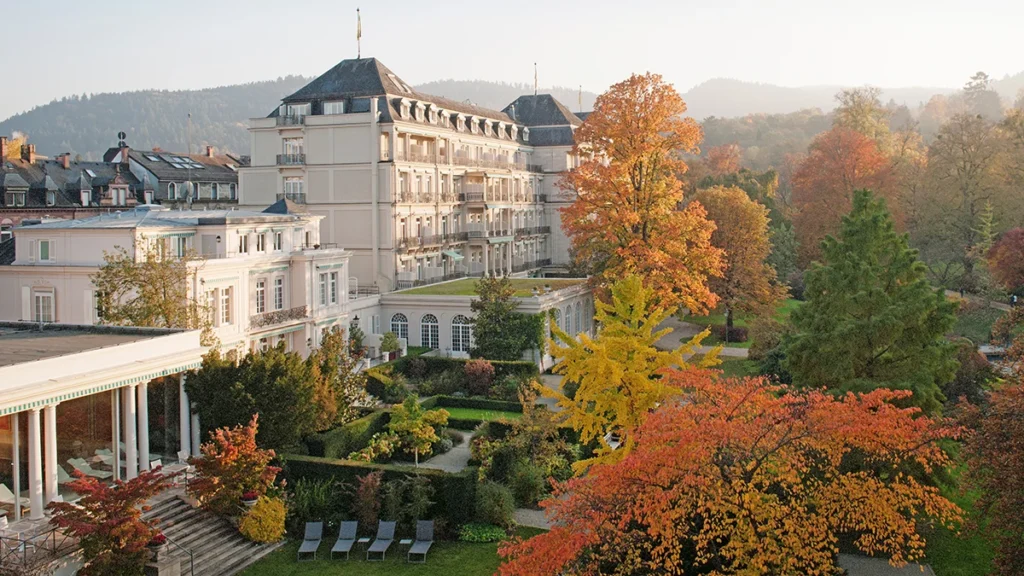
In the historic, mist-shrouded town of Baden-Baden, Germany—a destination that has served as a sanctuary for Europe’s elite since the 19th century—a quiet revolution in preventative medicine is taking place. At Brenners Park-Hotel & Spa, the traditional concept of the "holiday" has been fundamentally reimagined. Here, the boundaries between a high-end European retreat and a cutting-edge clinical facility are not just thin; they are intentionally blurred.
For the modern global traveler, wellness is no longer defined by a simple massage or a weekend of yoga. Instead, it has evolved into a rigorous, data-driven pursuit of biological optimization. At Brenners, the mission is clear: to reconcile the comforts of five-star hospitality with the cold, hard precision of clinical diagnostics.
The Intersection of Luxury and Science
On my initial arrival at Brenners, the experience was devoid of the typical "vacation" decompression. There was no lingering over a welcome cocktail in the lobby. Instead, a front-desk agent briskly guided me through the newly renovated main hotel, bypassing the tranquil gardens to arrive directly at the clinic. This seamless transition is the property’s signature: a commitment to discretion and efficiency.
The environment inside the clinic is striking. White-coated staff move with clinical precision, navigating around guests who appear to have stepped directly off a Milanese runway. It is a peculiar, high-stakes fashion show where the objective is not to be seen, but to be analyzed. Women in Dior and men in tailored cashmere move between diagnostic suites, clutching not drinks, but lab results.

"The line between luxury hospitality and medical care is intentionally blurred," notes a spokesperson for the hotel. "Guests don’t just come for the Michelin-starred dining or the manicured grounds of the Oos River. They check in for the preventative medicine and the longevity programs that are simply not available in a standard medical setting."
A Chronology of Care: The Daily Rhythm
The rhythm of a stay at Brenners is dictated by the clinic’s operating hours. Monday through Friday, the day is consumed by a rigorous schedule of medical diagnostics. Evenings, however, are reserved for the restorative indulgence of a grand hotel.
The Initial Assessment
Most mornings begin with a consultation with Dr. Harry König, the architect of the hotel’s medical operation. Dr. König specializes in a hybrid approach, blending the best of conventional Western medicine with the holistic philosophies of naturopathy.
The first 48 hours are foundational. My initial schedule was heavy on diagnostics: ultrasounds of my thyroid, heart, abdomen, and leg veins; cardiovascular stress testing; and comprehensive blood work. As the days progressed, the schedule evolved. Each evening, a new, updated itinerary would appear in my room—a dynamic, living document that shifted based on the biomarkers uncovered in the morning’s testing.

The Mid-Week Regimen
By mid-week, the protocol had matured into a highly personalized routine. My days were segmented into three categories:
- Clinical Diagnostics: Regular updates on my physiological state, including IV drips tailored to address specific nutrient deficiencies.
- Technological Interventions: Sessions involving EmSella pelvic-floor activation, Exomind brain stimulation for cognitive health, and physiotherapy to correct biomechanical imbalances.
- Recovery and Rejuvenation: Afternoon sessions of Cranio Sacral Balance, followed by specialized spa treatments like a JetPeel facial utilizing Augustinus Bader products or a Lomi Lomi massage infused with local Black Forest pine and fir extracts.
Supporting Data: The Biological Audit
The clinical data provided by Brenners is granular. By the fourth day, my results were in: a vitamin-D deficiency, low iron levels, and slightly elevated cholesterol, likely hereditary, alongside a sluggish thyroid that required a long-term management strategy.
The immediate response from the clinic was both pharmaceutical and practical. Supplements were sourced from a local pharmacy and delivered to my room, while the nutrition team adjusted my meal plans. "It’s about addressing the fundamentals," Dr. König explained. "Before you look at aggressive longevity interventions, you must optimize the basics."
The clinic at Brenners is one of only two in Germany legally permitted to perform pluripotent stem-cell treatments. However, in a refreshing display of ethical restraint, these were never pushed upon me. Dr. König’s approach was conservative; he viewed my age (32) as a factor that rendered aggressive, high-risk interventions unnecessary. Instead, he focused on sustainable health foundations—strength training, reformer Pilates, and hormonal education—rather than the "quick fixes" often peddled in the unregulated wellness industry.

Official Perspectives and Ethical Boundaries
The "ReLife" approach at Brenners is predicated on the idea that longevity is a long-term strategy, not a vacation activity. "Longevity is a strategy," Dr. König notes. "Comparing it to a summer trip is a mistake. It is easy to feel healthy in a controlled, beautiful environment. The challenge is creating results that hold up once you return to the stressors of your daily life."
The hotel’s commitment to privacy is paramount. By hosting C.E.O.s, political figures, and A-list celebrities, the clinic has developed a reputation for "biological tune-ups" that remain entirely invisible to the public eye. The staff is trained in a level of discretion that rivals the world’s most secure financial institutions.
The Hospitality Integration
A key differentiator for Brenners is the food. Unlike "deprivation retreats" where guests are forced into communal tables and meager portions, the dining experience at Brenners is individualized.
Breakfast at Fritz & Felix, lunch in the Wintergarten, and dinner in the privacy of one’s room are all curated based on the day’s lab work. My specific protocol was gluten-free, lactose-free, and hyper-focused on protein targets. Yet, the food remained exceptional—a testament to the hotel’s ability to hide medical necessity behind the veil of gourmet luxury.

Implications for the Future of Wellness
While the experience is not without logistical minor hitches—such as the occasional scheduling delay or a temporary lapse in communication between the clinic and the kitchen—these flaws serve as a reminder that this is a real medical facility, not just a service-oriented hotel.
The results, however, speak for themselves. Beyond the subjective feeling of vitality, there were external validations. By the end of the trip, staff members were expressing genuine surprise at my age, and during my flight home, an encounter with a fellow passenger who mistook me for a student served as a humorous, if unscientific, marker of success.
For those willing to invest the time—and the substantial financial cost, starting at roughly $51,800 per person for the 10-night minimum—Brenners offers more than just a spa break. It offers a blueprint for aging. It is a reminder that in the modern era, the ultimate luxury is no longer just comfort; it is the data-backed assurance that you are doing everything possible to extend your health span.
As I left Baden-Baden, I realized the true value of the "ReLife" protocol. It didn’t just change my vitamin levels; it changed my relationship with my own body, moving me from a passive observer of my health to an active participant in my own longevity. The "Brenners Effect" isn’t found in the pampering; it’s found in the science that follows you home.