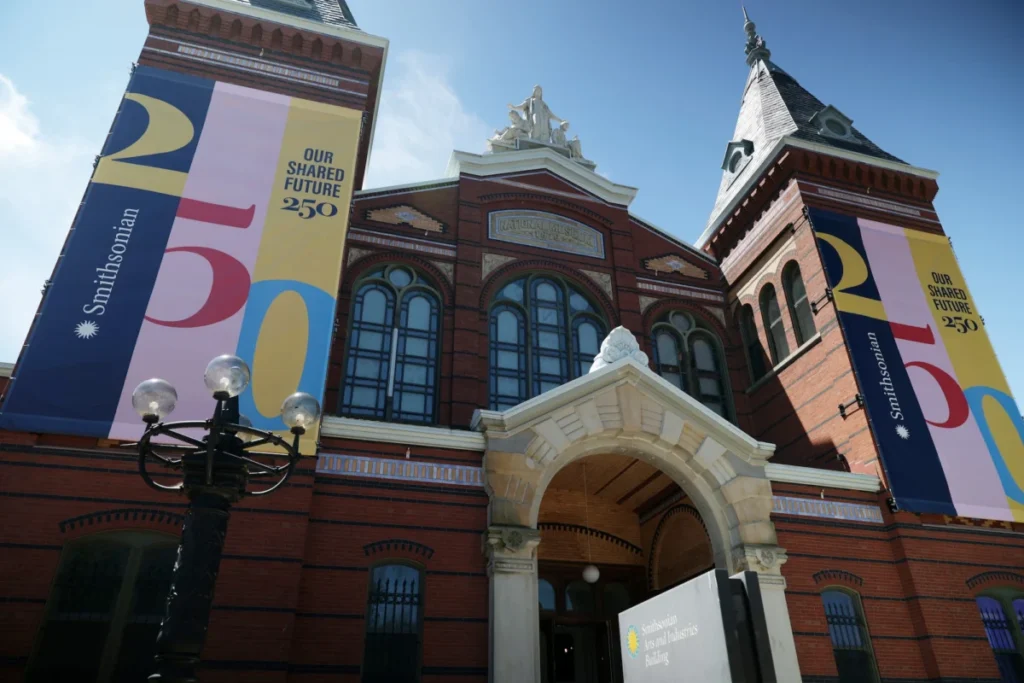
In a move that could permanently alter the landscape of the National Mall, the Smithsonian Institution is reportedly considering a pivot in its strategy for the National Museum of the American Latino. According to reports from the New York Times, the institution’s board of regents is weighing a proposal to house the long-awaited museum within the historic Arts and Industries Building—a structure already under the Smithsonian’s purview—rather than pursuing the construction of a new, purpose-built facility.
The decision, which could be finalized as early as the board’s August 31 meeting, represents a significant tactical retreat from previous ambitions to erect dedicated structures for both the Latino Museum and the National Museum of the American Women’s History. By utilizing the 1881 Arts and Industries Building—nestled between the Smithsonian’s iconic Castle and the Hirshhorn Museum—the institution may be seeking to bypass the escalating legislative friction that has stalled its development plans for years.
A Complex Chronology: From Legislative Triumph to Political Stagnation
The path toward a dedicated Latino museum has been a twenty-five-year odyssey, marked by profound hope followed by bruising political reality.
- 2020: The Legislative Breakthrough. Following decades of advocacy, the creation of both the National Museum of the American Latino and the American Women’s History Museum was authorized as part of a massive $2.3 trillion end-of-year spending package. It was a rare moment of bipartisan consensus for the cultural sector.
- 2022: Leadership Secured. The momentum appeared to hold when Jorge Zamanillo was appointed as the inaugural director of the Latino Museum, tasking him with the monumental effort of fundraising and curation.
- 2023: The Funding Crisis. The project hit a major, if temporary, wall when the House Appropriations Committee moved to ban federal spending on the museum’s construction, signaling a shift in the Republican-led House.
- 2024: The Resilience Phase. Despite the headwinds, ARTnews reported that the Smithsonian had made significant strides, including the formation of a high-profile board and the successful solicitation of $70 million in private funding toward a $500 million goal.
- 2025: Executive Confrontation. The political environment darkened significantly during President Donald Trump’s second term. An executive order issued by the White House accused the Smithsonian of promoting “improper, divisive, or anti-American ideology,” further chilling the institution’s relationship with federal lawmakers.
- 2026: The Current Deadlock. In May, the House of Representatives rejected a proposal for a site near the Tidal Basin. The rejection was driven by controversial legislative amendments that sought to impose ideological mandates on the museum’s content—specifically regarding the definition of “biological women”—and demands for increased direct political influence over the institution’s internal governance.
Supporting Data: The Logistics of the Arts and Industries Building
The proposed transition to the Arts and Industries Building is as much a logistical necessity as it is a political maneuver. The 1881 structure is a historic jewel, but it presents a unique set of challenges and opportunities.
Space and Structural Constraints
The Arts and Industries Building, while grand, was not originally designed for modern, high-traffic museum exhibitions. Its status as a National Historic Landmark limits the extent of structural modifications allowed, meaning the Smithsonian would have to balance modern climate control, accessibility, and high-tech exhibition needs with strict preservation mandates.
The "Loophole" Debate
Critics of the Smithsonian, such as Mike Gonzalez of the Heritage Foundation, argue that utilizing the existing building is a "loophole" designed to avoid the congressional scrutiny that would accompany the construction of a new site on National Park Service land. For the Smithsonian, however, the move represents a pragmatic consolidation of assets. By utilizing a building it already owns, the institution eliminates the need for new land-use permits, which have proven to be the primary legislative choke point for the museum’s development.
Financial Viability
The project requires a $1 billion total investment—split evenly between private fundraising and federal appropriations. By moving into an existing structure, the Smithsonian could theoretically reduce the total capital expenditure required for a “ground-up” build, potentially allowing for a faster timeline. However, the cost of retrofitting a 19th-century building for 21st-century museum requirements is notoriously high, and it remains unclear if this shift will satisfy the donors who have already pledged funds toward a new, purpose-built monument.
Official Responses and Internal Tensions
The atmosphere surrounding the Smithsonian has become increasingly charged. During a contentious July congressional hearing, Smithsonian leadership, including the director of the National Museum of American History, Anthea Hartig, faced intense scrutiny. Lawmakers questioned the institution’s commitment to diversity, equity, and inclusion, with critics labeling the Smithsonian’s current scholarly approach as “Marxist.”
The Smithsonian has maintained a policy of relative silence regarding these attacks, offering only confirmation of the upcoming board meeting. However, internal sources suggest a climate of high anxiety. The museum’s leadership is caught in a vice: they must fulfill the mandate of the 2020 legislation while simultaneously navigating a political landscape that views their very existence as an ideological target.
In his editorial for the Washington Examiner, Mike Gonzalez explicitly framed the current situation as a battle for the soul of the institution. He argued that the Smithsonian’s attempt to house the Latino museum in the Arts and Industries Building is an act of "desperation" by an organization that has lost its way. These comments echo the broader sentiment within the current administration that the Smithsonian has abandoned its role as a neutral repository of history in favor of contemporary political activism.
Implications: The Future of Cultural Diplomacy on the Mall
The potential move into the Arts and Industries Building carries profound implications for the future of the Smithsonian and the cultural identity of Washington, D.C.
The Erosion of Neutrality
If the Smithsonian is forced to accept political mandates—such as ideological screening or content restrictions—in exchange for federal funding or site approval, the fundamental nature of the museum as a site of free inquiry may be compromised. This sets a dangerous precedent for all federally funded cultural institutions, potentially ushering in an era of political oversight in academic and historical programming.
The "Homeless" Museum
The term "homeless" used by critics captures the precariousness of the Latino Museum. As the board of regents meets on August 31, the decision they make will define the legacy of the Smithsonian’s second century. If they choose to retreat into the Arts and Industries Building, they may find temporary safety from legislative interference, but they also risk signaling that the Smithsonian is no longer a site for grand, forward-looking architectural and cultural statements.
Public Trust and Engagement
Ultimately, the museum is meant to serve the American Latino community. If the project is perceived as being "sneaked in" through a side door or restricted by ideological gatekeeping, it risks alienating the very public it was intended to honor. The success of the museum will depend not just on its location, but on its ability to maintain its scholarly integrity in the face of intense, partisan pressure.
As the Board of Regents convenes, they are not just deciding on a building; they are deciding whether the Smithsonian Institution can withstand the current wave of political populism. Whether the Latino Museum finds a home in the historic halls of the Arts and Industries Building or remains in the purgatory of political debate, the result will be a defining moment in the history of American cultural institutions. The outcome of the August 31 meeting will likely be a bellwether for how the Smithsonian—and perhaps the broader federal government—handles the intersection of history, politics, and the public interest in the years to come.