In the rarefied world of high-horology, legitimacy is the ultimate currency. To justify price tags that rival the cost of luxury automobiles, watchmakers have long relied on a labyrinthine system of validations: the Geneva Seal, COSC chronometer certification, the Patek Seal, METAS Master Chronometer status, and an endless parade of GPHG awards and Red Dot design accolades.
However, beneath the polished sapphire crystals and the gold-stamped certificates lies a growing, systemic issue. The industry has become so obsessed with "validating" its products through external and internal mechanisms that it has, in many ways, lost the plot. What was once intended to provide objective proof of performance has devolved into a muddy, often opaque, and increasingly performative landscape of marketing—a "backrub circle" of prestige that leaves the modern collector more confused than informed.
A Chronology of Validation: From Precision to Prestige
The history of watch certification is rooted in a genuine need for objective standards. In the early 20th century, as wristwatches transitioned from niche instruments to mass-market items, accuracy was the primary hurdle. Before a man could trust a watch on his wrist, he needed proof that it would keep time reliably.

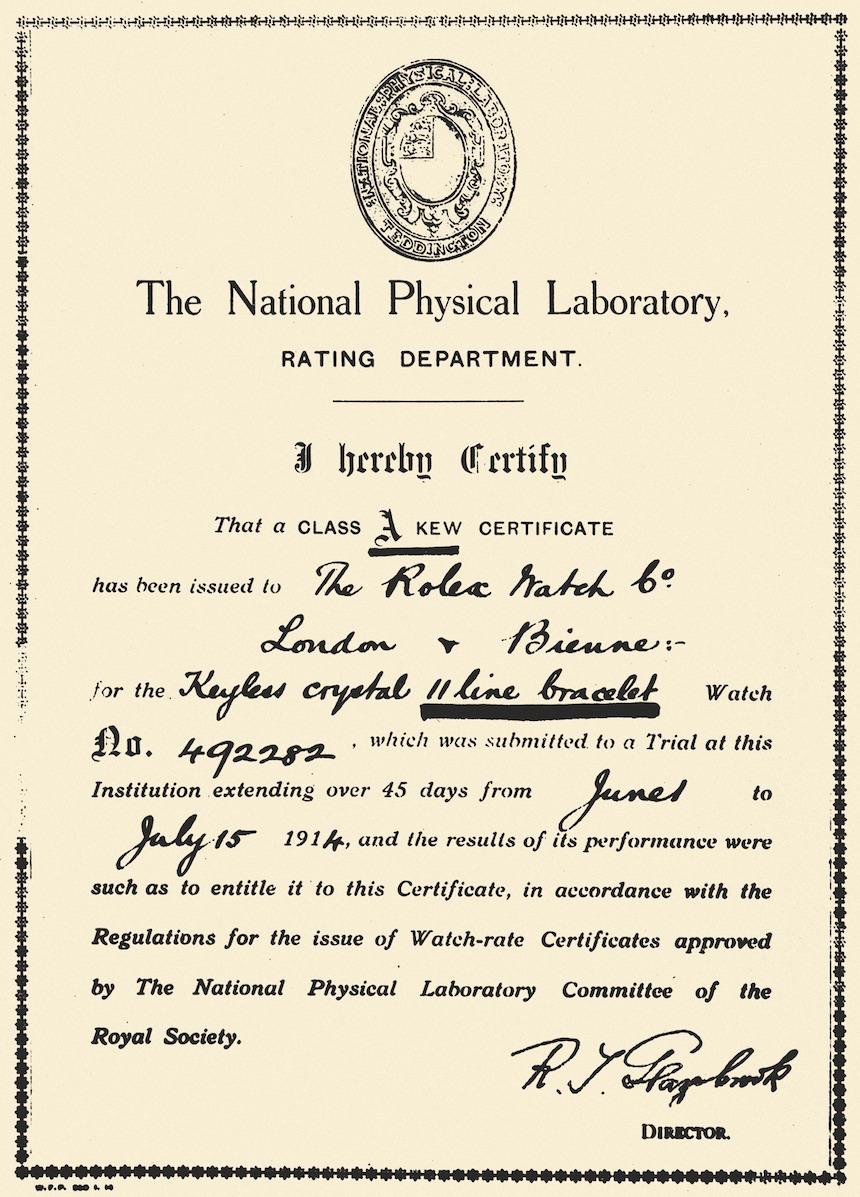
Early certificates, such as the famous Kew Observatory records, were monumental achievements. They proved that a mechanical device could withstand the rigors of daily wear while maintaining precision. This was the golden age of certification: an era where independent, third-party observatories served as the arbiters of truth.
However, over the decades, the landscape shifted. The mid-to-late 20th century saw the rise of the COSC (Contrôle Officiel Suisse des Chronomètres), which standardized testing for movements. Yet, as competition intensified, brands began to find these universal standards insufficient for marketing purposes. They wanted exclusivity. This led to the "internalization" of validation. In 2009, Patek Philippe famously introduced the "Patek Seal," a proprietary standard that effectively bypassed traditional third-party testing in favor of its own, brand-specific criteria. This move, while successful in cementing the brand’s identity, sparked a long-standing debate: Can a brand truly be the judge, jury, and executioner of its own quality?
The Anatomy of the "Certification Mess"
To understand the current state of the industry, one must distinguish between the two primary pillars of validation: external and internal.
External Validations: The Pay-to-Play Conundrum
External validations often manifest as awards or auction results. The Grand Prix d’Horlogerie de Genève (GPHG) is perhaps the most prominent example. While ostensibly a celebration of excellence, it is frequently criticized as a "pay-to-play" environment. When a single brand enters seven to ten entries, the competitive spirit is diluted. Furthermore, when repeat winners go on to collaborate with individuals who previously sat on the judging panels, the perception of a meritocratic contest crumbles, replaced by the optics of a "backrub circle."
The issue extends to auctions. Collectors often equate high auction prices with inherent value, but the reality is more cynical. It is an open secret that luxury brands frequently buy their own pieces at auction to bolster the market perception of their vintage inventory. This creates an artificial floor, leading buyers to believe they are participating in a competitive market when, in fact, they are witnessing a brand-controlled performance.
Internal Validations: The "Trust Us" Doctrine
Internal certifications like the Rolex Superlative Chronometer or the Patek Seal represent the brand’s attempt to define quality on its own terms. While these internal standards are often rigorous, they suffer from a lack of transparency. The consumer is asked to trust the brand’s word, rather than an objective, state-governed benchmark.

Even long-standing traditions like the Geneva Seal have become obscure. Many collectors assume that every Geneva Seal-certified watch is individually vetted by a governing body. In reality, the process involves periodic, random sampling. While statistically valid, it is rarely communicated as such to the buyer, who perceives a level of individual assurance that may not exist in the way they imagine.
Supporting Data: The Case for Transparency
The sheer volume of certifications is staggering. According to COSC data, over 2.1 million watches were certified as chronometers in 2025. Yet, notably, only about 39% of exported mechanical watches carry this designation. This suggests that the majority of the industry is either bypassing formal chronometer testing or, more likely, relying on their own internal quality control.
The discrepancy between the "premium" marketing of these certifications and the consumer’s actual knowledge is vast. Surveys and anecdotal evidence from collectors suggest that fewer than 30% of owners of high-end, sealed watches understand the technical nuances of the certifications they pay thousands of dollars to acquire. This is not necessarily the consumer’s fault; it is a result of an industry that treats certification as a marketing slogan rather than a technical specification.

Official Responses and Industry Silences
When questioned, brands often point to the complexity of their internal testing as a badge of honor. They argue that traditional third-party tests like COSC are "outdated" or fail to account for modern material science. For example, brands that reject traditional certification often cite their proprietary "in-house" standards as being far more stringent.
However, these "official" defenses rarely address the core issue: the lack of a standardized, modern, third-party benchmark. When a brand says, "We test to higher standards than the industry average," they are essentially asking the consumer to accept a proprietary "black box" of quality. In any other industry—from aerospace to automotive—such a lack of external, standardized validation would be considered a significant risk. In luxury horology, it is presented as a privilege.
The Exception: The METAS Model
If there is a beacon of hope in this chaotic landscape, it is the METAS (Swiss Federal Institute of Metrology) Master Chronometer certification. First championed by Omega in 2014, the METAS standard is a significant evolution. It is a Swiss state-operated institution that tests not only the movement but the watch in its fully cased-up state.

Critically, the METAS certification includes testing for magnetic resistance, power reserve, and performance under specific, real-world conditions. It is, perhaps, the most modern and trustworthy validation currently available. It moves away from the "trust us" model of internal seals and toward an objective, state-audited process. However, it remains underutilized across the broader industry, likely because it is a rigorous, time-consuming, and expensive process that demands genuine accountability.
Implications for the Future
The current state of "Grinding Gears" in the certification world has several critical implications for the future of the luxury watch market:
- Consumer Disenchantment: As information becomes more accessible, the "marketing fluff" surrounding certifications is being exposed. When a collector learns that a prestigious award or a fancy-sounding seal doesn’t actually guarantee what they thought it did, the brand’s credibility suffers.
- The Rise of Storytelling over Certification: Brands that realize the futility of chasing every obscure certification are pivoting toward "myth-making." The Omega Moonwatch is the ultimate example. The watch succeeds not because of a specific certificate, but because the story of its history is so compelling that the technicalities of its modern movement become secondary. This, however, is a dangerous game—if the story is not backed by performance, the brand risks being viewed as a "lifestyle" company rather than a horological powerhouse.
- A Demand for Radical Transparency: There is an opening for a brand to disrupt the market by being the first to openly disclose its failure rates, its testing protocols, and its objective performance data without the filter of a marketing department.
Conclusion: A Call for Modernization
The industry is at a crossroads. We have reached a point where the number of certifications, seals, and awards has become a white noise that obscures the actual quality of the timepiece. For the industry to maintain its reputation, it must stop treating certifications as mere marketing props.

The future should belong to standards that are transparent, objective, and—most importantly—understandable to the average collector. The Swiss watch industry, with all its heritage and technical prowess, is capable of more than just a "backrub circle." It is time to retire the antiquated practices of the past and adopt a new, rigorous, and unified language of validation. Until then, the discerning collector should remain skeptical of the gold stickers on the box and focus instead on the reality of the watch on the wrist.