In the rarefied world of luxury architecture, the distance between a concept and a client’s realization is bridged by the quality of communication. While computer-aided design (CAD) and high-resolution renders have become the industry standard, they often suffer from the limitations of scale. A client staring at a 15-inch laptop screen cannot fully grasp the gravitas of a sweeping coastal facade or the intricate texture of hand-selected Italian marble. To address this, premier architecture studios are increasingly turning to large-scale, illuminated displays—a sophisticated fusion of gallery-grade aesthetics and modular technology that transforms a studio into a compelling narrative space.
The Evolution of the Architectural Gallery
For decades, the architectural presentation relied on physical models, foam-core boards, and the occasional projector. However, the rise of backlit modular systems—specifically Silicone Edge Graphics (SEG) lightboxes—has fundamentally altered the topography of the modern design studio. These systems offer more than just illumination; they provide a high-definition stage for a studio’s portfolio.
By utilizing ultra-thin LED arrays, these displays eliminate the uneven "hot spots" that plagued older fluorescent lighting systems. This uniformity allows for the true representation of color, depth, and material texture. For an architect, whose life’s work is defined by the play of light on surfaces, a display that mimics the actual lighting conditions of a site is an invaluable tool.
Chronology: From Static Prints to Dynamic Modular Systems
The transition toward these systems has followed a clear trajectory within the design industry:
- The Early 2000s: Studios relied on static wall-mounted prints or large-format vinyl banners. While impactful, these were costly to replace and often suffered from poor color reproduction when backlit.
- The 2010s: The emergence of early LED lightboxes offered better efficiency, but the rigid, custom-built frames made changing graphics a labor-intensive process, often requiring specialized installation teams.
- The Current Era: The introduction of modular SEG systems has democratized the high-end display. With tool-free assembly and fabrics that can be swapped in minutes, studios can now rotate their featured projects as frequently as their client roster changes.
Supporting Data: Why Scale and Illumination Matter
The psychology of space dictates that human beings respond more viscerally to large-format visual stimuli. According to spatial design research, a "hero" image—a single, high-impact photograph displayed at a scale of six feet or greater—increases cognitive retention by up to 40% compared to multiple, smaller images.
Furthermore, the integration of light in architectural presentations serves a functional purpose. When images of material samples (timber, concrete, glass) are backlit, the light passes through the ink density of the print to mimic the luminescence of real-world materials. This provides a tactile "visual texture" that invites the viewer to lean in and inspect the work, effectively inviting the client into the space before a single brick is laid.
Technical Considerations: Achieving Visual Perfection
The transition to large-format printing is not without its pitfalls. To maintain a professional standard, studios must adhere to rigorous technical protocols:
1. Source Material Integrity
High-resolution photography is the bedrock of the display. When blowing an image up to mural size, even minor artifacts in a file become glaringly obvious. Studios are encouraged to use raw, uncompressed files and to conduct "proof prints" of specific sections of a project before committing to a full-scale display.
2. Chromatic Accuracy
Color calibration is paramount. An image that looks vibrant on a backlit LED monitor may appear washed out when printed on fabric. Designers must account for the "white point" of the LEDs being used. A 6500K (cool daylight) LED will produce a different color profile than a 3000K (warm white) LED, requiring the printer to adjust the CMYK profiles accordingly.
3. The Balance of Light
The surrounding ambient light of the studio must be considered. A lightbox that is too bright can cause eye fatigue and create a harsh, "clinical" environment that feels disconnected from the warm, inviting nature of residential luxury architecture. Smart studios use dimmable LED drivers, allowing them to adjust the intensity of the display based on the time of day or the specific tone of the client meeting.
Official Perspectives: The Value of Modular Flexibility
Leading suppliers, such as those specializing in SEG solutions, emphasize that the true value lies in the "living" nature of the studio. "Architecture is a fluid discipline," notes a spokesperson from the display technology sector. "A studio should not be a static museum of past work. By using modular frames, the environment remains as dynamic as the projects being conceived within it."
The modularity also provides a cost-effective solution for firms with multiple locations. By standardizing frame dimensions across a firm’s offices in London, New York, and Dubai, a studio can distribute a single, high-quality digital file to be printed locally, ensuring brand consistency across the globe.
Implications for Client Relations
The primary implication of this technology is the shift in the power dynamic of the client meeting. Traditionally, the architect holds the "expert" position while the client follows along on a screen. With a large-scale illuminated display, the project becomes an immersive environment.
- Contextual Understanding: For hotel or commercial developers, a panoramic view of a project illuminated on a wall allows the entire design team to stand back and discuss the flow of a site plan simultaneously, fostering a collaborative atmosphere.
- Targeted Curation: By switching out the fabric graphics, an architect can customize the studio environment for a specific visitor. A client interested in high-end residential work is greeted by images of luxury estates, while a commercial developer sees glass-fronted office towers. This level of personalization signals a deep respect for the client’s interests and a high degree of organizational sophistication.
Best Practices for Studio Curation
To avoid the "cluttered wall" effect, studios should follow a philosophy of "intentional white space."
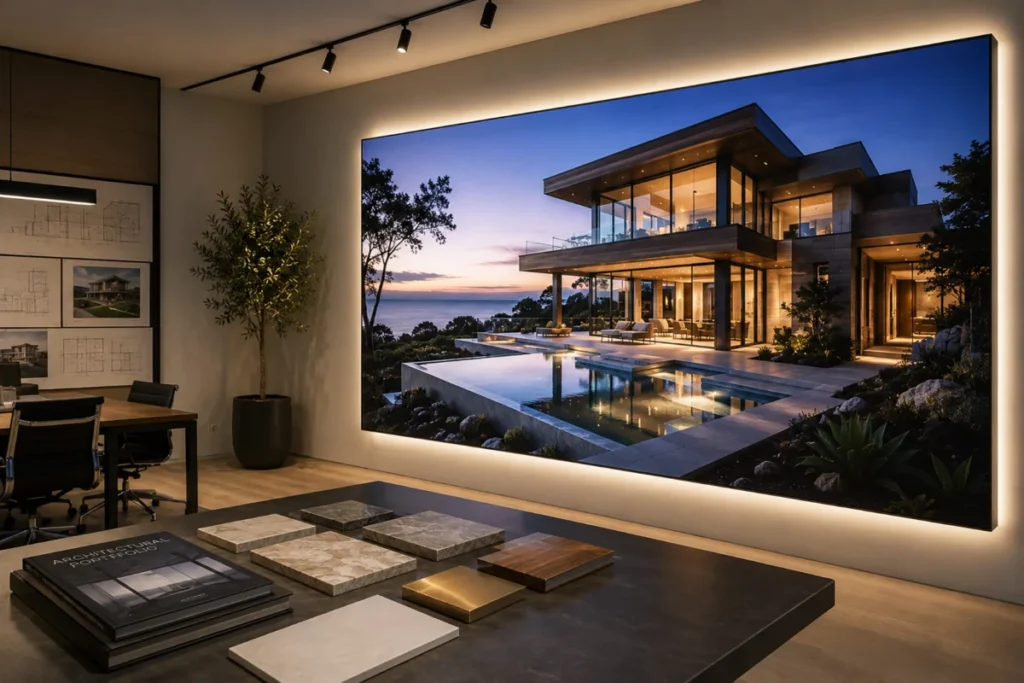
- The Hero Approach: Dedicate the most prominent wall to a single, high-impact image. This acts as the anchor for the studio’s identity.
- The Material Gallery: Use smaller, auxiliary lightboxes to display detail shots—a macro view of a joinery detail or the texture of a stone facade.
- Minimalist Typography: Text should be limited to the project name, location, and key completion metrics. The imagery must be allowed to speak for itself.
- Strategic Rotation: Change displays based on the project phase. During the design development phase, showcase the sketches and floor plans; upon completion, transition to the high-gloss professional photography.
Conclusion: The Architecture of Presentation
In an industry where the stakes are measured in millions of dollars and decades of legacy, the presentation of one’s work is as critical as the engineering behind it. Large, illuminated modular displays do more than fill empty wall space; they articulate a studio’s design philosophy and provide a window into the future of their projects.
By investing in high-quality, flexible, and well-lit visual infrastructure, architecture studios can ensure that their client presentations match the caliber of their buildings. When the environment is as carefully designed as the architecture itself, the client is not just being sold a concept—they are being invited to inhabit a vision. Through the convergence of light, scale, and modular design, the modern architecture studio transcends its role as a workspace, becoming a testament to the power of visual communication in the built environment.