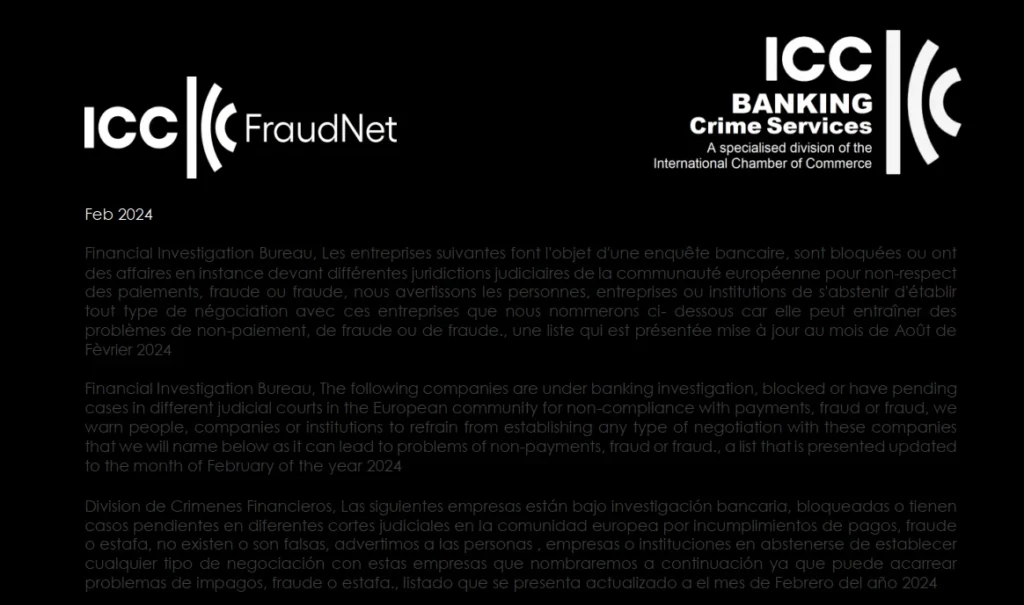
The International Chamber of Commerce Commercial Crime Services (ICC-CCS) has issued a stern warning to the global business community regarding a burgeoning wave of fraudulent activity. Unknown bad actors are circulating sophisticated, yet entirely fabricated, "blacklists" that purport to be official documents from the ICC-CCS. These documents, which list the names and contact details of various individuals and corporate entities, are being used as a weapon to damage reputations and disrupt legitimate international trade.
The ICC-CCS, a division of the International Chamber of Commerce dedicated to combating commercial crime, has categorically denied any involvement in the compilation or distribution of these lists. As global supply chains become increasingly digitized and interconnected, the emergence of such disinformation campaigns poses a significant threat to market integrity and corporate trust.
The Anatomy of the Fraud: Main Facts and Observations
The fraudulent documents currently in circulation are designed to mimic the professional aesthetic of official ICC-CCS communications. By incorporating the organization’s branding, unauthorized logos, and official-looking headers, the perpetrators have successfully deceived several industry participants.
The primary objective of these lists appears to be character assassination. By grouping specific companies and individuals under the umbrella of a "blacklist"—a term typically associated with sanctioned entities or businesses involved in illicit trade—the anonymous creators aim to trigger automatic risk-mitigation protocols within other firms. When a company is falsely labeled as "blacklisted" by an authority as reputable as the ICC-CCS, potential partners and suppliers are likely to sever ties immediately to avoid regulatory scrutiny.
This tactic represents a form of "reputational warfare." Unlike traditional fraud, which seeks to extract direct financial payments, this campaign seeks to extract a "social cost," effectively excommunicating targeted companies from their respective industries.
Chronology of the Disinformation Campaign
While the exact origin of these lists remains under investigation by cybersecurity experts and internal security teams, the ICC-CCS has identified a pattern of dissemination that suggests a coordinated effort rather than an isolated incident.
- Initial Detection: Reports began trickling into ICC-CCS headquarters several months ago, with businesses inquiring about the validity of documents that supposedly flagged them as high-risk or involved in "counterfeiting."
- The Proliferation Phase: In the weeks following the initial reports, the lists began to surface across various industry forums, private messaging groups, and email threads. The perpetrators have utilized both encrypted messaging platforms and traditional corporate email channels to ensure the lists reach high-level procurement officers and compliance departments.
- The Institutional Response: As the volume of inquiries grew, the ICC-CCS recognized that the issue was systemic. Recognizing the danger these lists posed to its own reputation and the stability of the businesses named within them, the organization began gathering evidence of the fraudulent files.
- The Formal Alert: Following a comprehensive internal review, the ICC-CCS issued an official statement denouncing the documents, clarifying their stance on such lists, and urging the global trade community to exercise extreme caution.
Supporting Data and the Digital Landscape
The rise of these "blacklists" is occurring against a backdrop of increasing digital fraud within the maritime and international trade sectors. According to recent cyber-threat intelligence reports, there has been a 30% increase in "brand impersonation" attacks globally over the last year.
These fraudulent blacklists leverage the concept of "information asymmetry." In the complex world of international trade, companies rely on clearinghouses and regulatory bodies to provide accurate risk data. By inserting false data into this ecosystem, the perpetrators exploit the due-diligence processes of target companies.
Why Digital Authentication Matters
The ICC-CCS has long utilized rigorous verification standards to ensure that their communications are secure. However, the perpetrators of these blacklists have relied on the fact that many organizations do not take the time to verify the origin of a digital document if it carries a familiar brand logo. This phenomenon, often referred to as "confirmation bias," leads compliance officers to accept the document as authentic simply because it aligns with their internal requirements for risk assessment.
Official Responses: A Call for Vigilance
Michael Howlett, Director of the ICC-CCS, has been unequivocal in his condemnation of these documents. In a formal address regarding the matter, Mr. Howlett described the lists as "completely baseless," emphasizing that the ICC-CCS does not, and has never, produced lists of this nature.
"ICC-CCS would like to make it clear that our organization does not produce lists of this nature," Mr. Howlett stated. "The contents are entirely false and should not be relied upon."
Furthermore, Mr. Howlett highlighted the malicious intent behind the campaign, noting that the documents were crafted by unknown parties with the sole purpose of damaging the reputations of the listed companies. He urged the international business community to "completely disregard" these documents and advised that they be given "no credence whatsoever."
The official stance of the ICC-CCS is clear: any communication claiming to be a blacklist or a risk-assessment file emanating from their offices should be treated as an immediate red flag. The organization has advised that anyone receiving such a document should refrain from forwarding it and, instead, report it directly to the ICC-CCS for investigation.
Implications for Global Trade and Corporate Integrity
The existence of these fraudulent blacklists carries profound implications for the global business environment.
1. Erosion of Trust
The most significant impact of this campaign is the erosion of trust in legitimate oversight bodies. If market participants begin to fear that even official documents from respected organizations might be falsified, the entire infrastructure of international trade becomes susceptible to paranoia. This, in turn, slows down the movement of goods and capital as companies adopt overly defensive, and often unnecessary, screening measures.
2. Legal and Financial Consequences
For the companies erroneously placed on these lists, the fallout can be catastrophic. Sudden loss of contracts, frozen bank accounts, and damage to credit ratings are common outcomes of being associated with a "blacklist." These firms may face a long, arduous process to clear their names, requiring expensive legal intervention and extensive public relations campaigns to regain the confidence of their stakeholders.
3. The Need for Enhanced Verification Protocols
In response to this crisis, industry leaders are calling for a shift toward blockchain-based document verification. By utilizing distributed ledger technology, organizations like the ICC-CCS could issue digital certificates of authenticity that are impossible to forge. Until such technologies are widely adopted, companies must move away from "blind trust" and implement rigorous internal verification procedures. This includes checking official organization websites, contacting known representatives directly, and utilizing secure, authenticated channels for the exchange of sensitive compliance data.
4. The Regulatory Response
Governments and regulatory bodies may soon need to step in to address the rise of "reputational fraud." Currently, there are few international laws that specifically target the digital creation and dissemination of false "blacklists" designed to harm corporate reputations. Law enforcement agencies, including Interpol, may need to coordinate more closely with organizations like the ICC-CCS to track the digital footprints of those responsible for these campaigns.
Conclusion: A Proactive Stance Against Disinformation
The incident involving the fraudulent ICC-CCS blacklists serves as a cautionary tale for the modern era of globalized business. As the barriers to creating high-quality, professional-looking digital documents disappear, the burden of verification shifts increasingly onto the end-user.
The ICC-CCS has demonstrated decisive leadership by addressing the issue head-on and refusing to allow its brand to be weaponized against innocent parties. However, the fight against such disinformation is a collective responsibility. Businesses must remain vigilant, maintain skepticism toward unsolicited documents, and prioritize the verification of all sensitive information.
By fostering a culture of transparency and proactive security, the international trade community can protect itself against the shadow of these malicious actors. The ICC-CCS remains committed to its mission of promoting international trade through integrity and security, and it calls upon all members and partners to report any suspicious activity immediately. In the digital age, the most effective defense against fraud is an informed and skeptical public.
For further information or to report a suspicious document, please contact the official ICC-CCS channels directly via their verified website. Do not rely on contact information provided within the fraudulent documents themselves.