Introduction: The Invisible Shield of Global Trade
The global economy is fundamentally maritime. Over 80% of the volume of international trade is carried by sea, relying on a complex web of shipping lanes that connect continents, supply chains, and markets. Yet, this lifeblood of the global economy is constantly under threat from piracy, armed robbery, and maritime insecurity. At the heart of the defense against these threats sits the International Maritime Bureau (IMB) Piracy Reporting Centre (PRC), a 24-hour nerve center that serves as the world’s primary guardian for seafarers and vessel operators.
Operating under the auspices of the International Chamber of Commerce (ICC), the IMB PRC is not merely a data collection agency; it is a critical operational lifeline. In an era where maritime threats are evolving from traditional board-and-rob piracy to sophisticated cyber-attacks and geopolitical blockades, the PRC’s mandate to provide transparent, reliable data and real-time support has never been more vital.
The Genesis and Evolution of the IMB PRC
A Response to Chaos
The IMB Piracy Reporting Centre was established in 1992 in Kuala Lumpur, Malaysia. Its creation was a direct response to the alarming rise in piracy incidents in the late 1980s and early 1990s, particularly in Southeast Asian waters. At the time, there was no centralized mechanism for ships to report attacks, leaving maritime authorities in the dark and seafarers vulnerable to unchecked criminal syndicates.
The 24-Hour Mandate
The PRC operates on a unique model: a 24-hour, single point of contact. This ensures that no matter where a vessel is located or what time a distress call is placed, there is a professional entity ready to receive, verify, and disseminate critical security information. By acting as a bridge between the vessel in distress and the local coastal authorities or navies, the PRC fills a vital gap in international maritime law enforcement.
Chronology: Navigating Decades of Maritime Insecurity
The 1990s: Establishing the Baseline
In its formative years, the IMB PRC focused on documenting the "Wild West" of the Malacca Strait. By providing the first consistent set of data on piracy, the center pressured governments to acknowledge that maritime crime was not merely a local nuisance, but an international economic threat.
The 2000s: The Somalia Crisis
The early 2000s saw the epicenter of piracy shift dramatically to the Horn of Africa. The rise of Somali piracy represented a terrifying evolution, characterized by the hijacking of supertankers and the kidnapping of crews for multi-million dollar ransoms. During this period, the IMB PRC became the primary source of intelligence for the international navies deployed to the region, including the EUNAVFOR and NATO task forces.
The 2010s to Present: Diversification of Threats
The last decade has seen a shift toward the Gulf of Guinea, which has become the world’s most dangerous region for seafarers. Simultaneously, the PRC has had to adapt to "hybrid" threats, where criminal groups use advanced technology—drones, encrypted communications, and sophisticated surveillance—to track commercial vessels.
Supporting Data: Why Transparency Matters
The strength of the IMB PRC lies in its data. Every year, the Bureau publishes comprehensive reports that serve as the industry standard for maritime risk assessment.
Data Integrity and Methodology
The IMB PRC’s reports are meticulously curated. By requiring firsthand accounts from vessel masters and owners, the PRC strips away the noise of rumor and hyperbole. This transparency is crucial for:
- Insurance Underwriting: Marine insurers use IMB data to adjust premiums for high-risk zones, providing a financial incentive for governments to improve their maritime security.
- Flag State Policy: Countries use the data to determine whether to allow armed guards on board or to advise vessels to reroute.
- Naval Deployment: The data identifies "hotspots," allowing regional navies to optimize patrols, which is critical given the finite resources available for securing vast ocean stretches.
Statistical Trends
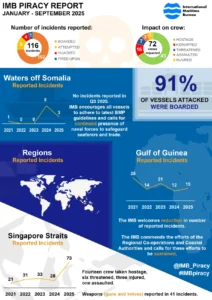
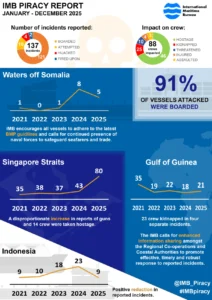
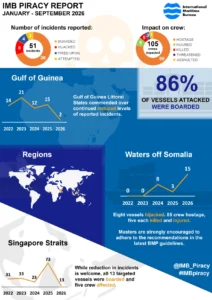
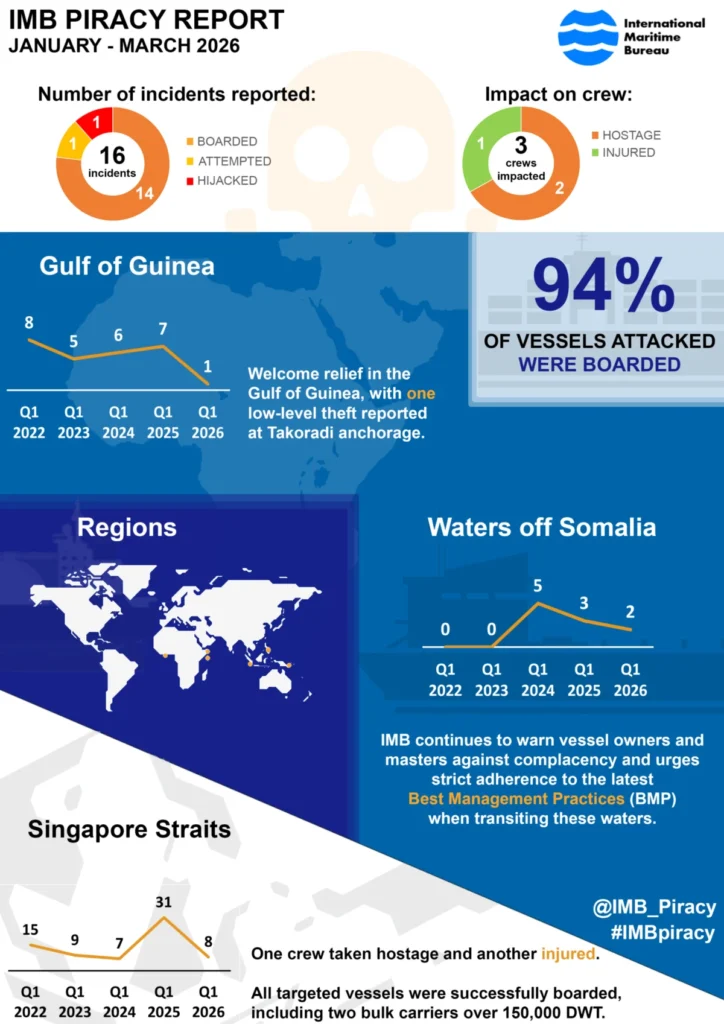
Recent data highlights that while total piracy numbers may fluctuate, the severity of attacks remains high. The PRC tracks specific metrics: the number of crew taken hostage, the number of ships fired upon, and the success rate of boarding attempts. This granularity allows the industry to track the effectiveness of deterrence measures like "Citadels"—hardened, secure rooms within a ship where crew can retreat during a boarding.
Official Responses and Strategic Advocacy
The ICC’s Role in Governance
The International Chamber of Commerce (ICC), the parent organization of the IMB, plays a massive role in shaping the regulatory environment surrounding maritime security. With a membership of over 45 million companies across 170 countries, the ICC leverages its institutional weight to ensure that maritime security is not sidelined in the face of other global economic challenges.
Michael Howlett: The Voice of the Industry
Michael Howlett, the Director of the ICC International Maritime Bureau, has frequently emphasized that the PRC’s goal is "to make business work for everyone, every day, everywhere." According to Howlett, the PRC does not operate in a vacuum. It works in close collaboration with the International Maritime Organization (IMO) and regional coast guards to ensure that information shared with the PRC is turned into actionable intelligence on the water.
Advocating for "Responsible Conduct"
Beyond reporting, the ICC promotes "responsible business conduct." This involves advocating for international legal frameworks that prosecute pirates effectively. Often, the greatest challenge to maritime security is not the lack of knowledge, but the lack of judicial follow-through. The ICC’s advocacy ensures that the issue of "lawless seas" remains a permanent fixture on the agendas of the G20 and the United Nations.
Implications: The Future of Maritime Security
The Digital Frontier
As the shipping industry undergoes a "digital transformation," the IMB PRC faces new challenges. Piracy is no longer just about rifles and skiffs; it is about cyber-security. If a pirate group can hack a vessel’s navigation system, they can force a ship into their territory without firing a shot. The PRC is currently evolving its reporting mechanisms to incorporate cyber-incidents, ensuring that the maritime industry is as prepared for digital piracy as it is for physical boarding.
Geopolitical Instability
The current global climate, marked by conflicts in the Red Sea and the Black Sea, has created a volatile environment for merchant shipping. The IMB PRC’s role is shifting toward providing not just anti-piracy support, but comprehensive maritime situational awareness. Vessels now look to the PRC for guidance on how to navigate regions where state and non-state actors blur the lines between combatants and pirates.
Economic Impact
The economic implications of a breakdown in maritime security are catastrophic. Increased piracy leads to:
- Higher Insurance Premiums: Costs that are inevitably passed down to the consumer, contributing to inflation.
- Supply Chain Disruptions: Delays in the delivery of fuel, medicine, and raw materials.
- Environmental Risk: An oil tanker hijacked by inexperienced pirates is a potential ecological time bomb.
The PRC acts as a stabilizer. By providing a clear picture of risks, it prevents the shipping industry from "panic-rerouting," which would cause even greater economic turmoil.
Conclusion: A Global Public Good
The IMB Piracy Reporting Centre is an extraordinary example of how private sector institutions can provide a "global public good." It operates with the efficiency of a business but with the mission of a humanitarian organization. As we look toward an increasingly unpredictable future, the work of Michael Howlett and his team at the IMB PRC remains a cornerstone of the global order.
Without the data, the 24-hour support, and the relentless advocacy of the IMB PRC, the high seas would be a far darker place. For the millions of seafarers who spend months away from their families, and for the global consumers who rely on the goods they transport, the PRC is the quiet, vigilant sentinel ensuring that the veins of global trade remain open and secure.
Contact and Resources
For shipping companies, governments, or maritime stakeholders seeking to engage with the Bureau’s security protocols, the IMB PRC remains the primary point of contact:
Michael Howlett
Director, ICC International Maritime Bureau
Tel: +44 207 423 6960
Email: [email protected]
As global trade continues to expand and the complexities of the maritime domain grow, the partnership between the ICC and the IMB PRC will undoubtedly remain a vital component of the international security architecture. Their commitment to transparency, collaboration, and professional reporting ensures that, even in the most treacherous waters, no vessel—and no seafarer—needs to navigate the threat of piracy alone.