

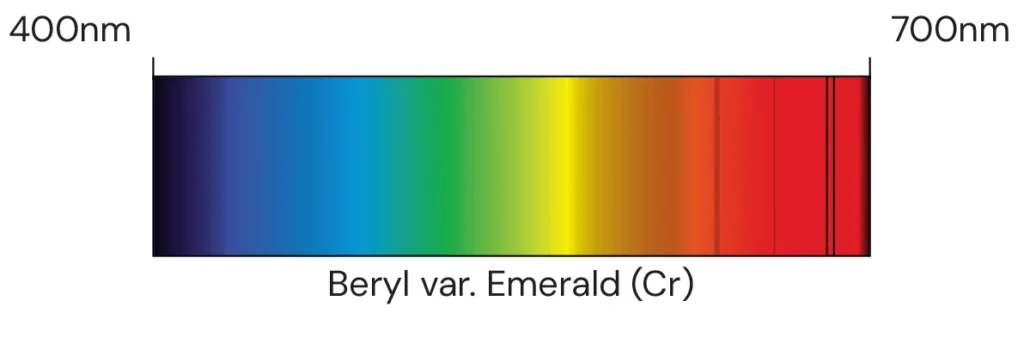
London, UK – In the dazzling realm of gemstones, where beauty and rarity reign supreme, a powerful scientific tool has quietly revolutionized the art and science of gemmology. Spectroscopy, the meticulous observation and measurement of how gemstones interact with electromagnetic radiation, has evolved from a nascent scientific curiosity into an indispensable diagnostic method. This advanced technique allows gemmologists to peer into the very heart of a stone, revealing its identity, origin, and even its history with remarkable precision. As synthetic stones and treatments become increasingly sophisticated, spectroscopy stands as a bulwark against deception, ensuring authenticity and value in the global gem market.
The Illuminating Power of Light: A Historical Perspective
The fundamental principles of spectroscopy can be traced back to the groundbreaking work of Sir Isaac Newton in 1672, who first observed the spectrum of visible light. However, it was Joseph Fraunhofer’s advancements in the early 19th century that laid the groundwork for practical spectroscopic analysis. By incorporating a narrow slit and a diffraction grating, Fraunhofer created a spectroscope capable of dispersing light into its constituent colours. His observation of dark lines within the solar spectrum, now known as Fraunhofer lines, provided crucial insights into the chemical composition of the sun’s atmosphere by indicating absorbed wavelengths. These lines, though originating from celestial observation, would later prove invaluable for gemmologists in calibrating and understanding their own spectroscopic instruments.
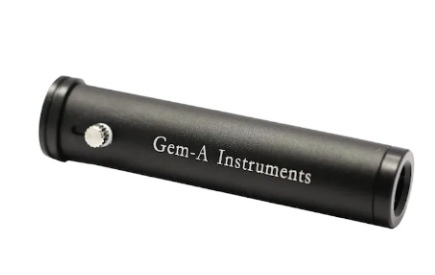
The application of spectroscopy to gemstones began to gain traction in the 1860s, with early records of the absorption spectra of stones like zircon and almandine appearing in seminal works such as A.H. Church’s "Precious Stones." The development of the hand-held spectroscope in the 1930s, significantly advanced at the Gem Testing Laboratory in London, marked a pivotal moment. This portable instrument, alongside the refractometer and microscope, became a cornerstone of gemmological equipment. Its utility lies in the fact that the unique patterns of absorption and emission bands—their positions, widths, and intensities—serve as highly reliable fingerprints for identifying gemstones. In many instances, these spectral signatures can also reveal a stone’s natural or synthetic origin and whether it has undergone colour treatments.
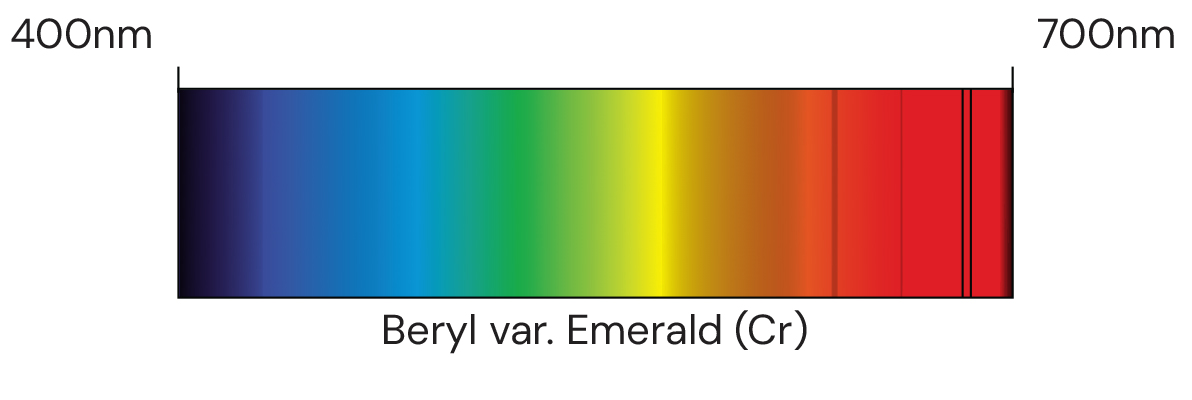
The evolution of spectroscopy in gemmology mirrors broader technological advancements. While the interaction of infrared radiation with materials was noted in the early 1900s, practical infrared spectrometers only became commercially available in the 1940s. Similarly, the Raman effect, discovered in the late 1920s, required the advent of lasers in the 1960s to become a viable tool for analysis. These parallel developments underscore the interconnectedness of scientific discovery and the gradual refinement of analytical techniques that empower gemmologists today.
A Spectrum of Techniques: Modern Spectroscopic Tools in Gemmology
The contemporary gemmological laboratory utilizes a diverse array of spectroscopic instruments, each offering unique insights into a gemstone’s composition and structure. These sophisticated tools go beyond simple identification, providing critical information about origin, treatments, and even the subtle nuances that distinguish a rare natural marvel from its synthetic counterpart.
FTIR (Fourier Transform Infrared) Spectroscopy: Unveiling Molecular Signatures
Fourier Transform Infrared (FTIR) spectrometers are instrumental in identifying gemstones by analyzing their absorption of infrared radiation across various wavelengths, typically expressed as wavenumbers (the number of waves per centimetre). The infrared spectrum, ranging from approximately 700 nanometres to 1 millimetre, provides a detailed molecular fingerprint. Absorption patterns detected by FTIR can be used to:
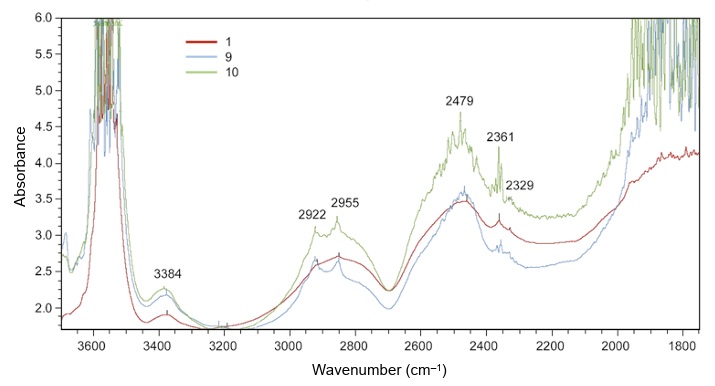
- Identify Gem Materials: Each mineral possesses a unique FTIR spectrum, allowing for definitive identification.
- Distinguish Natural from Synthetic: Subtle differences in the presence or absence of certain molecular bonds can differentiate natural stones from their lab-created equivalents. For example, the presence of OH⁻ groups, as indicated by a large asymmetric band around 3500 cm⁻¹, can be a key indicator in certain gemstones.
- Detect Coatings and Fillings: FTIR can identify surface treatments or fillings that may alter a stone’s appearance or durability.
- Classify Diamond Types: The presence and concentration of impurities like nitrogen can be accurately measured, distinguishing between Type I and Type II diamonds. This is crucial for separating natural and treated stones, as synthetic diamonds often exhibit significantly lower nitrogen concentrations than their natural counterparts.
A compelling example is the analysis of coloured diamonds. Naturally coloured blue diamonds are almost invariably Type IIb, characterized by the presence of boron and a lack of detectable nitrogen. In contrast, near-white Type I diamonds, with high levels of nitrogen, are more likely to be considered natural. Conversely, most synthetic diamonds of similar appearance contain less than five parts per million of nitrogen. Furthermore, FTIR can detect the resin impregnation of jadeite, a treatment that can be challenging to identify with standard tests but which typically leaves distinctive infrared absorption peaks.
UV-Vis-NIR Spectroscopy: Colour, Origin, and Identity
Ultraviolet-Visible-Near Infrared (UV-Vis-NIR) spectrometers scan a broader range of wavelengths, from short-wave ultraviolet up to one or a few thousand nanometres. This technique is particularly adept at understanding the causes of colour in gemstones and identifying trace elements that influence their origin and authenticity.
- Colour Origin: Absorption bands in the UV-Vis-NIR spectrum are directly responsible for the colours we perceive in gemstones. For instance, in diamonds, specific absorption peaks can be attributed to the presence of impurities or structural defects. An absorption at 415 nm, caused by nitrogen aggregates, is a strong indicator of a natural diamond. Conversely, absorptions at 484 nm and 884 nm, related to nickel, and at 737 nm, associated with silicon, are more commonly observed in synthetic diamonds.
- Source Identification: UV-Vis-NIR spectroscopy can assist in tracing the geographical origin of gemstones. For sapphires, different absorption patterns can distinguish stones originating from igneous versus sedimentary rock formations. For emeralds, the relative proportions of chromium and iron can vary significantly between different mining localities, providing a spectral signature of their origin.
- Distinguishing Valuable Varieties: The presence of specific trace elements, detectable by UV-Vis-NIR, can differentiate high-value gemstones from similar-looking, less costly alternatives. For example, the presence of copper in Paraiba tourmalines, indicated by characteristic spectral peaks, is a key factor in their significant market value compared to stones lacking this element.
X-ray Diffractometers: Unraveling Atomic Architecture
X-ray diffractometry (XRD) probes the internal crystalline structure of gemstones. When X-rays interact with the ordered arrangement of atoms within a crystal lattice, they diffract at specific angles, analogous to how light waves are diffracted by optical gratings.
- Mineral Identification: XRD instruments measure the precise distances between atomic layers. Since different elements have distinct atomic sizes and arrangements in various materials, this provides a highly sensitive method for identifying mineral species. Even polycrystalline aggregates, such as rocks, can be analyzed to identify their constituent mineral components.
- Crystal Structure Analysis: The atomic structures and symmetry of single crystals can be meticulously investigated. This is a routine procedure when studying newly discovered minerals, as was the case with taaffeite, a mineral first identified as a cut gemstone that had attracted the attention of a gemmologist in Dublin.
- Elemental and Coating Analysis: X-rays can also excite electrons in the inner shells of atoms. When outer shell electrons fill these vacancies, characteristic X-ray photons are emitted, providing information about the elemental composition of the material. This technique, often referred to as Energy Dispersive X-ray Spectroscopy (EDX or EDS), can identify stones, coatings, and even trace elements that help distinguish natural from synthetic stones. For instance, the presence of nickel or silicon in diamonds is more typical of synthetic stones, while the trace element proportions of chromium, vanadium, and iron can help differentiate natural from synthetic ruby.
Raman Spectroscopy: Vibrational Fingerprints and Inclusions
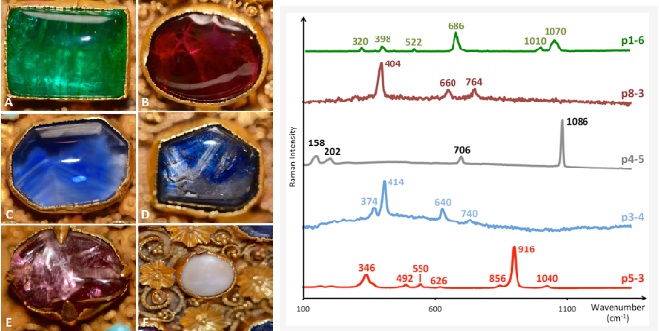
Raman spectroscopy utilizes a focused laser beam, typically in the infrared or visible spectrum, to interact with a gemstone. While most of the light is scattered elastically at the same wavelength, a small fraction undergoes inelastic scattering, meaning its wavelength is altered. This shift in wavelength is unique to the vibrational modes of the molecule and crystal lattice, producing a diagnostic series of peaks that form a material’s Raman spectrum.
- Material Identification: By comparing the observed Raman spectrum to extensive databases, gemmologists can reliably identify the gemstone. While generally effective for identification, it’s important to note that Raman spectroscopy may not always distinguish between natural and synthetic versions of the same material, as their fundamental molecular structures are often identical.
- Inclusion Analysis: Sophisticated Raman instruments can identify microscopic inclusions within a gemstone, even if they are not at the surface. This provides valuable information about the stone’s geological history and formation environment.
- Diamond Analysis: Raman spectroscopy is particularly useful for diamonds, with results often enhanced at low temperatures achieved by cooling the stone with liquid nitrogen. This technique is adept at detecting minute defects within the diamond’s structure, which can provide strong evidence of its natural or synthetic origin and any treatments it may have undergone, such as high-pressure, high-temperature (HPHT) colour enhancement, which can be difficult to confirm by other methods.
Spectroscopy for the Professional Gemmologist: Beyond Identification
While the primary role of spectroscopy in gemmology is identification, its applications extend far beyond this fundamental task. The increasing sophistication of synthetic gemstone production and novel treatment techniques necessitates continuous advancements in analytical instrumentation.
Advanced spectroscopic methods, such as Laser-Induced Breakdown Spectroscopy (LIBS) or Inductively Coupled Plasma Mass Spectrometry (ICP-MS), may involve the removal of minuscule amounts of material from a gemstone’s surface. This is typically achieved by vaporizing a tiny pit, often no wider than a human hair, using a laser. While seemingly invasive, this process is justified by the significant price premium placed on natural, locality-specific, and high-quality gemstones. The vaporized material is then analyzed to determine elemental and isotopic compositions. Such detailed analyses, when compared with comprehensive databases, can provide compelling evidence of a gemstone’s geographical origin, offering unparalleled insights for connoisseurs and collectors.
The ongoing "arms race" between synthetic producers and gemmological analysts underscores the critical importance of spectroscopy. As new methods of synthesis and treatment emerge, so too must the corresponding analytical tools evolve. Spectroscopy, with its deep historical roots and its capacity for ongoing innovation, is poised to remain at the forefront of gemmological science, ensuring transparency and trust in the precious world of gemstones for generations to come.
The Future of Gemstone Analysis
The journey of spectroscopy in gemmology is far from over. As gemstone synthesis and treatment methods become increasingly complex, the demand for more precise and sensitive analytical instruments will continue to grow. The development of portable, user-friendly spectroscopic devices will democratize advanced analysis, making it accessible to a wider range of gem professionals and enthusiasts. Furthermore, the integration of artificial intelligence and machine learning with spectroscopic data analysis promises to unlock even deeper insights, potentially revealing subtle characteristics that are currently undetectable. Spectroscopy’s ability to non-destructively reveal the hidden stories within gemstones solidifies its position as an indispensable tool, safeguarding authenticity and illuminating the true value of these precious treasures.



