In an unprecedented collision between art history and contemporary political anxiety, the Robert Mapplethorpe Foundation has denied a licensing request for a seminal 1981 portrait of Roy M. Cohn. The image, intended for the cover of an upcoming biography titled American Scoundrel: Roy Cohn’s Dark Journey from Joe McCarthy to Donald Trump, was withheld by the estate over concerns regarding the book’s critical depiction of the sitting U.S. president.
This decision marks a chilling milestone in the relationship between cultural institutions and the current administration. As the nonprofit sector navigates an era of heightened executive scrutiny, the Mapplethorpe Foundation’s retreat highlights a growing climate of self-censorship, where the fear of federal reprisal—specifically the weaponization of tax-exempt status—has begun to dictate the visibility of historical artifacts.
A Legacy Captured: The 1981 Portrait of Roy Cohn
The portrait in question remains one of the most stark examples of Robert Mapplethorpe’s mature aesthetic. Titled simply Roy Cohn, the photograph captures the infamous lawyer with an unflinching, icy stare. His nose, split by a prominent scar, is framed by the deep, obsidian backdrop that became the hallmark of Mapplethorpe’s work during his final decade.
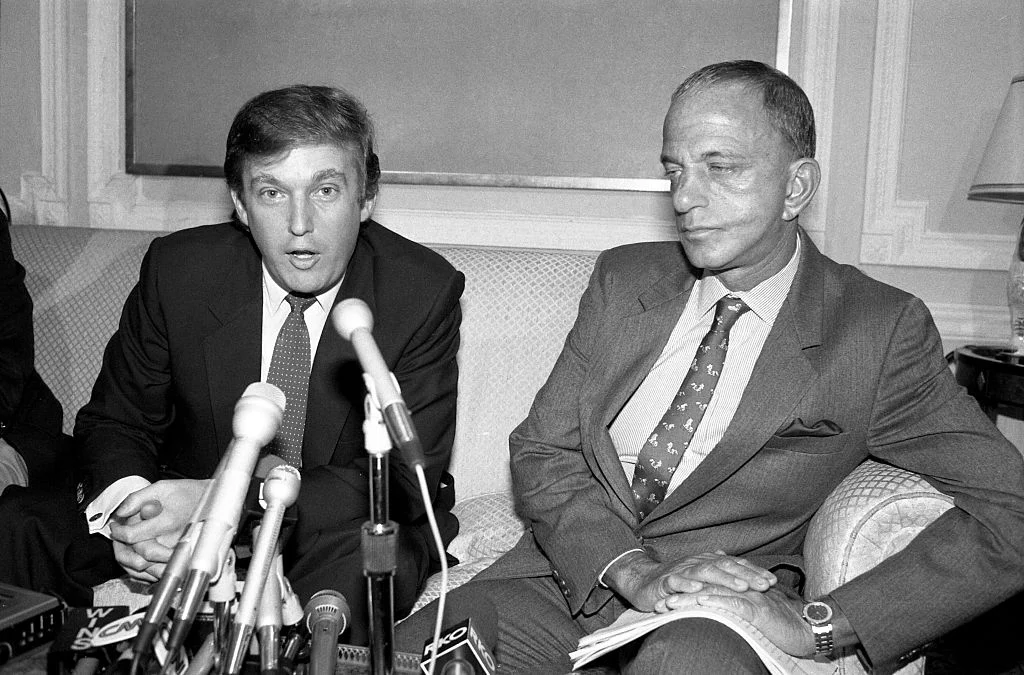
At the time of the shoot, the image was commissioned for an Interview magazine feature helmed by writer Steven M.L. Aronson. In 1981, Cohn was at the zenith of his power—a man who spent his days as a fixer for mobsters and media moguls, and his nights in the hedonistic sprawl of Studio 54. Among his protégés was a young real estate developer named Donald Trump. For Mapplethorpe, the subject was a departure from his usual focus on the underground S&M scene of the 1970s—a body of work famously codified in his "X Portfolio"—but it represented his burgeoning pivot toward high-profile portraiture. Both men would eventually perish from AIDS-related complications before the 1980s concluded, leaving behind legacies defined by contradiction, power, and early death.
Chronology of a Denial
The path to the Foundation’s refusal began with the standard administrative process of licensing an image for publication. Authors Kai Bird and Susan Goldmark sought the rights to use the portrait to anchor their biography, American Scoundrel. Given the historical relevance of the photograph to the subject’s life, the request seemed routine.
However, as the editorial process progressed, the Foundation—which acts as the steward of Mapplethorpe’s artistic vision—began to express reservations. These were not grounded in artistic integrity or copyright technicalities, but in the political content of the manuscript. According to reporting from The New York Times, the Foundation’s board became increasingly concerned that the book’s negative characterization of President Trump could lead to a punitive response from the White House.
The Foundation, registered as a 501(c)(3) nonprofit, operates under strict regulations regarding political activity. While these laws are designed to prevent tax-exempt entities from participating in partisan campaigns, they are not intended to chill artistic expression or inhibit the publication of historical biographies. Yet, the board reportedly feared that the proximity of a Mapplethorpe image to an anti-Trump narrative could be construed as a political statement, potentially triggering a federal investigation into the Foundation’s tax status.
The Weaponization of Cultural Policy
The decision to block the image does not exist in a vacuum. It is the latest in a series of interventions by the Trump administration into the operations of America’s cultural crown jewels. Since the beginning of his second term, President Trump has exerted direct pressure on institutions that traditionally operate at arm’s length from the Oval Office.
The administration’s playbook has become increasingly transparent. By leveraging funding and administrative oversight, the White House has forced significant internal changes at the Smithsonian Institution and assumed effective control over the John F. Kennedy Center for the Performing Arts. These actions have sent a shockwave through the arts community, signaling that no institution—regardless of its historical prestige—is immune to ideological alignment.
The Mapplethorpe Foundation’s caution is, therefore, a reflection of a broader, systemic fear. As Suzanne Nossel, a former chief executive of the free expression organization PEN America, noted, "The idea that a photograph of a dead mobster lawyer could somehow qualify as political activity… is hard to fathom. And yet, we’re in an environment where no one feels they can rule anything out."
Voices of Outrage: The Authors Respond
The refusal has drawn sharp criticism from the project’s authors. Kai Bird, a Pulitzer Prize-winning biographer, expressed disbelief at the Foundation’s rationale. "I am thunderstruck," Bird told the Times. "It is astonishing that these people are being so cowed, so easily."
For Bird and Goldmark, the denial is not merely a bureaucratic hurdle; it is a fundamental betrayal of the artist’s own history. Robert Mapplethorpe was, during his lifetime, the epicenter of a massive culture war. His work was frequently targeted by conservative politicians who sought to defund the National Endowment for the Arts (NEA) due to the sexual nature of his "X Portfolio." In 1989, the Corcoran Gallery of Art canceled a retrospective of his work, fearing the political fallout from a conservative-led Congress.
By suppressing their own archive to appease a sitting president, the Foundation stands in stark contrast to the defiant spirit of the man they represent. The irony of the situation—that an artist who was once the victim of censorship is now the instrument of it—is not lost on the literary and art historical communities.
Implications for the Nonprofit Arts Sector
The Foundation’s decision carries profound implications for the future of archival access. If major estates begin to preemptively "vet" the political content of the books, films, or articles that use their images, the public record risks being sanitized. This "pre-emptive self-censorship" creates a dangerous precedent:
- The Erosion of Academic Freedom: If historical analysis becomes subject to the approval of estate foundations, biographies of controversial figures will inevitably lose their edge, favoring "safe" portrayals that do not risk the ire of powerful political figures.
- The Politicization of Nonprofits: When 501(c)(3) organizations begin to make licensing decisions based on fear of federal retaliation, they effectively enter the political arena they are trying to avoid. By choosing not to act, they are making a political choice.
- The Standardization of Fear: As the administration continues to signal that it will hold cultural institutions accountable for their associations, other foundations—many of which rely on government grants or public-private partnerships—may follow suit. This creates a "chilling effect" that stifles critical inquiry across the arts and humanities.
Conclusion: A Precarious Future
The Mapplethorpe Foundation, established shortly before the artist’s death, claims its mission is "to protect his work, to advance his creative vision and to promote the causes he cared about." Yet, in the estimation of critics, the current board has prioritized institutional self-preservation over the integrity of that vision.
The portrait of Roy Cohn—a man who spent his life manipulating the levers of power—has, in death, become the catalyst for a new kind of power dynamic. Whether this decision will embolden other institutions to stand their ground or trigger a cascade of similar concessions remains to be seen. What is clear, however, is that the space for objective historical documentation is shrinking. In an age where the line between "cultural artifact" and "political target" has been systematically erased, the act of publishing an image has become, once again, a radical and dangerous endeavor.
As of this writing, the Robert Mapplethorpe Foundation has declined to comment on the criticism leveled by the authors. The photograph, once a symbol of the raw, unfiltered truth of the New York scene, remains tucked away in a vault—a silent witness to a new era of American uncertainty.