

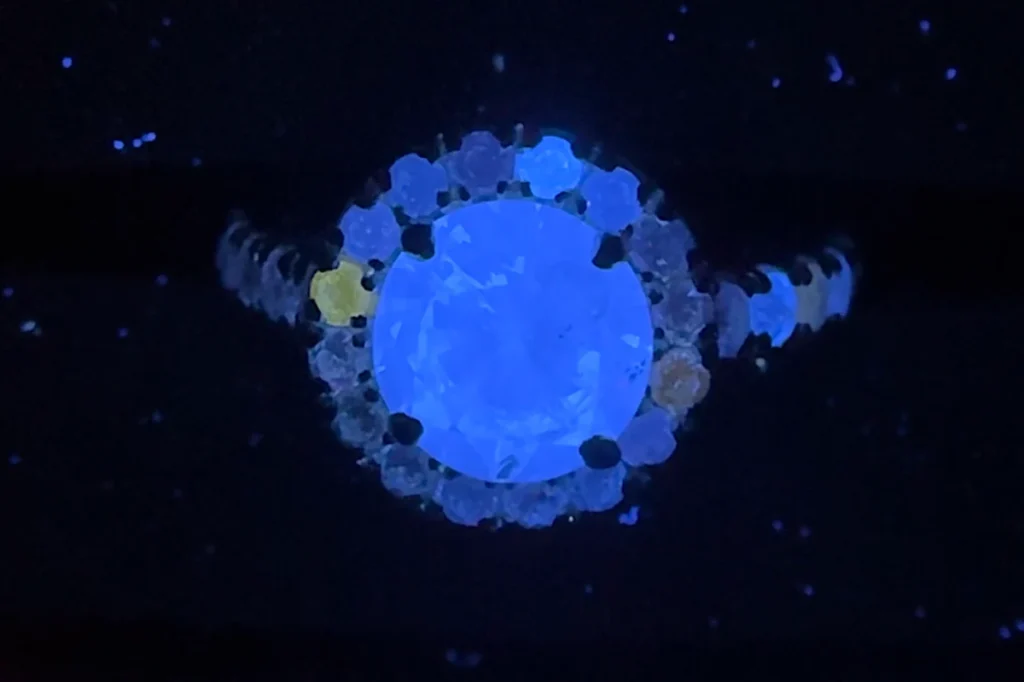
Diamonds, the enduring symbols of love and luxury, have captivated humanity for millennia. Their brilliance and allure have made them the cornerstone of the jewelry trade, their value recognized for over two thousand years. Yet, beneath their dazzling surface lies a phenomenon that often goes unnoticed by the casual observer but holds profound significance for gemmologists and discerning collectors: fluorescence. This innate property, the ability of a diamond to emit light when exposed to ultraviolet (UV) radiation, is not merely a visual curiosity; it’s a key to understanding a diamond’s origin, its unique characteristics, and even its authenticity.
Pat Daly FGA DGA, a respected authority in the field, guides us through the intricate world of diamond fluorescence, demystifying its causes, its relevance to gemological identification, and its impact on the diamond market. As we delve deeper, we’ll uncover how this subtle interplay of light and matter provides invaluable insights into the very essence of these precious gemstones.
The Science Behind the Sparkle: Understanding Diamond Imperfections and Their Luminescent Secrets
For centuries, the composition of diamonds remained a mystery. It wasn’t until the late 18th century that scientists definitively established them as being primarily composed of carbon. However, it was in the early 20th century that a deeper understanding of their intricate structure and chemistry began to emerge. The increasing industrial applications of diamond spurred intensive scientific research, leading to a comprehensive exploration of its properties and their correlation with its atomic makeup.
At the heart of understanding diamond fluorescence lies the concept of "defects." A theoretically perfect diamond would consist solely of carbon atoms arranged in a precise, three-dimensional lattice, with each atom bonded to four others. However, in reality, virtually all diamonds contain imperfections. These departures from the ideal structure, known as defects, can manifest as foreign chemical impurities or vacancies – empty spaces where a carbon atom should be.
These defects are of paramount importance in gemmology because they profoundly influence a diamond’s observable characteristics. Crucially, they can alter its color and, as we will explore, its luminescent responses under UV light. This luminescent behavior serves as a powerful diagnostic tool for gemmologists, enabling them to differentiate between natural, treated, and synthetic diamonds.
A Spectrum of Origins: Classifying Diamonds by Their Impurities
The classification of diamonds into distinct types is primarily based on the quantity and distribution of two key impurities: nitrogen and boron. This classification is fundamental to understanding their fluorescence.
Type I Diamonds: These diamonds are characterized by the presence of nitrogen atoms in significant quantities, typically ranging from hundreds to thousands of parts per million (ppm). Within Type I, there are further subdivisions:
-
Type Ia: This is the most common type of diamond, accounting for approximately 98% of all natural diamonds. In Type Ia diamonds, nitrogen atoms are not dispersed individually but tend to aggregate over millions of years within the Earth’s mantle. Initially, nitrogen atoms may exist as dispersed ions. However, as diamonds mature, these atoms coalesce into pairs and, eventually, into groups of four nitrogen atoms surrounding a vacancy.
- Single Nitrogen Atoms: The presence of single nitrogen atoms can impart a distinct yellow hue to the diamond, but their effect on luminescence is minimal.
- Nitrogen Pairs: Pairs of nitrogen atoms have a quenching effect on luminescence, meaning they tend to suppress it. They also do not significantly impact the diamond’s color.
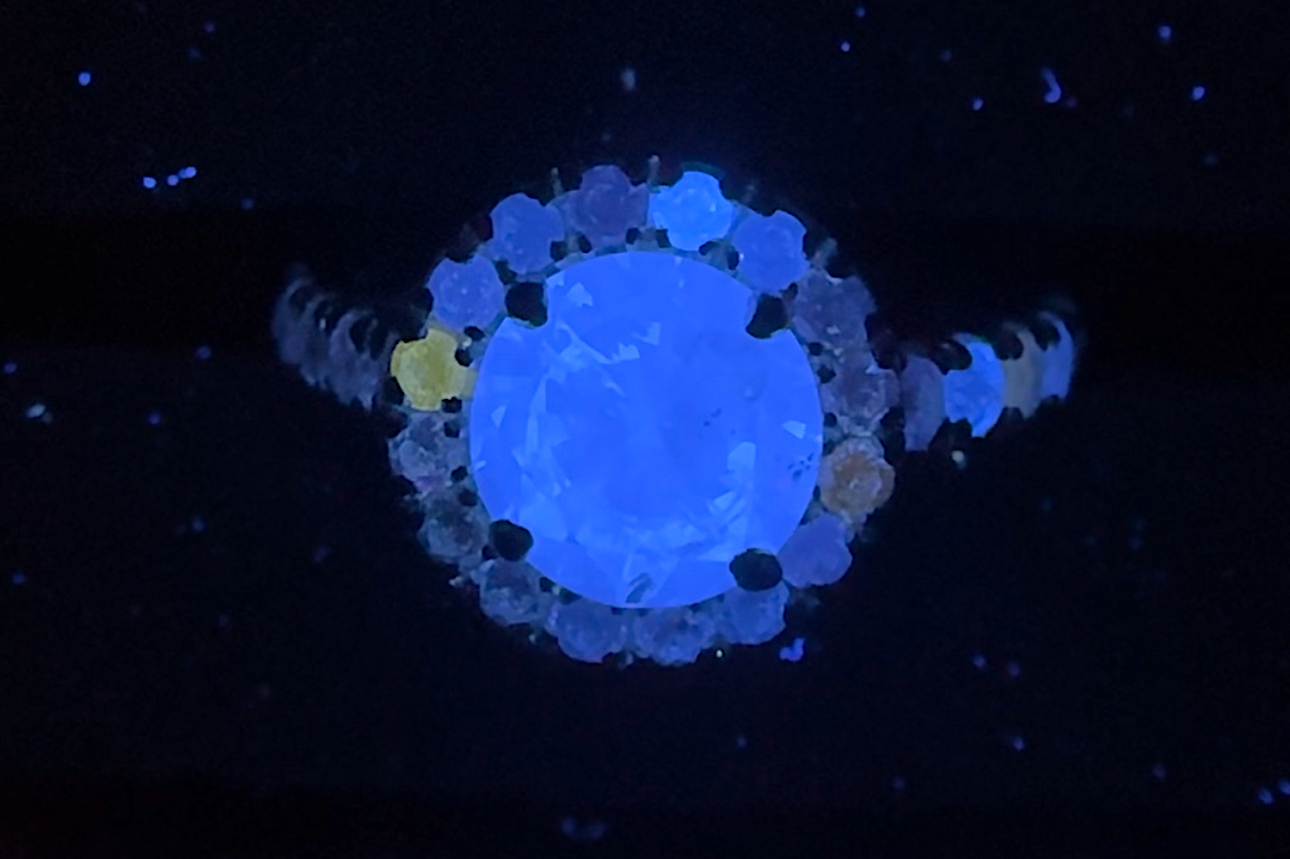
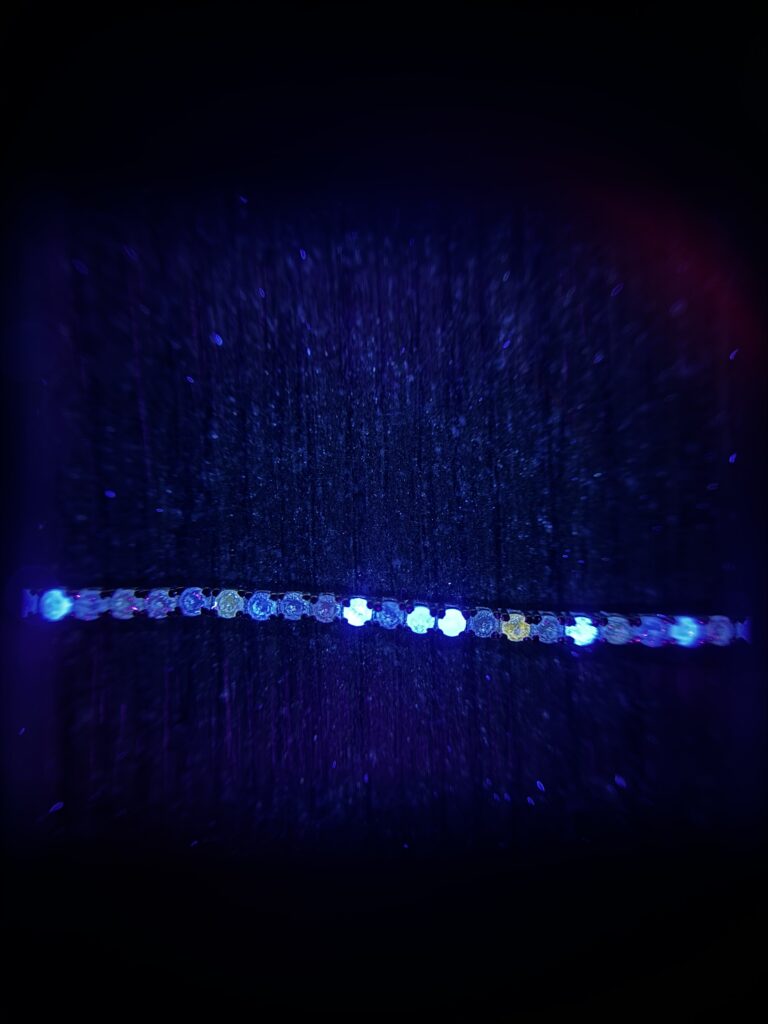
- Groups of Four Nitrogen Atoms with Vacancies: This specific aggregation is particularly significant as it is responsible for the characteristic blue fluorescence observed in many natural diamonds when exposed to long-wave ultraviolet (LWUV) light. These aggregates also contribute to a yellowish body color in the diamond. The interplay between the number of these aggregates and the presence of nitrogen pairs dictates the overall luminescence of the stone. It’s estimated that between one-third and all Type Ia diamonds can exhibit fluorescence, depending on the specific UV wavelength used for excitation, viewing conditions, and the instrument employed. The presence of this blue fluorescence under LWUV is considered strong evidence of a diamond’s natural origin.
-
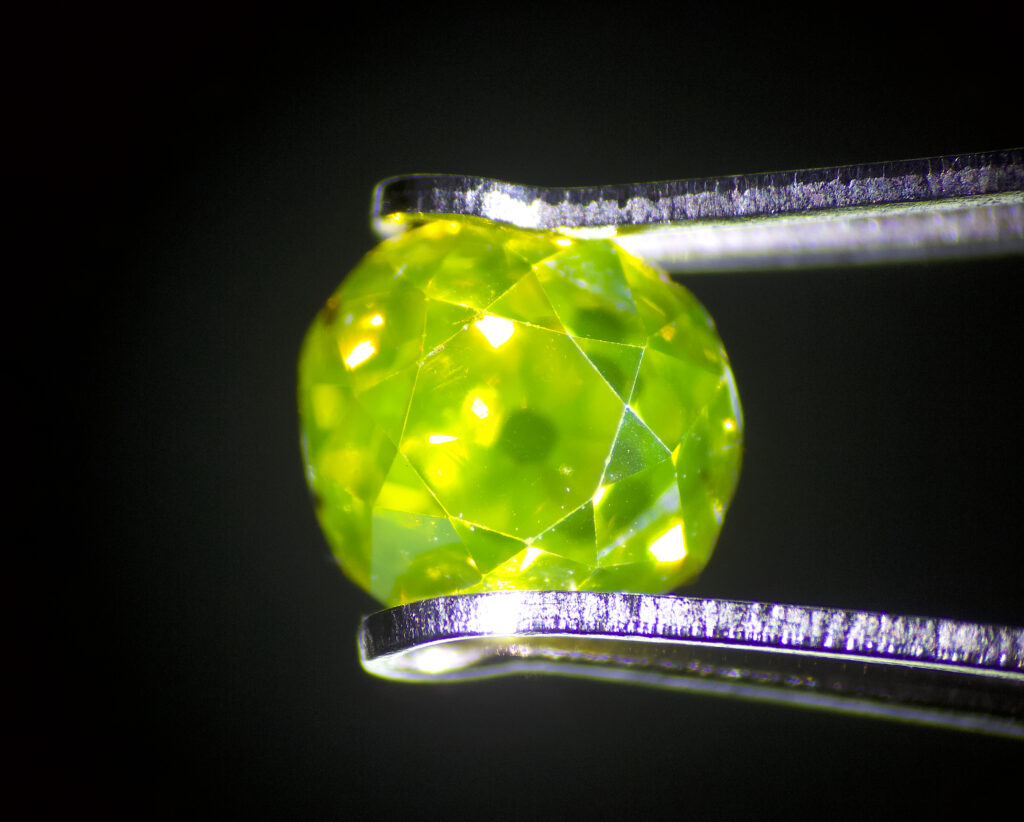
Type Ib: This rarer subtype of Type I diamonds contains nitrogen atoms that are isolated and dispersed individually within the crystal lattice. These dispersed nitrogen atoms are responsible for the striking yellow and greenish-yellow colors seen in some diamonds. While they significantly impact color, their luminescent response is generally less pronounced compared to Type Ia diamonds.
Type II Diamonds: In contrast to Type I, Type II diamonds contain negligible amounts of nitrogen, typically less than 10 ppm. They are further divided into two categories:
-
Type IIa: These diamonds have extremely low levels of nitrogen and are often colorless. They typically do not exhibit significant fluorescence under standard gemological equipment and conditions. However, some rare, naturally colored pink diamonds of this type can display an orange glow under LWUV. This phenomenon is attributed to a specific defect involving a nitrogen ion associated with a vacancy, a defect that is uncommon in natural stones but frequently found in artificially colored and synthetic pink diamonds.
-
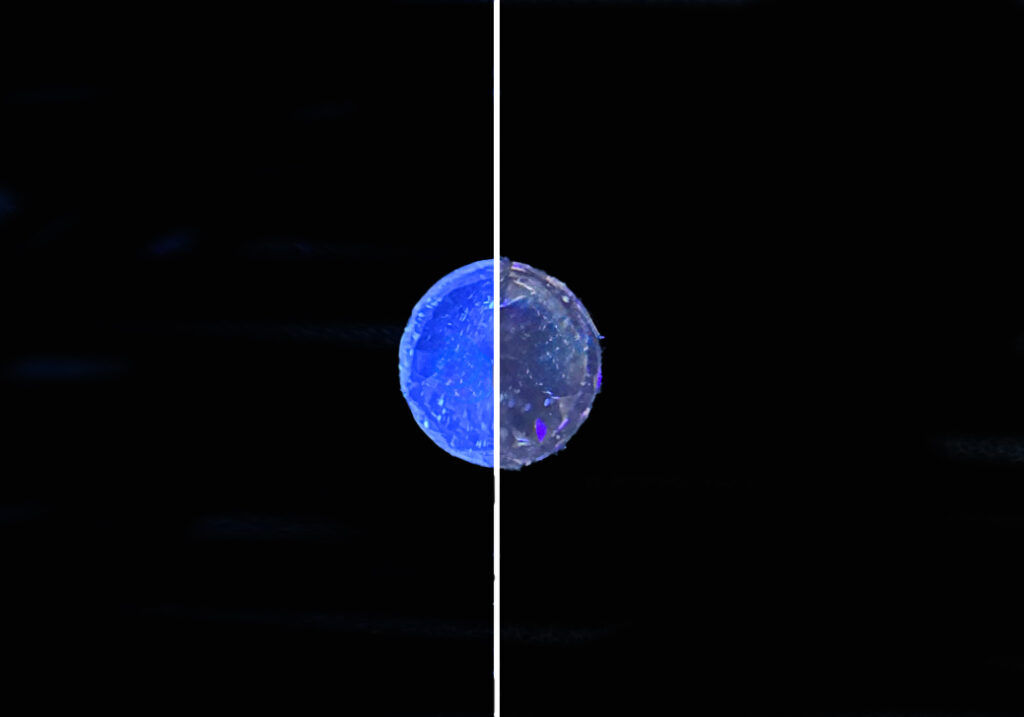
Type IIb: This is a very rare type of diamond that contains boron impurities. Boron is responsible for the characteristic blue color of many blue diamonds and also influences their luminescence. Type IIb diamonds often show little to no fluorescence under LWUV. However, when exposed to short-wave ultraviolet (SWUV) light, they can exhibit bluish, greenish, or orange-to-red fluorescence. Phosphorescence (the emission of light after the UV source is removed) is common in Type IIb diamonds after SWUV exposure, sometimes lasting for up to a minute. The interplay between bluish-green and red phosphorescence has even been proposed as a method for identifying individual stones, potentially aiding in the recognition of recut stolen diamonds.
The Dance of Light: Fluorescence Colors and Their Causes
While blue fluorescence in LWUV is the most commonly observed, diamonds can exhibit a spectrum of fluorescent colors, each linked to specific structural defects:
-
Green Fluorescence: This color is typically caused by the presence of two nitrogen ions combined with a vacancy, or four nitrogen ions combined with two vacancies.
-
Orange Fluorescence: A single nitrogen ion combined with a vacancy is thought to be responsible for orange fluorescence.
-
Yellow Fluorescence: Platelets, which are planar defects composed mainly of carbon atoms with some nitrogen, are believed to be the cause of yellow fluorescence.
-
Pink Diamonds and Fluorescence: The coveted color of pink diamonds is often attributed to dislocations – structural faults within the crystal lattice caused by distortions. These dislocations can sometimes combine with nitrogen atoms. Most natural pink diamonds fall into Type I and typically display blue or yellow fluorescence.
The Significance for Gemmologists and Collectors
The ability of diamonds to fluoresce under UV light is far more than a visual spectacle; it is a critical tool in the gemmologist’s arsenal.
-
Identification of Natural Diamonds: As mentioned, the presence of blue fluorescence in LWUV is a strong indicator of a natural diamond, particularly Type Ia diamonds. While synthetic diamonds can also fluoresce, their patterns and colors often differ significantly.
-
Detecting Treatments and Synthetics: Certain fluorescence responses are highly characteristic of treated or synthetic diamonds. For instance, the orange glow seen in some Type IIa diamonds under LWUV is rare in natural stones but common in treated and synthetic pink diamonds. Similarly, high-pressure, high-temperature (HPHT) treated stones often exhibit bright yellow and green body colors and intense fluorescence in similar hues.
-
Understanding Diamond Formation: The patterns of fluorescence can even provide clues about the growth history of a diamond. Defects tend to accumulate at different rates on various faces of a growing crystal, leading to distinct luminescent responses on different facets. This can help gemologists recognize the original growth faces of a diamond, even after it has been polished. Natural diamonds typically grow as octahedra, while HPHT synthetics often display prominent cube faces, and Chemical Vapor Deposition (CVD) grown synthetics exhibit layers parallel to specific cube faces.
-
Assessing Value and Appearance: While not a primary grading factor like the "4 Cs" (carat, cut, color, clarity), fluorescence can influence a diamond’s appearance. Strong blue fluorescence, for example, can sometimes make a diamond appear whiter or even slightly hazy, depending on its intensity and the diamond’s color grade. Conversely, some collectors and enthusiasts are drawn to the unique visual effects created by fluorescence. Diamond grading reports often include information about fluorescence, allowing buyers to make informed decisions.
The Evolving Landscape: Luminescence in Synthetic Diamonds and Advanced Detection
The advancements in diamond synthesis have introduced new complexities and opportunities in the field of fluorescence analysis.
-
Synthetic Diamond Luminescence: Many synthetic diamonds exhibit distinct luminescent properties that differentiate them from their natural counterparts. For instance, blue fluorescence under LWUV is relatively rare in synthetics. Instead, many synthetic diamonds display an orange-to-yellow or greenish glow, often stronger in SWUV than in LWUV. Some HPHT synthetic diamonds, particularly those containing boron, can exhibit long phosphorescence, which can even be stimulated by daylight. While irradiation can diminish this effect, it adds to the cost of production.
-
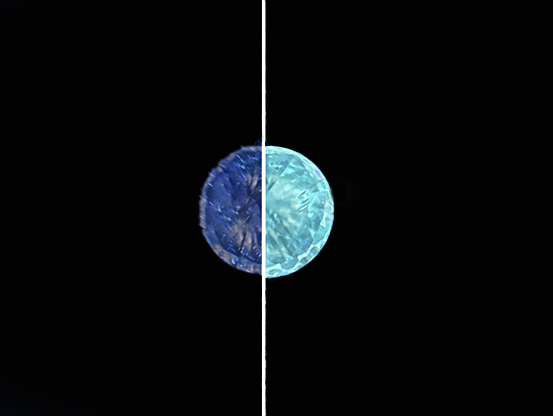
Technological Advancements in Detection: The gemological industry has responded to these challenges with sophisticated instruments designed to detect and analyze diamond fluorescence. Tools like De Beers’ Diamond View and SYNTHdetect utilize specific UV wavelengths and analyze the colors and changes in luminescence over short periods to distinguish between natural and synthetic stones. These instruments are crucial for screening multi-stone jewelry and ensuring market integrity.
A Spectrum of Light, A World of Insight
The phenomenon of diamond fluorescence, once a subtle curiosity, has evolved into a critical area of study and application within gemmology. From revealing the subtle interplay of impurities within a diamond’s atomic structure to providing powerful tools for identifying natural stones and detecting simulants, fluorescence offers a captivating glimpse into the hidden world of these cherished gems.
As research continues and synthetic diamond production becomes more sophisticated, the understanding and application of fluorescence analysis will undoubtedly remain at the forefront of gemological science, ensuring that the brilliance we admire in diamonds is matched by our understanding of their true nature. Whether a collector seeking a unique visual characteristic or a gemologist verifying authenticity, the study of diamond fluorescence unlocks a deeper appreciation for these timeless treasures.
Featured Image: A stunning fluorescent diamond ring, photographed by Gabriel Kleinberg, showcases the captivating beauty of this often-unseen property.
Further Exploration: For those eager to delve deeper into the fascinating world of gemmology and the science behind gemstones, Gem-A offers introductory online courses like GemIntro and a range of accredited educational programs.



