
The international art market and the Pacific Northwest’s cultural landscape are bracing for a landmark series of sales as Sotheby’s prepares to auction approximately 50 masterworks from the collection of legendary Seattle real estate developer Richard “Dick” Hedreen. This high-stakes divestment, estimated to realize at least $90 million, represents a sophisticated philanthropic maneuver designed to realize one of the most significant private-to-public art transfers in American history.
Far from a retreat from his previous charitable commitments, the upcoming auctions in New York represent the financial engine intended to power the establishment of a new art museum at Seattle University. This strategic sale follows the 2022 announcement of a transformative gift by Hedreen and his late wife, Betty, which included 350 works of art and $25 million in seed money. By curating a portion of the collection for the auction block, the Hedreen family aims to ensure the longevity and operational excellence of the institution that will eventually house the remaining 350 pieces—a collection valued in its entirety at over $300 million.
Main Facts: A Dual-Track Strategy for Cultural Preservation
The Sotheby’s sales, scheduled to take place over the upcoming fall and winter seasons, are not merely a liquidation but a "curatorial pruning" intended to balance the needs of a nascent university museum with the realities of modern institutional endowment.
The Auction Breakdown
Of the roughly 400 works that comprise the total Hedreen collection, 50 have been selected for public sale. These works are expected to generate a minimum of $90 million, though market analysts suggest the "Lichtenstein effect" and the rarity of the Old Master offerings could push the final tally significantly higher. The proceeds are earmarked to bolster the $25 million already pledged to Seattle University, providing the capital necessary for construction, staffing, and the long-term maintenance of a world-class facility.
The Retained Collection
The 350 works remaining with Seattle University form the core of the future museum’s permanent collection. This group includes foundational pieces by modern and contemporary titans such as Willem de Kooning, Rashid Johnson, Amy Sherald, Cecily Brown, and Jonas Wood. Crucially, the university will also retain a significant cache of Old Masters, including works by Bronzino, Jacopo Pontormo, Élisabeth Vigée Le Brun, and Thomas Gainsborough. This ensures that the university’s museum will debut with a depth and historical breadth rarely seen in collegiate collections.
Chronology: From Seattle Real Estate to International Connoisseurship
The journey of the Hedreen collection mirrors the evolution of Seattle itself—from a regional hub to a global center of wealth and culture.
The Formative Years (1970s–1980s)
Richard and Betty Hedreen began their collecting journey in the early 1970s, rooted deeply in the local Seattle arts community. Their initial foray into the art world was characterized by active participation in the Seattle Art Museum’s Contemporary Art Council. During this period, they focused primarily on the avant-garde and contemporary movements of the time, establishing relationships with living artists and local galleries.
The Expansion into Old Masters (1990s–2010s)
While many contemporary collectors remain siloed within the 20th and 21st centuries, the Hedreens developed a sophisticated interest in European Old Masters. This pivot was not a replacement of their contemporary interests but an expansion. They began to acquire works from the 15th through 18th centuries, developing a unique "dialogue-based" approach to display. In their home and offices, a 16th-century portrait might hang adjacent to a 1990s pop-art masterpiece, creating a visual bridge across half a millennium of human creativity.

The 2024 Gift and 2026 Auction Roadmap
In 2024, the formal announcement of the gift to Seattle University sent shockwaves through the art world, marking it as one of the largest single donations to a Jesuit institution. As 2025 approached, the family, in consultation with university advisors, determined that the most sustainable path forward involved a strategic sale. The upcoming Sotheby’s auctions in late 2025 and early 2026 represent the final phase of this transition, moving the art from private walls to the global market to fund a public future.
Supporting Data: Highlighted Works and Market Context
The 50 works selected for auction represent some of the "trophy" pieces of the collection—works with significant market momentum and impeccable provenance.
The Contemporary Anchor: Roy Lichtenstein
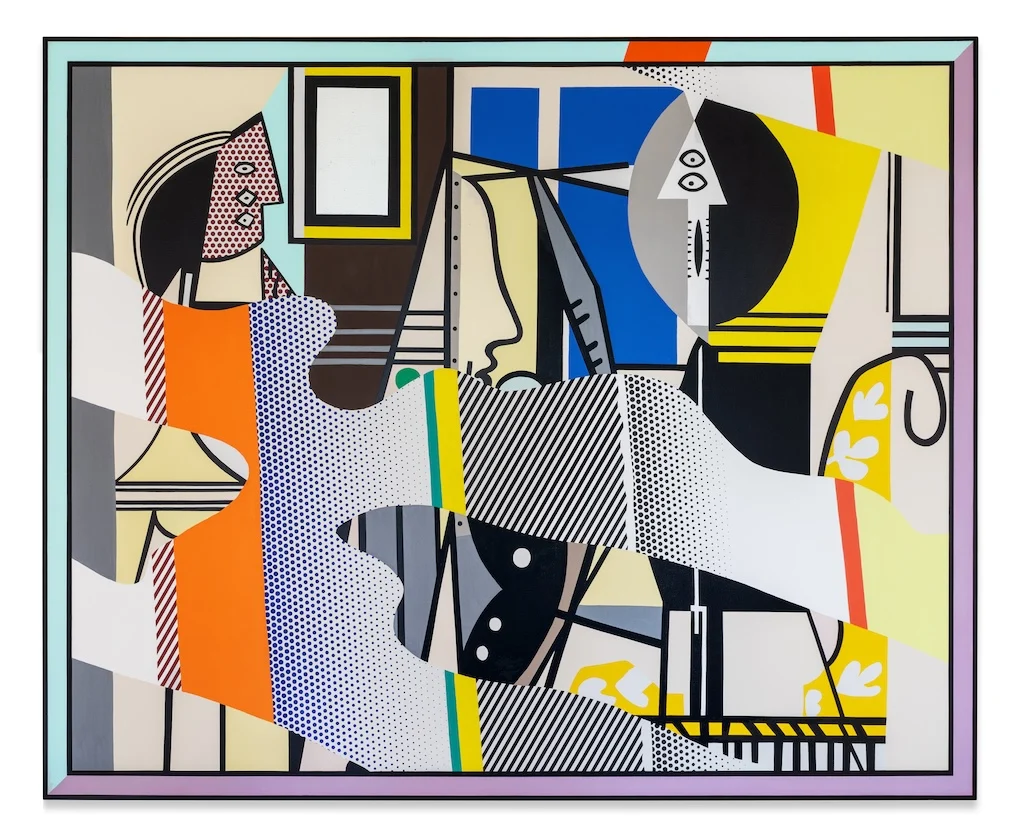
Leading the Sotheby’s group is Roy Lichtenstein’s Reflections on “Painter and Model” (1990). Estimated at $20 million to $30 million, the work is a quintessential example of Lichtenstein’s late-career mastery.
- Artistic Significance: The painting is a sophisticated "meta-commentary" on art history, riffing on Pablo Picasso’s 1928 Painter and Model (currently in the MoMA collection).
- Market Timing: The sale coincides with the major "Roy Lichtenstein: Like New" retrospective at the Whitney Museum of American Art, a factor that traditionally drives up demand and pricing for an artist’s work at auction.
The Contemporary Powerhouse: Cecily Brown
Another standout is Cecily Brown’s Untitled (Shipwreck) (2017), a massive 12-foot-wide canvas estimated at $7 million to $10 million.
- Context: This work belongs to a celebrated series where Brown interrogated 19th-century Romanticism, specifically drawing inspiration from Delacroix and Géricault’s The Raft of the Medusa. Its inclusion in the sale highlights the Hedreens’ eye for contemporary works that possess "Old Master" DNA.
The Old Master Records: Pencz and Cavarozzi
The February Old Masters sale in New York will feature works with extraordinary histories:
- Georg Pencz: Portrait of Sigismund Baldinger (16th Century). Estimated at $8 million to $12 million. This work has a harrowing provenance; it was looted by the Nazis during WWII and only returned to the heirs of Baron András Herzog in 2010. Its last appearance at auction set a record for the artist, and its return to the market is expected to be a major event for Renaissance scholars.
- Bartolomeo Cavarozzi: The Sacrifice of Isaac (ca. 1617). Estimated at $7 million to $10 million. Once attributed to Caravaggio himself, this work represents the pinnacle of the Caravaggisti movement. It previously set an artist record in 2014 when the Hedreens acquired it.
Official Responses: A Collaborative Vision
The decision of which works to sell and which to keep was not made in a vacuum. It was the result of a rigorous, months-long collaboration between the Hedreen family and the academic leadership of Seattle University.
According to sources familiar with the process, Richard Hedreen and his family spent hundreds of hours with an art historian from Seattle University. The goal was to conduct a "surgical" analysis of the collection. They asked: Which works are essential for a teaching collection? Which works provide the necessary "landmark" moments for a museum’s narrative? And which works, while valuable, can be sacrificed to ensure the institution has the cash flow to survive for the next century?
The university reportedly secured the vast majority of its "wish list." In a statement, the Hedreen family reaffirmed their dedication: “Seattle University has long held a special place in our lives, and our commitment to it remains as strong as ever. The works being sold were chosen with the university so that what remains still contains the landmark works, historical depth, and variety of artistic voices envisioned for the museum.”

Seattle University officials have expressed that this sale is a "transformational step" that turns a gift of objects into a fully realized, sustainable cultural institution.
Implications: Redefining the University Art Museum
The Hedreen-Sotheby’s deal has broader implications for the art world and the future of philanthropy.
1. The Endowment Model for Art
This move highlights a growing trend where major donors do not just "dump" art onto an institution but provide a liquid financial path for that institution to manage the gift. Many museums struggle with "orphan collections"—large gifts of art without the money to house or conserve them. The Hedreen model provides both the "soul" (the art) and the "body" (the funding) simultaneously.
2. The Pacific Northwest as a Global Art Hub
The establishment of the Hedreen collection at Seattle University, bolstered by $115 million in total cash (the original $25M plus the $90M auction estimate), immediately places the university on par with major East Coast institutions like the Yale University Art Gallery or the Harvard Art Museums. It shifts the gravity of the American art world further toward the West Coast.
3. The "Cross-Pollination" Aesthetic
By retaining a collection that mixes Old Masters with Contemporary giants, Seattle University will offer a unique pedagogical tool. Students will be able to study the brushwork of a 16th-century Italian master alongside a 21st-century abstractionist. This "historical depth," as the family calls it, challenges the traditional chronological silos of art history education.
As the gavel falls at Sotheby’s this winter, the art world will see the dispersal of 50 masterpieces. However, the true story is not what is being sold, but what is being built: a permanent, world-class legacy in the heart of Seattle that will educate and inspire for generations to come.