
The global art market and institutional landscape are currently undergoing a period of significant recalibration. From high-level curatorial appointments in the United States and the United Kingdom to substantial philanthropic infusions in Miami and Chicago, the industry is signaling a renewed focus on structural stability and regional growth. Simultaneously, the intersection of extreme private wealth and blue-chip collecting has reached new heights, while the logistical realities of contemporary performance art are forcing a reckoning at the world’s most prestigious biennials.
This report synthesizes the latest developments across the art world, detailing the personnel shifts, gallery expansions, and financial trends that are shaping the second half of the 2024 season.
I. Main Facts: Institutional Leadership and Market Expansion
The most immediate shifts in the art world involve a series of leadership transitions at major regional and international institutions. These moves reflect a broader trend of institutions seeking seasoned expertise to navigate an increasingly complex cultural climate.
Key Personnel Transitions
In Greenwich, Connecticut, the Bruce Museum has solidified its leadership team by appointing Kathy Fredrickson as Chief of Curatorial Affairs and Experience. Fredrickson, who officially took the mantle on August 3, is no stranger to the institution, having served as a curatorial strategy consultant since late 2023. Her move from the Corning Museum of Glass—where she was the director of collections and curatorial affairs—signals the Bruce Museum’s ambition to elevate its status as a premier regional hub for both art and science.
Across the Atlantic, Towner Eastbourne, the contemporary art museum in East Sussex, has announced that Martin Clark will serve as its next CEO and Director starting in January. Clark currently leads the Camden Art Centre in London, and his move to the coast is seen as a major win for Towner Eastbourne, which has seen its profile rise significantly in recent years, particularly after hosting the Turner Prize in 2023.
Gallery Roster Growth and Sales Appointments
The commercial sector is also seeing movement. Sargent’s Daughters, a gallery with a reputation for championing emerging voices, has announced two key internal promotions: Christine Nyce has been elevated to Director, and Nikki Myers has been named Gallery Associate.
On the international front, TERN, the Bahamas-based gallery, is expanding its influence by adding three artists to its roster: Gio Swaby, Richard Nattoo, and Marisa Willoughby-Holland. Meanwhile, the Mexico City-based JO-HS has announced representation of Hwi Hahm, a recent Hunter College MFA graduate whose work synthesizes German Expressionism and Cubism.
II. Chronology of Recent Developments
To understand the current momentum in the art world, one must look at the timeline of these announcements, which have clustered around the transition into the late summer season.
- Late 2023 – Mid-2024: Kathy Fredrickson begins her consultancy with the Bruce Museum, laying the groundwork for a long-term strategic overhaul of the institution’s curatorial vision.
- August 3, 2024: Fredrickson officially assumes the role of Chief of Curatorial Affairs and Experience at the Bruce Museum.
- August 2024: The Jorge M. Pérez Family Foundation and the Graham Foundation announce their respective grant cycles, injecting over $1.1 million into the arts nonprofit sector.
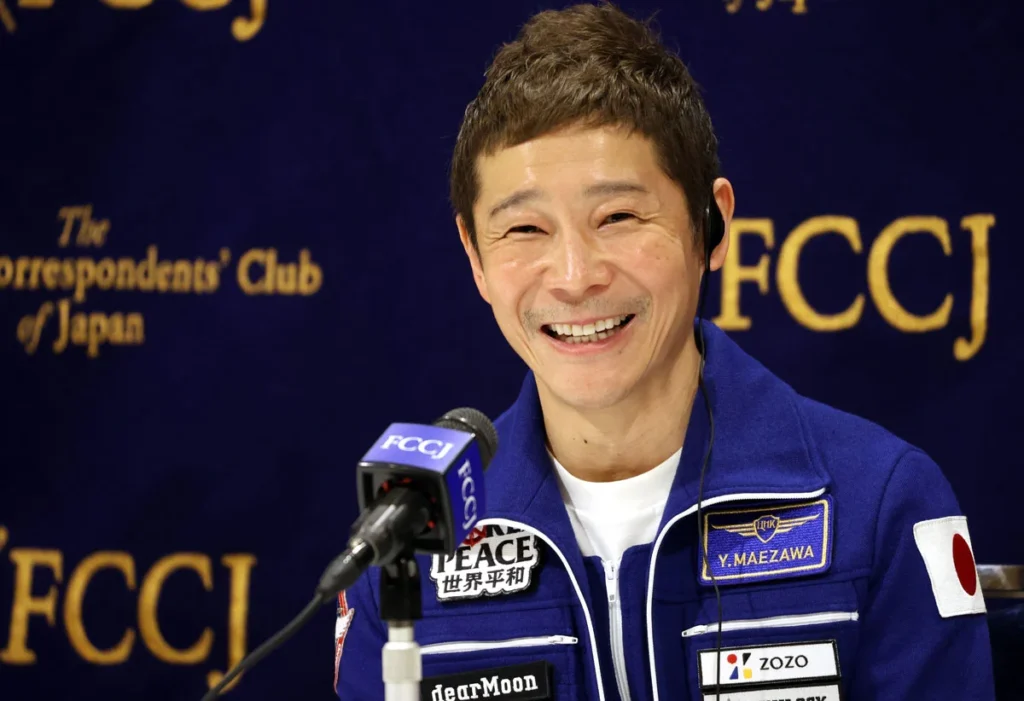
- August 2024: Details emerge regarding billionaire Yusaku Maezawa’s acquisition of the Nausicaä superyacht, a $350 million vessel designed to serve as a floating gallery for his blue-chip art collection.
- January 2025 (Projected): Martin Clark will officially depart the Camden Art Centre to begin his tenure at Towner Eastbourne.
III. Supporting Data: Philanthropy and Private Capital
The financial health of the art world is often measured by the generosity of its foundations and the spending power of its top-tier collectors. Recent data points suggest a robust commitment to both grassroots nonprofit support and high-end private acquisitions.
The Pérez Family Foundation: Investing in Miami
The Jorge M. Pérez Family Foundation has announced a disbursement of $720,000 as part of its CreARTE grant program. This funding cycle is specifically designed to bolster the Miami arts ecosystem, which has faced mounting pressure from rising real estate costs and shifting municipal priorities.
- Total Organizations Funded: 32
- Key Recipients: The Museum of Contemporary Art (MOCA) North Miami, Oolite Arts, and the Women Photographers International Archive (WOPHA).
- Objective: To expand resident programs, enhance educational outreach, and ensure that Miami remains a viable home for working artists.
The Graham Foundation: Architectural and Design Support
Simultaneously, the Graham Foundation has named 45 organizations as recipients of its latest grant cycle, totaling $451,000. These grants are specifically targeted at projects that explore the intersection of architecture, design, and fine art.
- Major Supported Projects:
- A landscape and design exhibition at the Cooper Hewitt, Smithsonian Design Museum in New York.
- An exhibition by Amanda Williams at the Museum of Contemporary Art Chicago.
- A comprehensive survey of Paul R. Williams at the Los Angeles County Museum of Art (LACMA).
The Big Number: $350 Million
The most staggering financial figure of the month belongs to Japanese billionaire Yusaku Maezawa. The founder of Zozo has reportedly spent $350 million on a 375-foot superyacht named Nausicaä.
- Design and Build: Designed by the legendary Marc Newson and built by the German shipyard Lürssen.
- The "Floating Gallery": The vessel features a two-story art gallery specifically designed to house Maezawa’s multi-million dollar collection.
- Key Artists on Board: The yacht will reportedly display works by Andy Warhol, Jeff Koons, Richard Prince, and Christopher Wool.
This acquisition highlights a growing trend among the "ultra-high-net-worth" (UHNW) demographic: the integration of museum-grade art environments into private, mobile luxury assets.
IV. Official Responses and Institutional Perspectives
While the commercial and philanthropic sectors are thriving, the institutional sector is grappling with the logistical and ethical challenges of modern programming. A recent investigative report by the New York Times has sparked a debate regarding the "performative turn" in global exhibitions, specifically at the Venice Biennale.
The Labor of Performance
As visual arts increasingly incorporate live performance, the strain on institutional budgets and human resources has become a point of contention. Laura Cappelle, a Paris-based critic, has raised critical questions about the sustainability of these practices.
The Practical Dilemma:
"The practical questions quickly pile up," Cappelle writes. "How many hours a day, or a week, can performers reasonably sustain? And who pays for their time and expenses, when visual exhibitions typically require only attendants to run?"
Case Study: The Dutch Pavilion
At this year’s Venice Biennale, Dries Verhoeven’s presentation at the Dutch Pavilion serves as a prime example of the intense labor requirements. To maintain the pavilion’s schedule of six daily performances over a six-month duration, the organizers have had to employ:
- Three rotating teams of performers to prevent burnout.
- Specialized insurance and travel stipends.
- An on-call doctor to manage the physical toll on the dancers and actors.
This shift suggests that while performance art is highly lauded by critics and audiences, the infrastructure of the art world—traditionally built to house static objects—is struggling to adapt to the needs of living labor.
V. Implications: The Future of the Art Ecosystem
The convergence of these events suggests several key takeaways for the future of the art industry.
1. The Professionalization of Regional Museums
The appointments at the Bruce Museum and Towner Eastbourne indicate that "regional" museums are no longer content to sit in the shadow of major metropolitan institutions. By hiring directors and curators from world-class organizations like the Corning Museum and Camden Art Centre, these institutions are positioning themselves as primary destinations for serious scholarship and high-profile exhibitions.
2. The Caribbean as a Rising Market Power
The expansion of TERN’s roster with artists like Gio Swaby—whose work has recently been acquired by major US museums—signals the continued "de-centering" of the art market. Collectors are increasingly looking toward the Bahamas and the wider Caribbean for innovation, moving away from the traditional New York-London-Paris axis.
3. The "Experience Economy" vs. Institutional Reality
The friction at the Venice Biennale highlights a growing rift. Audiences and curators are demanding "experiences"—live, breathing, and interactive art. However, the funding models for many national pavilions and museums remain rooted in the "object-based" economy. If the trend toward performance continues, we may see a radical restructuring of how art grants and exhibition budgets are calculated, with a greater emphasis on labor rights and health and safety protocols for performers.
4. Private Museums Go Mobile
Yusaku Maezawa’s superyacht represents the ultimate privatization of the art experience. While museums like the Bruce and MOCA North Miami struggle for grant funding to keep their doors open to the public, the world’s most significant masterpieces are increasingly being housed in high-security, private mobile environments. This tension between public accessibility and private stewardship remains one of the most polarizing issues in the contemporary art world.
As the industry moves into the autumn season, the balance between these forces—the labor of the artist, the vision of the curator, and the capital of the collector—will continue to define the trajectory of the global art market.